
Canned Tomatoes vs Fresh Tomatoes: Which to Buy?
By TMICORP Editorial Team | Last updated: 2026-10-30
Canned Tomatoes vs Fresh Tomatoes: Which to Buy?
Short answer: which to pick?
Canned tomatoes, pick for concentrated, consistent flavor in cooking and long shelf life. Fresh tomatoes, pick for raw eating, bright aroma, and firm texture. Choose canned for rich sauces, soups, and stews any time of year. Choose fresh when texture and raw aroma are the priority.
At-a-glance comparison (table)
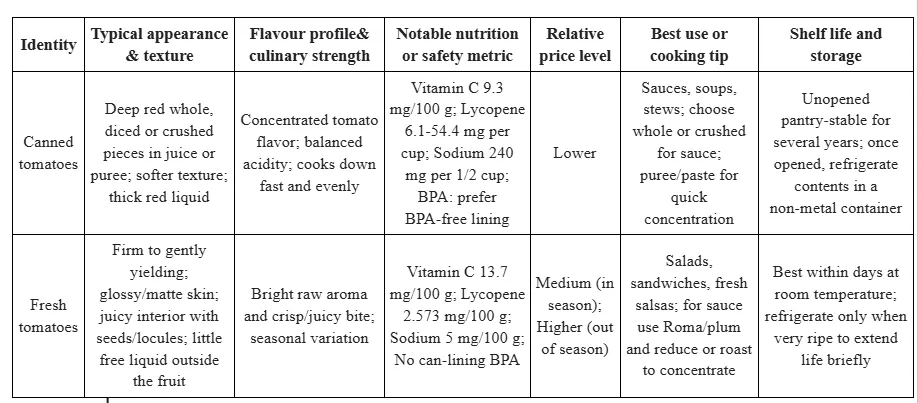
Lycopene varies by canned style (juice vs puree), and sodium depends on whether salt is added. Read labels for the specific can you pick.
Nutrition: vitamins, lycopene and what it means for you
Fresh usually gives you more vitamin C per bite, while canned tends to deliver more concentrated and more bioavailable lycopene. Heat from processing lowers vitamin C but increases lycopene availability from tomato cell walls, a trade-off summarized in a peer-reviewed scoping review of processed vs fresh tomatoes from Advances in Nutrition (Advances in Nutrition).
- Vitamin C
Fresh typically has more. One comparison lists fresh at 13.7 mg/100 g versus canned at 9.3 mg/100 g, reflecting vitamin C's sensitivity to heat during canning. If vitamin C is your priority, include fresh tomatoes or other raw produce in the meal.
- Lycopene
Canned formats span a wide range because of concentration. USDA figures per cup show about 6.1 mg for canned tomatoes packed in juice, 10.4 mg for stewed, 22.0 mg for canned tomato juice, and 54.4 mg for canned tomato puree.
A fresh-tomato comparison lists around 2.573 mg per 100 g. Cooked and canned products can deliver several times more lycopene per serving than raw portions of similar size.
See lycopene values by product type in the USDA dataset curated by the National Agricultural Library (National Agricultural Library).
- Sodium
Fresh is very low (about 5 mg/100 g). Canned varies with added salt; an example can lists 240 mg per 1/2 cup. Daily sodium limits vary by country, so if you're watching sodium, choose "no salt added" or low-sodium cans and compare labels.
Use both to cover your bases, fresh, raw tomatoes in salads for vitamin C and aroma; canned or cooked tomato products for a reliable lycopene boost. Year-round consistency comes from tomatoes packed at peak ripeness and stabilized by controlled heating.
Taste and cooking: sauces, soups and raw uses
Canned gives stronger, more concentrated tomato flavor in simmered dishes; fresh gives brighter raw aroma and crisp texture. Canned tomatoes are often packed at peak ripeness and, in puree or crushed formats, contain higher soluble solids and less free water, so they break down quickly into a rich sauce.
For weeknight sauces, soups, and stews, start with whole canned, crushed, or puree and you'll reach body and depth faster.
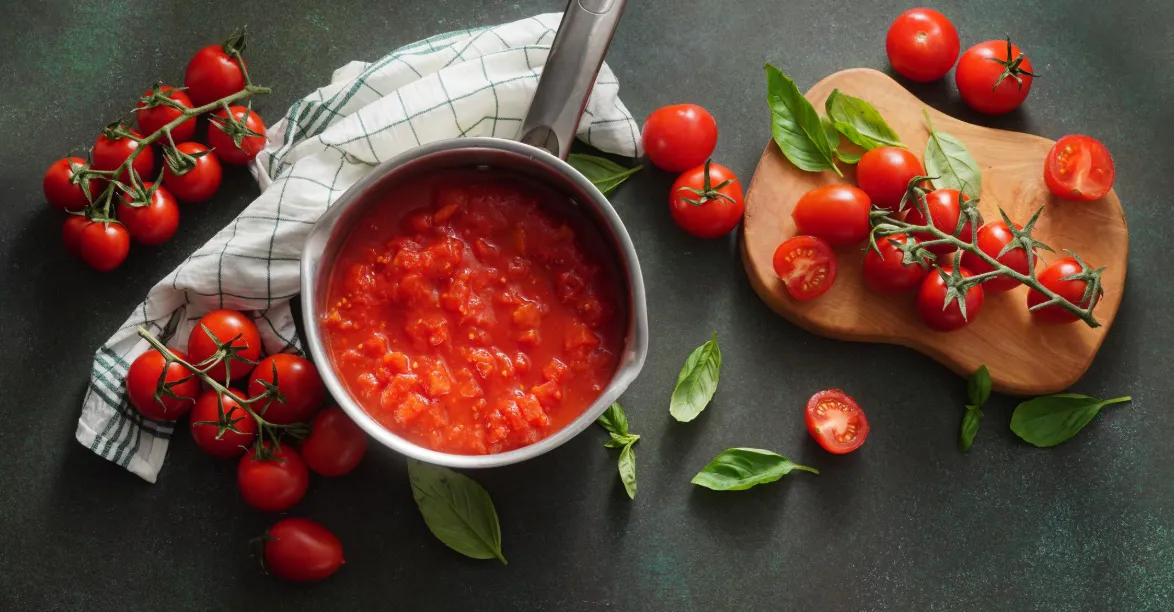
Fresh tomatoes have higher free water and more delicate volatile aroma compounds. For salads, sandwiches, bruschetta, and fresh salsas, choose ripe fresh tomatoes for snap and fragrance.
If using fresh for sauce, pick sauce-leaning varieties like Roma (plum) or San Marzano types, peel if you like a smoother texture, and expect to simmer longer to reduce water or roast first to concentrate.
Labels like "plum," "Roma," or "for sauces" on fresh, and "whole," "diced," "crushed," "puree," or "paste" on canned tell you the format and concentration.
How to recognise fresh vs canned (visual ID), images and words
Canned formats
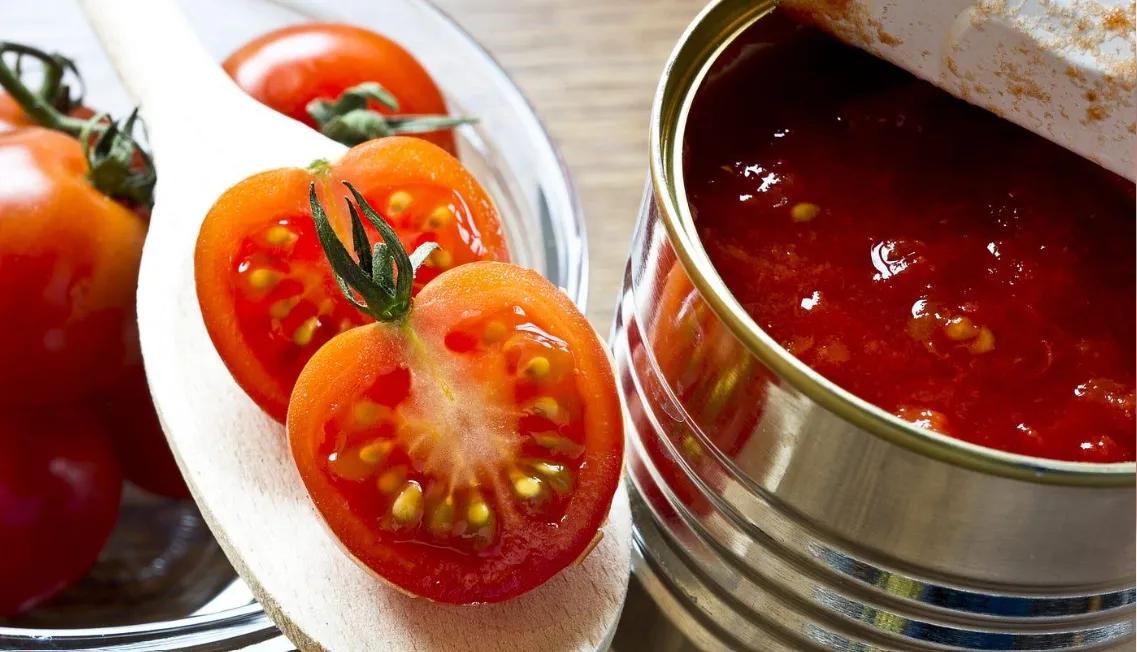
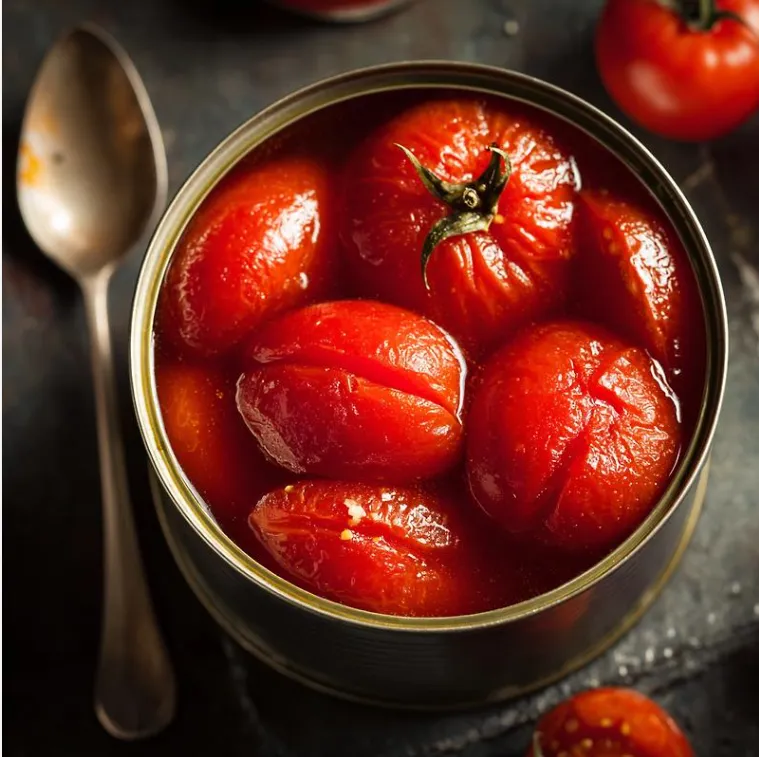
- Whole canned, intact peeled tomatoes in thick red juice or puree, seeds mostly inside the fruit, pieces hold shape but are soft.
- Diced canned, neat cubes suspended in juice; if calcium chloride is used, cubes stay firmer after cooking.
- Crushed, uneven small pieces in a thicker base; looks spoon-coatable straight from the can.
- Packed in juice vs puree, juice looks looser and lighter red; puree is thicker and a deeper red, signaling higher solids.
Fresh formats
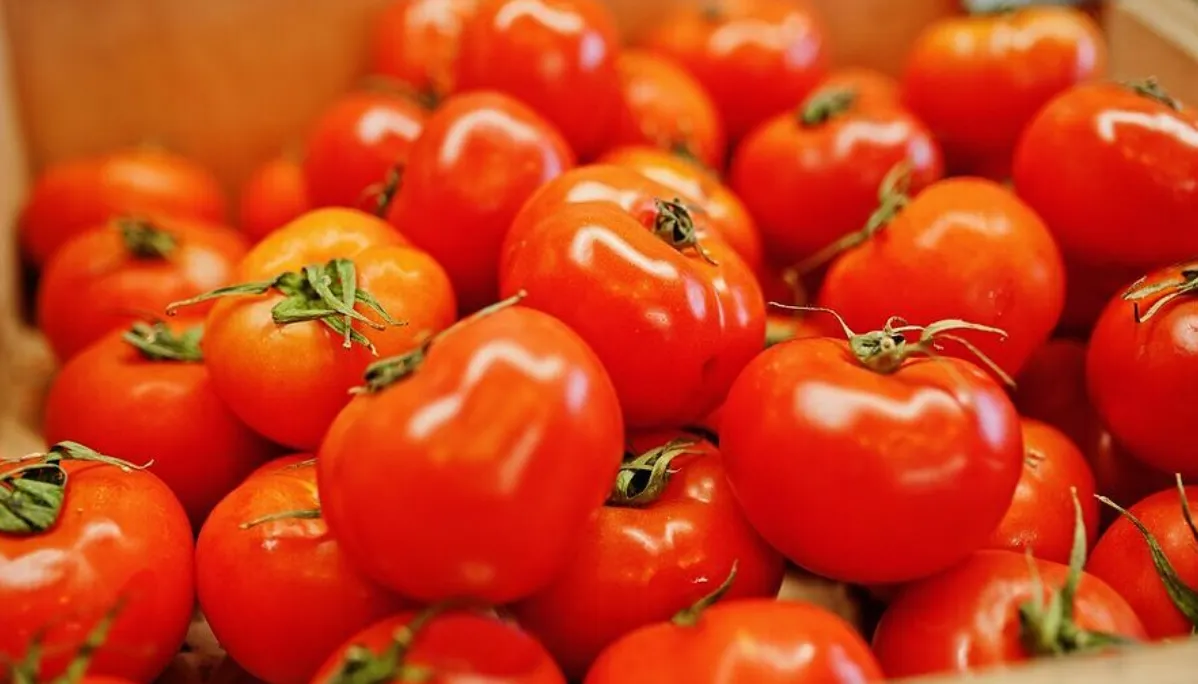
- Vine-ripened or standard round, smooth skin, even color, slight give when ripe; cut surface shows multiple seed pockets (locules) with gel.
- Roma (plum), more oval, meatier walls, fewer locules; less watery, better for sauces.
- Pre-diced fresh packs, look for firm, well-cut pieces; avoid pools of watery liquid or browning.
If you need sauce-ready tomatoes, choose whole canned, crushed, puree, or paste. If you need fresh diced, check packs for excess watery liquid or discoloration and avoid soft spots.
Safety, additives and what to look for on labels
Canned tomatoes can be excellent nutritionally, but labels matter for sodium, can linings, and minor additives. For sodium, a salted canned example shows about 240 mg per 1/2 cup; daily limits vary by country, so compare labels and pick "no salt added" or low-sodium if needed.
About BPA: some can linings historically used bisphenols. The European Food Safety Authority has updated its risk conclusions on BPA in food-contact materials and provides an overview of bisphenols in food safety (EFSA bisphenols topic; EFSA BPA summary). Shopper move: prefer cans labeled "BPA-free." Rinsing canned tomatoes can help reduce surface salt; BPA exposure depends on the lining, so the packaging claim is the main decision cue.
Common additives to recognize on tomato cans
- Citric acid, acidity regulator that supports flavor and safety.
- Calcium chloride, firming agent that helps diced pieces hold shape.
- "No salt added" and "low sodium", cues for reduced sodium formulations.
Price and availability: relative cost, seasonality and pantry value
Canned is typically the budget pantry option and consistent year-round, while fresh is best value in season and can be premium off-season. If you want reliable cooking tomatoes at a low price, keep canned on hand; for top raw flavor, buy fresh in season or choose smaller premium varieties for salads when budget allows. Availability is broad for canned (whole, diced, crushed, puree, paste, juice) in the pantry aisle, while fresh supply and varieties depend on local season and what your markets carry.
Relative price cues
- Budget, standard mass-market canned tomatoes (most pantry cans).
- Mid, higher-end or organic canned brands.
- Premium, specialty or heritage fresh tomatoes in season, and premium imported canned brands.
Shop-floor checklist: what to check before you buy
- Check the product form, whole, crushed, diced, peeled (canned) or variety/grade (fresh).
- Read the ingredient list, only tomatoes vs added salt, sugar, citric acid, calcium chloride, or preservatives.
- Look for salt claims, "no salt added," "low sodium," or regular.
- Prefer packaging lining claims, "BPA-free" where shown.
- Inspect pack condition, dents, bulging, rust, leaks for cans; bruises, mold, soft spots for fresh.
- Confirm best-before/expiry and any pack/harvest date.
- Note origin and variety if listed, Roma/plum often best for sauces; "organic" if that matters to you.
- For fresh, even color, firmness, aroma; avoid soft or watery spots.
- For pre-diced fresh, avoid excess liquid or discoloration.
- For sauces, pick plum/Roma fresh varieties, or cans labeled "for sauces" or "Italian/plum."
Practical next step: what to pick and how to store it
Cooking a sauce, soup, or stew? Pick canned whole peeled or canned crushed, and add puree or paste if you want extra body fast. Making salads, sandwiches, or fresh salsas? Pick ripe fresh tomatoes (Roma/plum for less water, or vine-ripened/heirloom for aroma).
Store cans in a cool, dark pantry unopened for a long shelf life measured in years; after opening, transfer contents to a non-metal, lidded container and refrigerate, using within a few days.
Store fresh tomatoes at room temperature until ripe; refrigerate only when very ripe to stretch life slightly, then bring back to room temperature before serving to recover aroma. Extra tip: roast or simmer fresh tomatoes into a thick sauce and freeze for later.
Frequently asked questions
-
Can I use fresh diced tomatoes in place of canned in a sauce?
Yes, but expect to simmer longer to reduce water and thicken. For better results, use Roma/plum types, peel if you want a smoother texture, or roast the tomatoes first to concentrate flavor before simmering.
-
Which canned style should I buy for different dishes?
Whole or crushed for most sauces and stews; puree for fast body and depth; paste to boost intensity; diced when you want visible pieces that hold shape (firmest if calcium chloride is listed).
-
Can rinsing canned tomatoes reduce salt?
A quick rinse can wash off surface salt from the liquid and outer surfaces of the tomatoes. It won't change salt already dissolved deep in the product, but it helps when you're aiming for lower sodium.
Discover TMICORP Canned Tomatoes – A Convenient Choice for Global Food Manufacturers
At TMICORP, we offer Vietnamese Canned Tomatoes designed to meet the diverse needs of international food manufacturers, distributors, and importers.
Carefully selected and processed to preserve their natural tomato flavor, vibrant red color, and consistent quality, our canned tomatoes provide a convenient, year-round ingredient solution for professional food production.
Suitable for a wide range of applications, including pasta sauces, soups, stews, pizza toppings, and ready-to-eat meals, they help simplify food preparation while ensuring reliable product consistency. With flexible packaging options and a commitment to international quality requirements, TMICORP is ready to support your business with dependable Vietnamese processed tomato products.


Related Articles
Canned Pineapple Benefits: Health, Nutrition & Risks
WHAT IS CANNED PINEAPPLE?
3 Easy and Delicious Dishes You Can Make with Canned Pineapple

Discover 8 of the Best Bubble Tea Flavors Around the World!