
Star anise vs anise: which should you buy?
By TMICORP Editorial Team | Last updated: 2026-09-29
Quick answer: which to buy and why
Star anise is your pick for aromatic, woody licorice notes in long-cooked broths and braises. Anise seed (Pimpinella anisum) is best when you want a sweet, concentrated licorice flavor for baking and liqueurs. Fennel seed suits sausages, salads and light braises where you want a milder, greener anise-like note. We compare three options here: star anise, anise seed and fennel seed.
Side-by-side comparison (quick table)
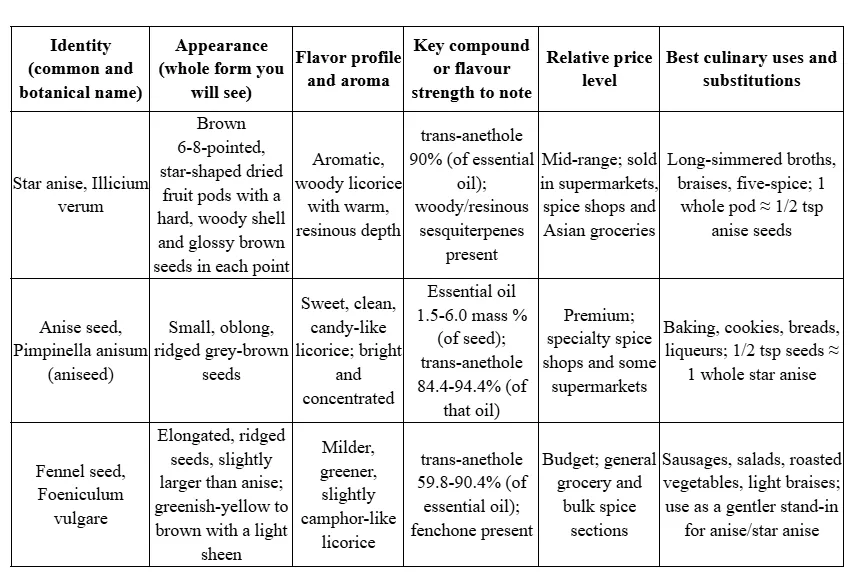
Batch, cultivar and storage can shift aroma strength and minor compounds, so adjust amounts to taste.
Identity and botanical names (what's what)
These three spices aren't the same plant, but they share a core licorice aroma because all three contain the flavor molecule trans-anethole. Star anise is the star-shaped dried fruit of Illicium verum, often labeled Chinese star anise or badiane. It is distinct from Japanese star anise, Illicium anisatum, which is toxic and not for food; avoid any product naming I. anisatum. Reviews of Illicium verum also note its star anise oil and shikimic acid as hallmark constituents of the fruit, useful in food and as studied phytochemicals.
Anise seed is the dried seed of Pimpinella anisum, commonly called anise, aniseed or anis; you may also see names like Roman anise or green anise on labels. The seed is prized because most of its essential oil is trans-anethole, giving a sweet licorice punch backed by minor aromatic notes documented across cultivars. For fennel seed, look for Foeniculum vulgare on the ingredient list; these are the dried seeds of the fennel plant, used worldwide for their gentler anise-like aroma and grassy top notes.
How they look and how to tell them apart (visual ID)
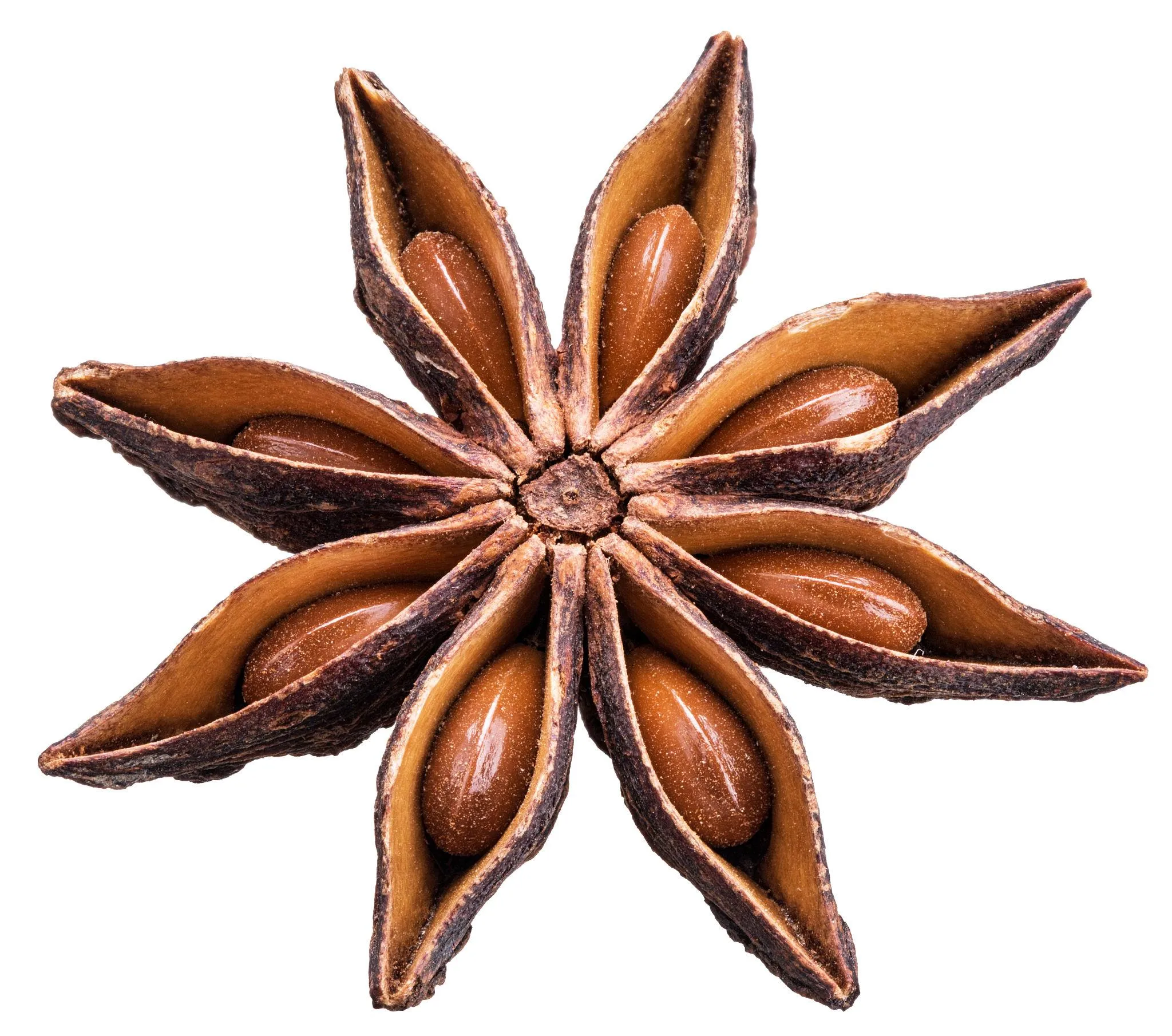
Star anise shows as woody, brown, 6-8-pointed stars. Each point is a hard boat-shaped carpel that often holds a single glossy, mahogany-brown seed; the outer surface is matte and rough, the edges sharp and brittle. The aroma is sweet-spicy and resinous when you crack a pod.
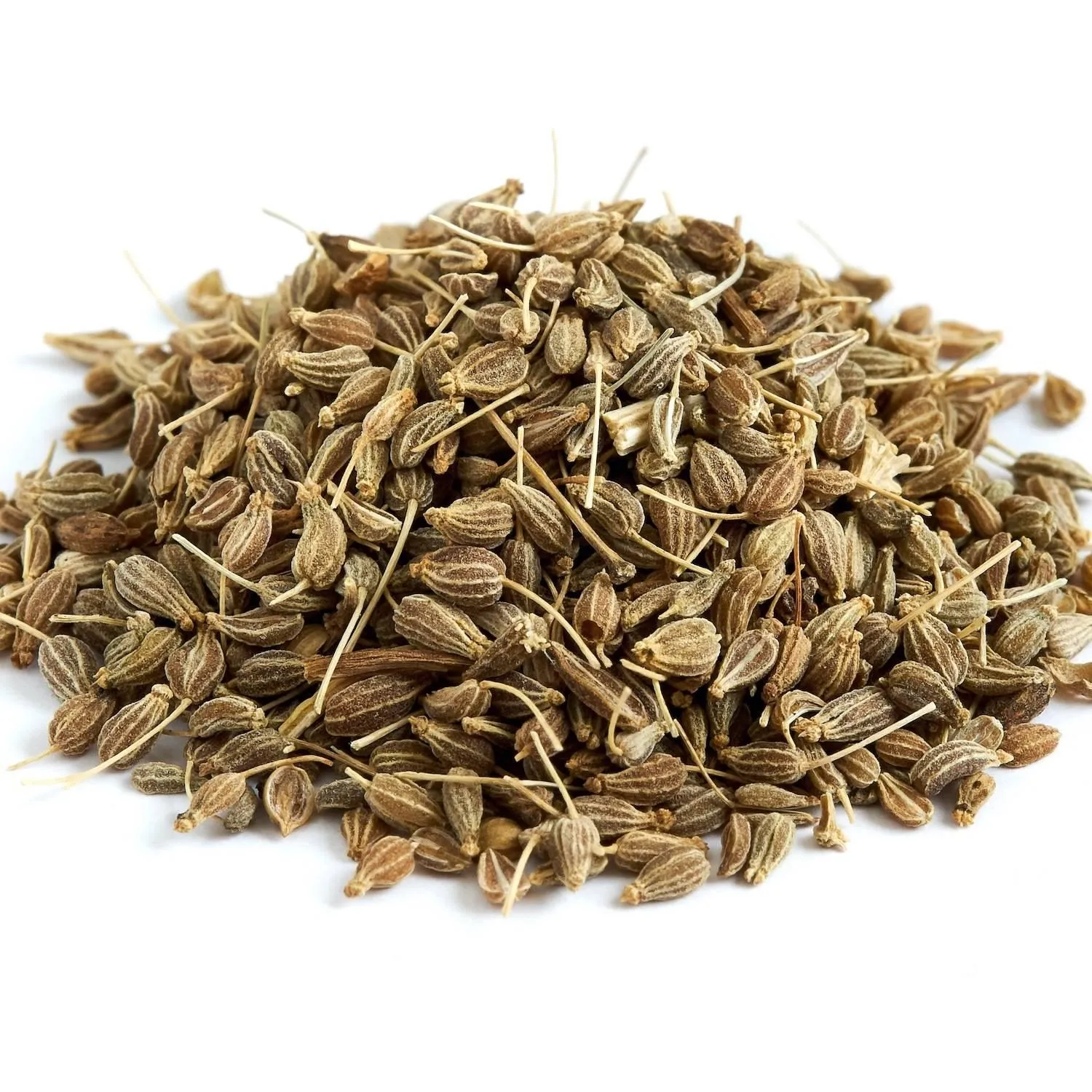
Anise seed is small, oblong and ridged with a grey-brown color. The seeds look like tiny curved grains with fine vertical ribs and a faint tail. They feel dry and slightly fibrous if crushed, releasing a strong, clean, candy-like licorice scent.
Fennel seed is slightly larger than anise and more elongated, with pronounced ridges. Colors range from greenish-yellow when fresher to tan-brown as it ages, often with a gentle grassy sheen. The smell is softer, greener and a touch camphor-like.
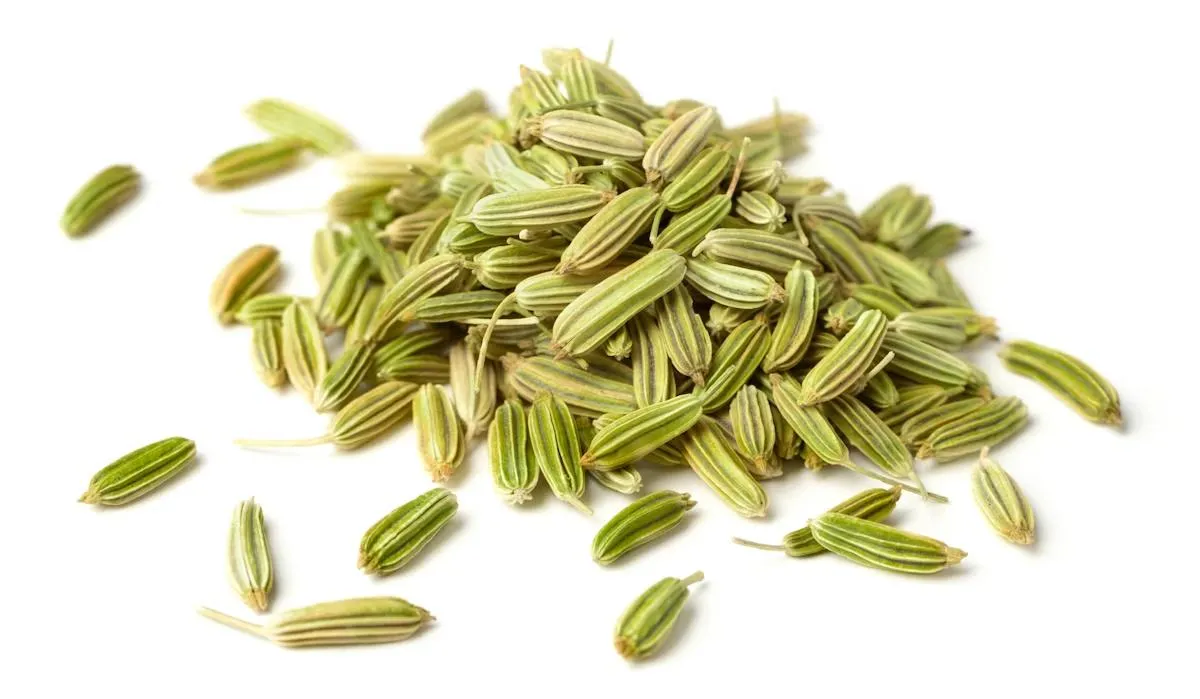
Practical authenticity tip: star anise should smell sweet-aromatic, not musty or medicinal. Unusually small, fragile stars, an acrid or soapy odor, or unlabeled origin can signal poor quality or, rarely, mis-identification; Japanese star anise (Illicium anisatum) is toxic and must be avoided.
Key compounds that make their flavour (what the numbers mean)
Anise seed's power comes from its essential oil content and what's in that oil. Whole anise seed contains about 1.5-6.0 mass % essential oil, and 84.4-94.4% of that oil is trans-anethole. In your kitchen, that means a small pinch of seed delivers a focused, sweet licorice aroma because most of its oil is the licorice compound.
Star anise oil is also dominated by anethole, about 90% of the essential oil by composition. The remaining minor compounds (including woody sesquiterpenes) add resinous, warming depth that holds up in long simmering, which is why whole pods excel in broths and braises.
Fennel seed oil contains a high but more variable share of trans-anethole (59.8-90.4%) and also characteristic fenchone, which reads as greener and slightly camphor-like. That's why fennel tastes anise-like but milder and fresher than anise seed.
On safety, an international expert committee has published a benchmark daily intake for trans-anethole; normal culinary use of seeds or whole pods is far below this. Concentrated extracts and essential oils are what approach regulatory limits.
Substitutes, conversion and how to swap them in recipes
Match by flavor impact per unit, not by weight. A practical starting point is: 1 whole star anise pod ≈ 1/2 teaspoon whole anise seeds. This aligns with how concentrated anise seed's oil is and how star anise's woody pod steadily releases aroma in simmering.
- Whole to whole: 1 whole star anise pod = 1/2 teaspoon anise seeds. Use the same ratio in reverse if a recipe calls for one pod and you only have seeds.
- Ground vs whole: ground anise releases faster and can taste stronger; start with a little less than you would of whole seeds and adjust to taste.
- Fennel as a gentler stand-in: use fennel seed when you want a greener, milder profile. Start with less than you would of anise seed, then taste and add more.
Cooking method matters:
- Long boiling or braising: leave star anise whole and remove before serving; its resinous depth holds up and avoids gritty specks.
- Baking, cookies and liqueurs: lightly crush or grind anise seeds to release oil quickly and evenly; their bright sweetness comes through in doughs and syrups.
- Quick sautés or salads: use a pinch of lightly crushed fennel seed for a fresh, herbal licorice lift.
How star anise, anise and fennel relate (and when to choose each)
They're unrelated botanically but closely related in aroma chemistry: all three taste anise-like because they share trans-anethole as the dominant flavor molecule. Choose star anise when you need structured, woody licorice that survives hours of simmering, such as in broths (pho), braises and classic five-spice blends. Pick anise seed for sweet baking and liqueurs where a clean, candy-like licorice note shines without woodiness. Use fennel seed in sausages, roasted vegetables, lighter sauces and salads where a greener, gentler anise character fits.
Are star anise and fennel related? Not closely as plants: Illicium verum (star anise) is an evergreen tree fruit, while Foeniculum vulgare (fennel) is an herb in the Apiaceae family; they simply converge on similar aroma through trans-anethole. In short, think anise vs star anise vs fennel as three routes to licorice-like flavor: bold and woody (star), sweet and concentrated (aniseed), or mild and green (fennel).
Other flavours to compare (cloves, cinnamon, licorice)
Cloves are driven by eugenol, giving a warm, spicy-medicinal bite, not a licorice sweetness. Cinnamon's signature is cinnamaldehyde, a sweet-warm barkiness that overlaps with star anise in mulled blends but lacks licorice. True licorice root tastes intensely sweet from glycyrrhizin; it sweetens and perfumes but doesn't duplicate anethole's perfume. For swaps, blend a little clove plus cinnamon if you want warm spice without licorice; licorice root adds sweetness and earthy depth rather than the aniseed profile.
What to check when buying (shop-floor checklist)
- Name check on the label
- Illicium verum for true star anise; avoid Illicium anisatum (Japanese star anise). - Pimpinella anisum for anise seed (also labeled aniseed, anis, green anise/Roman anise). - Foeniculum vulgare for fennel seed.
- Form: buy whole pods/seeds for freshness and easy visual ID; use ground only if you'll finish it quickly.
- Origin and ingredient list: a single named spice, no fillers; origin information helps with traceability.
- Packaging and date: intact, sealed packaging with a pack or best-before date.
- Visual check
- Star anise: 6-8-point brown stars with glossy seeds; avoid dampness, mold or heavy dust. - Anise/fennel: small oblong ridged seeds; color should be natural tan to greenish, not dyed.
- Aroma test if allowed: expect a pleasant sweet anise scent; a flat or musty aroma suggests age or poor drying.
- Safety note: because Japanese star anise is toxic, clear species labeling and reputable sourcing matter for star anise products, especially if making teas or using for infants.
Storage, shelf life and how to keep flavour
Whole seeds and pods keep their best flavor when stored airtight, cool and dark. As a benchmark, whole anise seeds keep about 12-18 months while ground anise loses punch in 2-3 months; other whole spices in this group behave similarly, so buy ground only in small amounts. Refresh whole seeds briefly by toasting in a dry pan for 30-60 seconds until fragrant, then cool and use. After opening, transfer to a small, well-sealed jar away from light and heat.
Practical next step: pick, use and store
- Decide by cooking method:
- Long simmer or braise = star anise. - Baking, cookies or liqueur = anise seed. - Sausages, salads, roasted veg or light sauces = fennel seed.
- Buy whole for versatility and value; grind or crush just before use.
- Sub in smartly: 1 whole star anise pod ≈ 1/2 teaspoon whole anise seeds; for fennel, start with a little less and build to taste for a greener profile.
- Label your jar with the spice name and the date you opened it; aim to finish ground spices within a few months.
- Store airtight, cool and dark; toast whole seeds briefly to revive aroma.
Final reminder: avoid Japanese star anise (Illicium anisatum), and taste-test small amounts when substituting.
Frequently asked questions
-
Can you use anise seed instead of star anise?
Yes. Start with 1/2 teaspoon whole anise seeds for each whole star anise pod, then adjust to taste.
-
Are star anise and fennel the same?
No. They are different plants and parts (a star-shaped fruit vs seeds) but share a similar anise-like aroma because both contain trans-anethole.
-
Is any star anise toxic?
Yes. Japanese star anise (Illicium anisatum) is toxic and not for food; buy only products labeled Illicium verum.
-
Which is best for baking?
Anise seed (Pimpinella anisum) gives the sweetest, cleanest licorice note and works best in cookies, cakes and liqueurs.
About TMICORP
TMICORP supplies Vietnamese star anise for commercial and food-processing applications. We offer different forms, including whole, broken and powdered star anise, with bulk packaging options for export orders. Buyers can contact TMICORP for product specifications, packaging options and quotations based on their required quantity and specifications.


Related Articles
Canned Pineapple Benefits: Health, Nutrition & Risks
WHAT IS CANNED PINEAPPLE?
3 Easy and Delicious Dishes You Can Make with Canned Pineapple
Discover 8 of the Best Bubble Tea Flavors Around the World!