
Cinnamon from Vietnam: Saigon & Vietnamese Cassia
By TMICORP Editorial Team | Last updated: 2026-07-30
This article is for general informational purposes only and is not medical advice. Consult a qualified healthcare professional for guidance on your individual situation.
1. What is cinnamon from Vietnam (Saigon / Vietnamese cassia)?
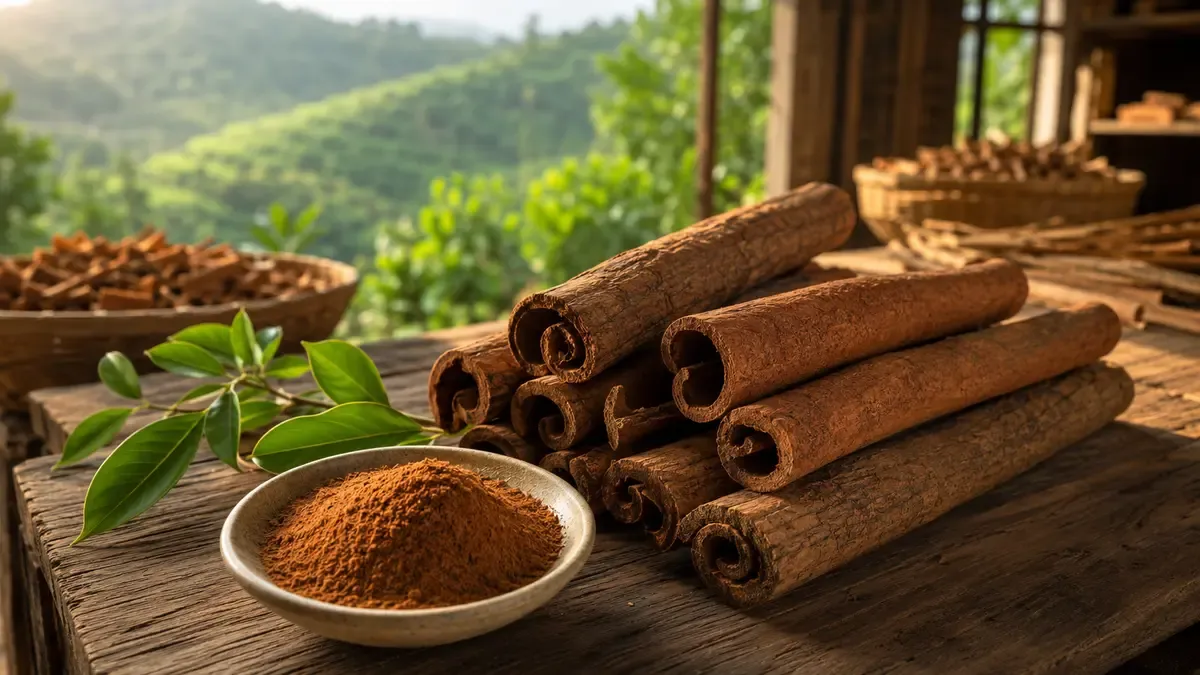
Saigon cinnamon is Vietnamese cassia, the aromatic bark of Cinnamomum loureiroi commonly sold as Vietnamese cinnamon and distinct from the delicate, low-coumarin Ceylon cinnamon (Cinnamomum verum). In trade, it sits within the cassia group (related to Cinnamomum cassia/Chinese cassia) but is prized for its bolder sweetness, richer color, and hotter, spicier finish.
Vietnamese cassia typically contains about 1-5% essential oil by weight, with botanical descriptions reporting notable cinnamaldehyde as a key component of that oil (often cited around a quarter of the oil alongside other aromatics). That oil range is what gives Saigon cassia its immediate, room-filling aroma and why bakers often find they can use less of it for the same impact.
Compared with Ceylon's finer, papery layers and delicate, citrus-tea perfume, Vietnamese cassia reads fuller, deeper, and more candy-sweet up front, then turns warm and peppery on the finish. For an accessible primer on the spice, see the Healthline overview of Saigon cinnamon and its compounds in cassia-type cinnamons (cinnamaldehyde, eugenol, and more) in a general-audience context. Healthline explainer on Saigon cinnamon and its compounds.
2. Where in Vietnam is cinnamon grown and produced?
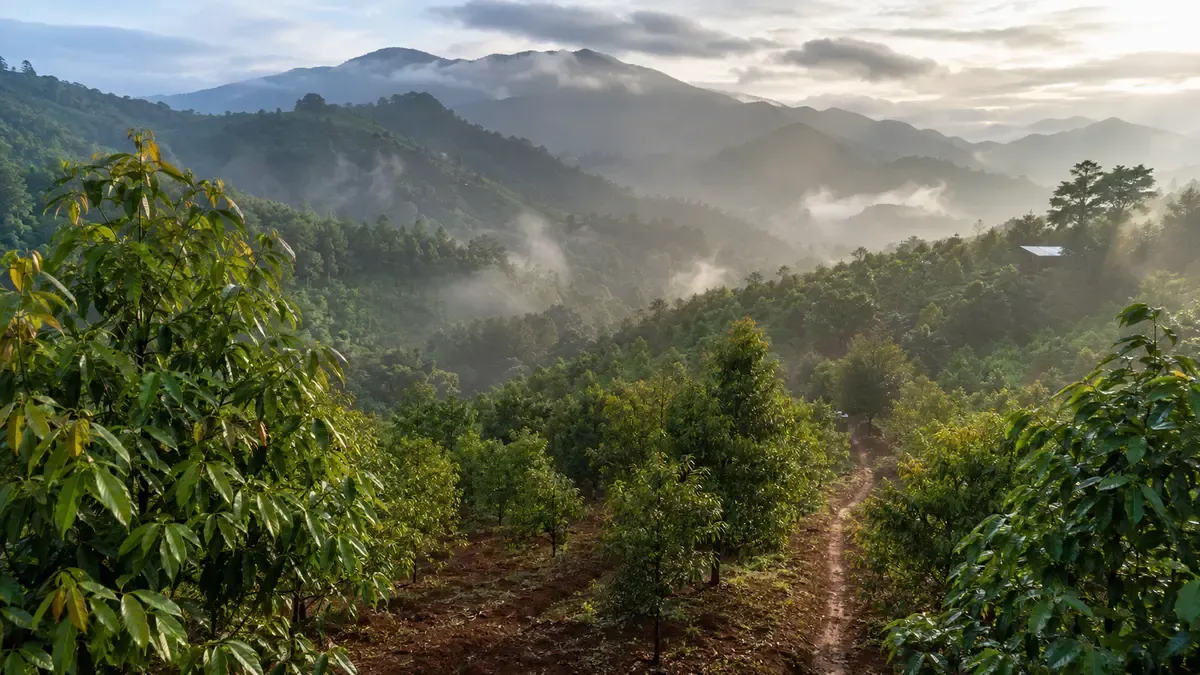
Vietnamese cassia is grown mainly in the northern mountainous provinces and North Central belt, with well-known hotspots including Yen Bai in the north and Quang Ngai and Bac Tra My (Quang Nam) toward the Central Highlands. The cool, misty uplands, sloping lateritic soils, and seasonal rains favor slow, oil-rich bark formation that defines Saigon cassia quality. Vietnam is a top global exporter; trade association reporting places cinnamon exports at roughly 100,000 tons in 2024 (VPSA; year noted), with major markets in India, the EU, and the US. Industry estimates vary on planted area, but hundreds of thousands of hectares are under cinnamon across these upland corridors, reflecting both long-standing smallholder groves and expanding new plantings. These regions also host most of the primary processing, peeling, drying, grading, before product moves to coastal ports. For context on export trends, see the Vietnam Pepper and Spice Association's updates. Vietnam Pepper and Spice Association (VPSA)
3. How cinnamon is harvested and processed in Vietnam
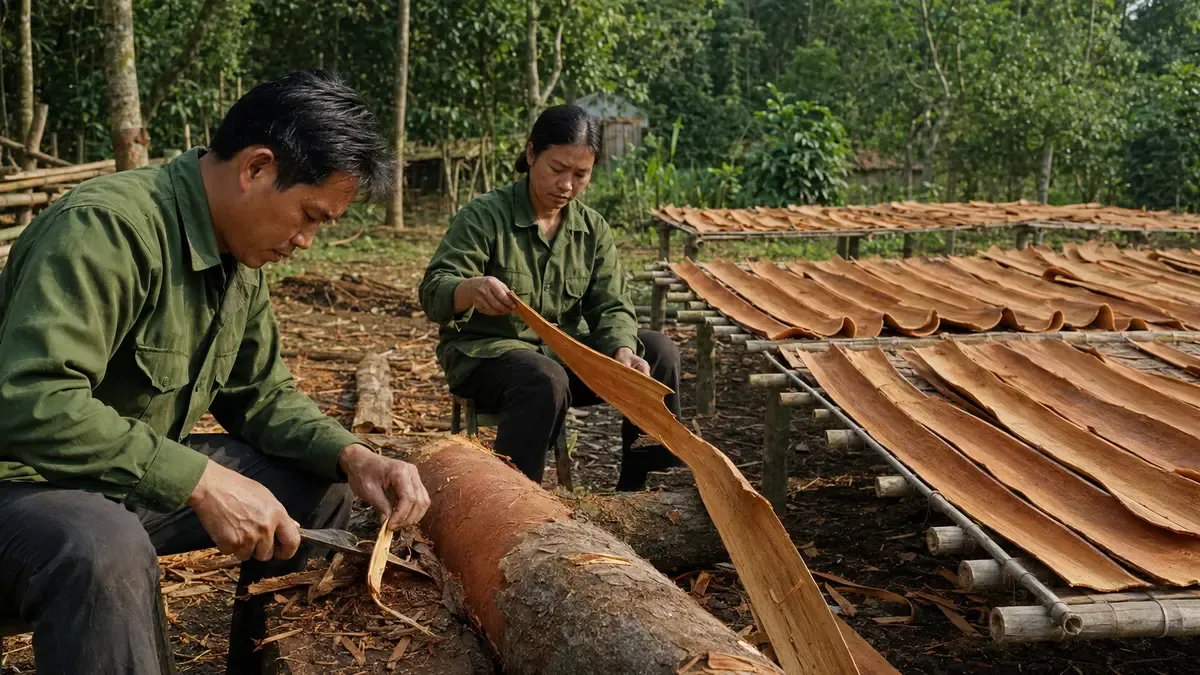
Vietnamese cinnamon is harvested once trees reach suitable maturity for thick, aromatic bark, then the bark is carefully slit, peeled, and sun-dried to harden and curl. After drying, processors sort and clean the bark, trimming for uniformity and converting it into product forms such as whole sticks (quills), split bark, broken pieces, and powder. Speed, cleanliness, and careful temperature control from peeling through milling help preserve essential oil percentage and the signature Saigon aroma.
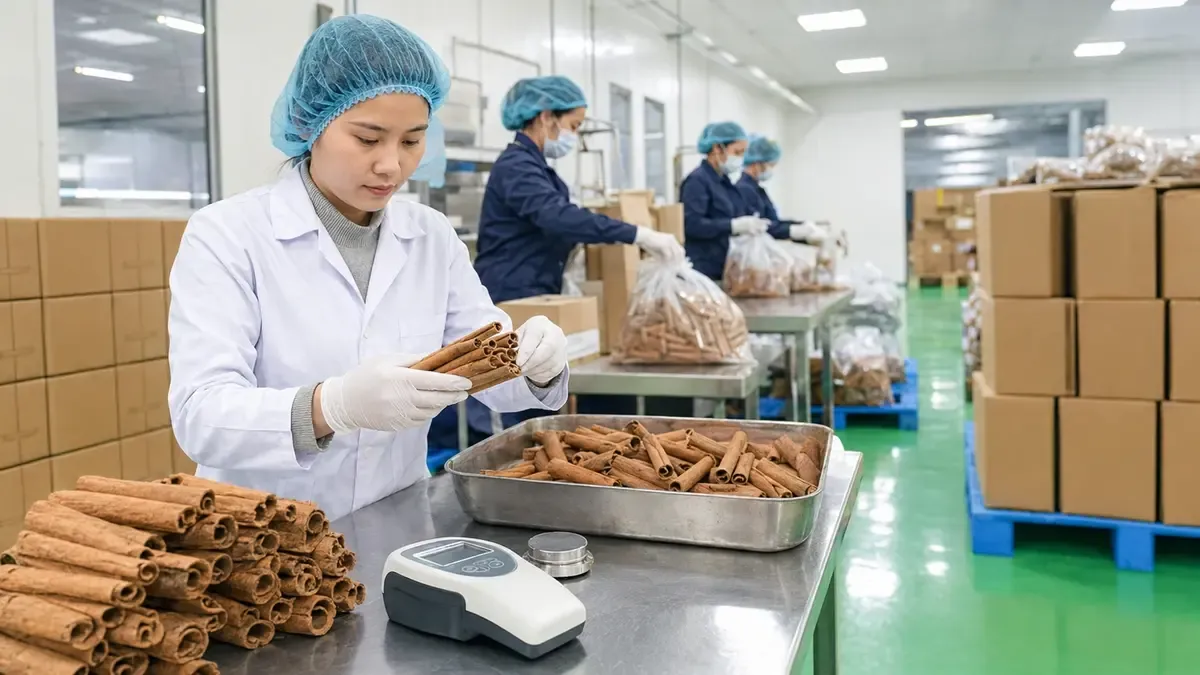
In practice, workers score the bark lengthwise, ease it off in sheets, and dry it until it naturally rolls; thicker sections become robust quills, while irregular pieces are set aside for cutting or milling. Final steps focus on removing dust and bark cork, checking moisture and appearance, and packing to protect freshness. Commercial packing commonly uses moisture-barrier bags inside 10-20 kg cartons, with export lots consolidated and shipped under FOB Hai Phong (and other VN ports) per buyer terms, then inspected on arrival per import requirements.
4. Flavor, aroma and quality markers
Vietnamese cassia is darker, sweeter, and more pungent than Indonesian or Chinese cassia, with a warm, rounded sweetness and a fiery, lingering finish ideal where a strong "cinnamon" note must stand up to fat, heat, and sugar. Buyers evaluate measurable markers such as essential oil percentage, cinnamaldehyde content, and bark thickness/appearance (Saigon cassia typically shows thicker, rougher bark compared with Ceylon's thin, papery layers). Common grading sorts emphasize stick uniformity, thickness classes, cleanliness, and low admixture. On the bench, the best lots bloom fast: smell the cut edge, rub a shard to release oils, and grind a pinch to test how quickly cinnamon volatiles carry in warm fat or hot water. Color and surface texture also tell a story, richer mahogany tones and dense, heavy quills often track with intensity, while a flat, woody nose usually signals lower oil or poor handling.
5. Common product forms and grades exported from Vietnam
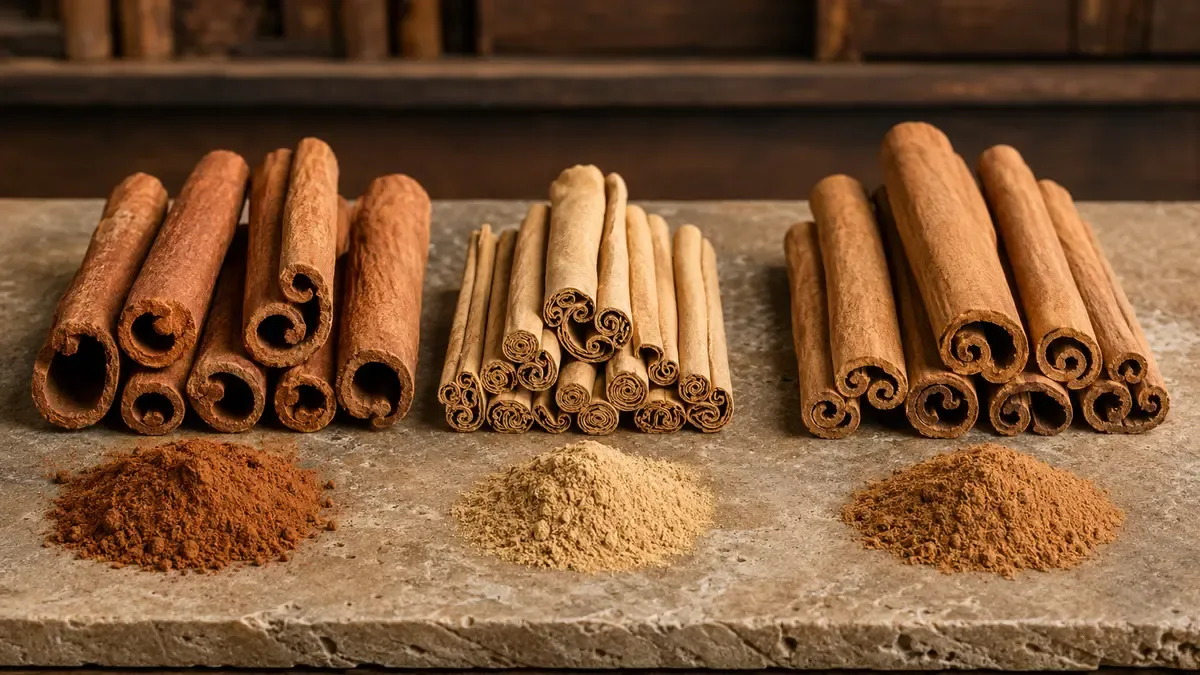
Exported forms include whole sticks (quills), split bark, broken pieces, ground powder, and distilled essential oil. Higher grades favor uniform, clean sticks with strong aroma, while broken and split grades suit extraction or bulk blending; saigon Vietnamese cinnamon powder is chosen when fast release or homogeneous dosing is needed. Marketers often claim oil-content tiers (for example, "4-5% oil" or "5% oil") that influence price and end use. Bulk packaging typically uses lined 10-20 kg cartons with inner poly or foil bags; retail-ready OEM/ODM formats range from jars to pouches. In practical terms, choose quills when appearance counts (spiced syrups, mulling), powder for doughs and rubs, and broken/split for infusions or industrial milling. MOQs vary by form and packaging, with lower starts often available for private-label trials.
6. Vietnam cinnamon price: what determines cost and typical ranges
Vietnam cinnamon price is driven by essential oil and cinnamaldehyde levels, grade (uniform sticks command more than broken or powder), harvest year and seasonality, supply-demand shifts, certifications (ISO 22000, HACCP, BRC FOOD, FDA registration, HALAL), and logistics (FOB vs CNF/CIF, freight, currency). Because weather and global demand can swing availability and costs, treat any per-kg figure as indicative only; request a current FOB Hai Phong quote with specification and packaging details. Vietnamese cassia often commands a premium over Indonesian and Chinese cassia thanks to its higher oil, richer sweetness, and intensity that can reduce recipe usage rates. For reliable comparisons, ask sellers to pair prices with current lab results for essential oil and a physical grade description, and request a representative pre-shipment sample.
7. Food safety, coumarin and recommended limits
Vietnamese cassia naturally carries more coumarin than Ceylon cinnamon, so most people should keep ground cinnamon to modest daily amounts, such as about 1 teaspoon (2.5 g) per day as a practical example. Those who are pregnant, have liver disease, or use blood thinners should speak with a healthcare professional before frequent use, and manufacturers should test coumarin by lot, label appropriately, and consider Ceylon for high-consumption products. For regular home cooking, that means treating Saigon cassia like a potent flavor: enjoy it in dishes and drinks, but avoid turning it into a daily supplement. For a consumer-level discussion of coumarin and usage considerations, see Healthline's overview of cassia vs Ceylon and coumarin caution. Healthline discussion of coumarin in cassia vs Ceylon.
8. Comparing Vietnamese cassia to other cinnamons (Ceylon, Indonesian cassia)
Vietnamese cassia is the boldest: higher oil, sweeter nose, and hotter finish; Indonesian cassia is milder and woodier; Ceylon cinnamon (Cinnamomum verum) is delicate, citrus-tea-like, and very low in coumarin. Choose Vietnamese for robust flavor in baking, masalas, and marinades; pick Ceylon when low coumarin or a gentle, layered aroma is the priority. Prices generally reflect this intensity and oil content. If you're balancing cost, potency, and coumarin, many buyers keep both: Saigon cassia for impact, Ceylon for lighter, daily sips and sweets.
>>>See more on: Cinnamon types: which to buy — Ceylon, cassia, Saigon, Korintje
9. How chefs and bakers use Saigon cinnamon (culinary tips)
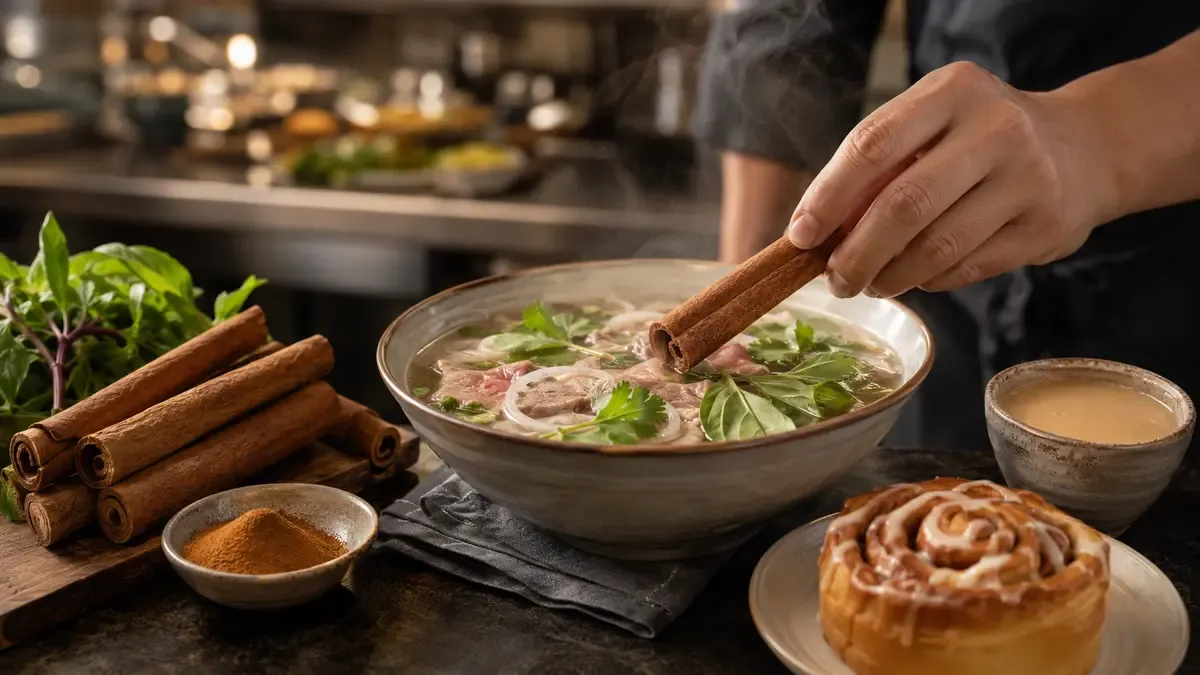
Because Saigon cassia is potent, many pros reduce the recipe quantity by about one-third versus milder cinnamon. Use sticks for broths (pho), mulled drinks, or slow simmers; use powder in quick doughs, rubs, and spice blends. Bloom powder in hot fat or liquid to unlock oils. It thrives where fat and sugar might otherwise mute spice, think laminated doughs, sticky buns, Mexican chocolate, biryanis, and robust braises. For aromatics without grit, simmer quills whole and strain; for speed, grind fresh right before mixing to catch the brightest top notes. Quick ideas: whisk Vietnamese cassia into chai masala and fold into cinnamon-roll filling, or simmer sticks with star anise and ginger for a pho-style broth base.
10. Buying Vietnamese cinnamon: suppliers, certifications and importing tips
Serious buyers should confirm origin (province), species (Cinnamomum loureiroi), current essential oil/cinnamaldehyde lab results, and coumarin testing, then review export documents and certifications (ISO 22000, HACCP, BRC FOOD, FDA registration, HALAL). Clarify trade terms (FOB, CNF/CIF), packaging (lined 10-20 kg cartons), payment (L/C, T/T), and lead times; request pre-shipment samples and COAs tied to lot numbers for traceability. Align specs with end use, uniform quills for retail jars, broken/split for extraction, powder for blends, and lock them into contracts and artwork to avoid substitution. As a certified Vietnamese spice processor, TMICORP provides OEM/ODM private-label options with low MOQ alongside batch-level documentation, which helps streamline US/EU compliance without surprises at the port.
11. Storage and shelf life
Store cinnamon cool, dry, and airtight away from light; whole sticks keep peak flavor longer than powder. Expect ground cinnamon to show best aroma for about 6-12 months and sticks for roughly 1-2 years under good storage, though safe use can extend beyond if aroma remains fresh. Discard if the aroma turns flat or musty, oiliness disappears, or any rancid note develops; re-grind a small amount to test bloom before large-scale use. Keep containers sealed between uses and away from heat and humidity.
12. Sustainability and socio-economic impact of Vietnam's cinnamon industry
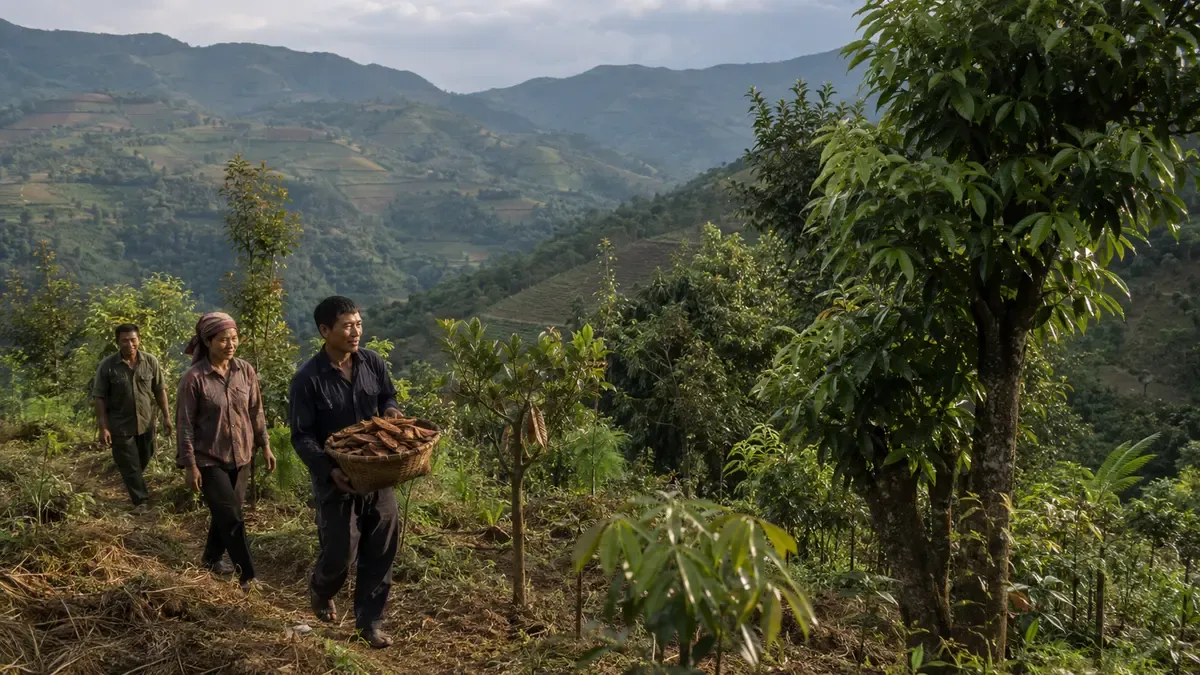
Cinnamon supports rural livelihoods across upland Vietnam, where smallholders plant, harvest, and replant groves that feed a growing export industry uplifting highland communities. Risks include monoculture pressure, soil depletion, and uneven benefits; buyers can encourage better outcomes by asking for traceability to farm groups, replanting programs, and community development commitments. Many processors now report on sustainability practices as part of long-term sourcing partnerships. Agroforestry approaches, mixing cinnamon with shade trees and crops, can help stabilize soils and income, and buyers who prefer such lots signal demand for better land stewardship.
13. Frequently asked questions
Is cinnamon from Vietnam good?
Yes, Saigon/Vietnamese cassia is considered excellent when you want bold flavor, thanks to its high essential oil percentage and sweet-hot profile. "Good" here means strong aroma, persistent sweetness, and enough heat to shine through sugar and fat in baking. The trade-off is higher coumarin than Ceylon, so moderate everyday use is wise.
Is cinnamon from Vietnam safe to eat daily?
Typical culinary amounts are fine, but keep portions modest because cassia carries more coumarin than Ceylon; a practical example limit is about 1 teaspoon (2.5 g) of ground cinnamon per day. People who are pregnant, have liver issues, or take blood thinners should consult a clinician, and brands should test and label coumarin per lot.
How can I tell Saigon (Vietnamese) cinnamon from Ceylon or Indonesian cassia?
Vietnamese cassia tends to be darker with thicker, rougher bark and a stronger, sweeter-hot aroma; Ceylon has thin, layered "cigar-style" quills and a lighter, tea-like scent; Indonesian cassia is milder and more woodsy. For certainty, labs can profile GC results for cinnamaldehyde and coumarin to distinguish species and quality.
What affects Vietnam cinnamon price and where can I get a current quote?
Oil content, grade (sticks vs split/broken/powder), season, certifications, freight terms, and currency drive cinnamon price in Vietnam. Ask exporters for a current FOB Hai Phong quote with COA and a representative sample; typical bulk packs are lined 10-20 kg cartons, with L/C or T/T commonly accepted.
Can I source small quantities or OEM/ODM from Vietnamese suppliers?
Many Vietnamese processors offer OEM/ODM and accept low MOQ for pilot runs or private-label launches. Confirm factory certifications, lead times, artwork and labeling options, and sample policies, and request lot-linked COAs and traceability documents before placing your first order.

Related Articles
Canned Pineapple Benefits: Health, Nutrition & Risks
WHAT IS CANNED PINEAPPLE?
3 Easy and Delicious Dishes You Can Make with Canned Pineapple
Discover 8 of the Best Bubble Tea Flavors Around the World!