
How to Tell When a Pineapple Is Ripe
By TMICORP Editorial Team | Last updated: 2026-08-07
1. Quick answer: how do you know a pineapple is ripe?
A pineapple is ripe when the base smells sweet and tropical, the flesh gives slightly to a gentle squeeze, and the fruit feels heavy for its size. In the store, sniff the bottom for a fruity aroma (no smell often means underripe; a fermented/alcoholic whiff means overripe), press the sides for a slight give (not rock-hard or mushy), and compare weight between similar fruits to favor the heavier one. Then confirm with visual cues: golden-yellow tones starting at the base help but aren't definitive; choose fruit with flatter, more rounded "eyes" on the skin and a fresh, mostly green crown. If you tug a leaf, treat it only as a quick clue, not proof of ripeness.
2. Five simple tests to check a pineapple's ripeness
The five practical tests you can do right in the aisle are smell, feel, weight, color, and a look at the eyes and crown. They work best as a set: aroma and a slight give are the strongest signals, weight helps you pick a juicier fruit, and the eye shape, crown condition, and base color can confirm what your nose and thumb already told you. If the tests disagree, trust scent and feel over color; run them in that order for the fastest, most reliable read.
-
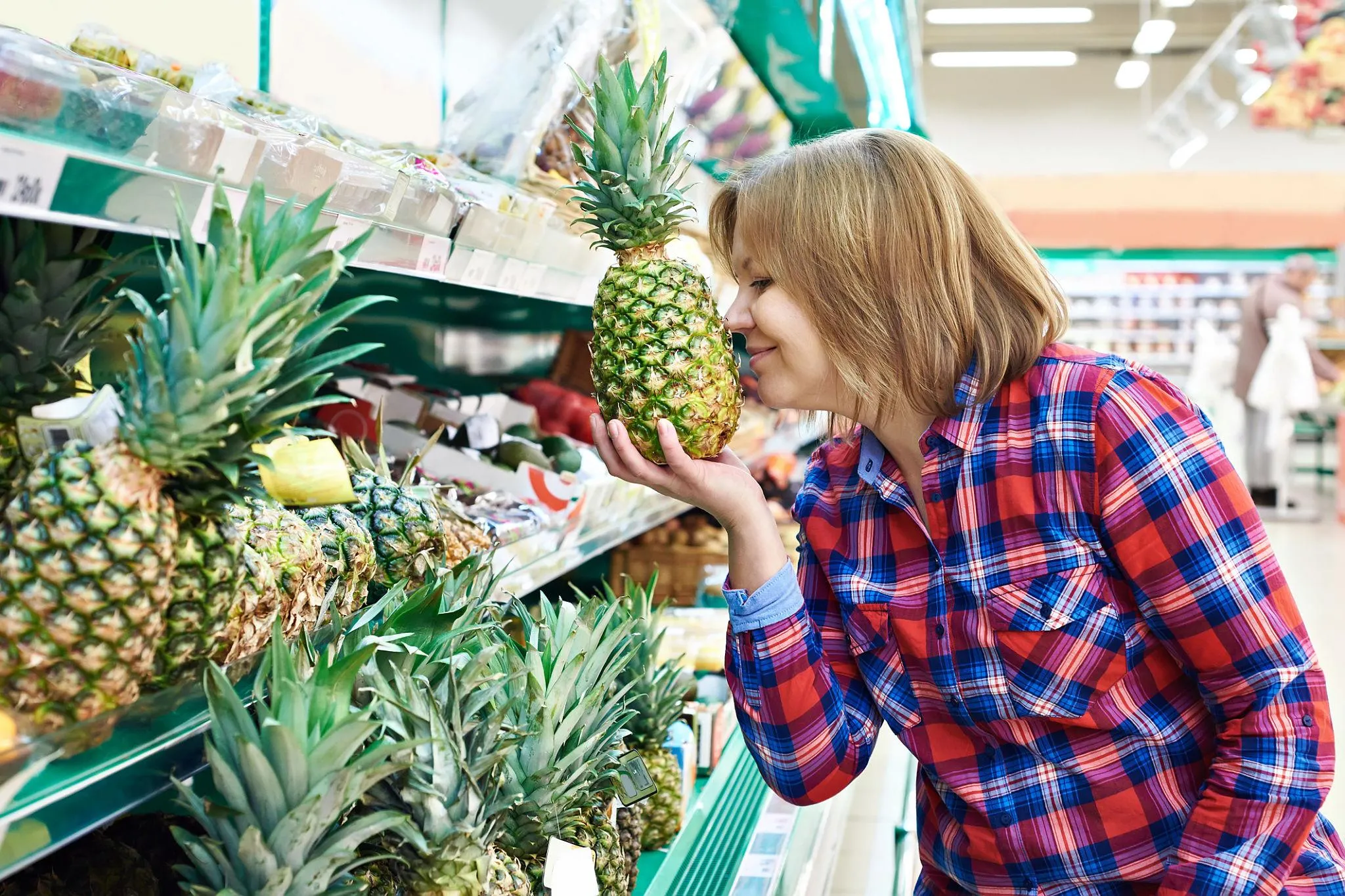
Smell the base (the sniff test)
A ripe pineapple smells fruity, sweet, and distinctly tropical at the base, while no smell suggests underripe fruit and a vinegary or alcoholic scent signals overripeness. Bring the stem end close and take a quick, clean sniff; ripe pineapples often have a noticeable but not overpowering perfume. If you get a sharp, boozy, or sour note, fermentation has begun and the texture and flavor will skew off. Aroma strength is an excellent single indicator because sugars and volatiles concentrate first at the bottom, so the base tells the truth even when the skin still shows some green. Cold fruit can smell muted in refrigerated cases, so let it warm in your hand for a moment before judging.
-
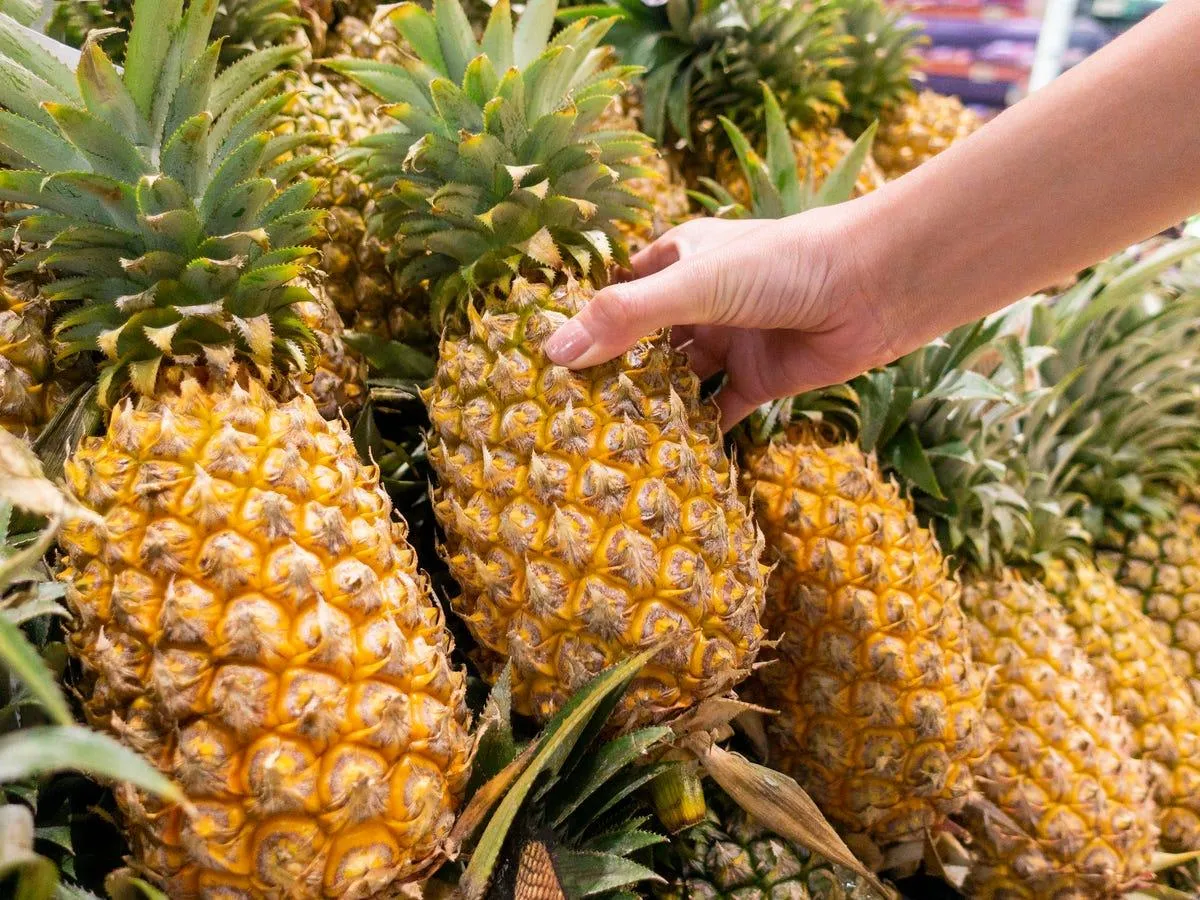
Feel it (the squeeze test)
A ripe pineapple yields just a little to a gentle thumb press yet stays mostly firm, while rock-hard fruit is underripe and very soft or mushy spots point to overripeness. "Slight give" means the surface cushions under light, even pressure without collapsing or leaving an indentation. This texture sweet spot matters: firm-ripe fruit is juicy and pleasant to bite for fresh eating, whereas underripe can taste woody and sour. If you plan to grill or bake, you can choose one that's a touch firmer so it holds its shape under heat. Press the sides rather than the eyes to avoid bruising the surface.
-
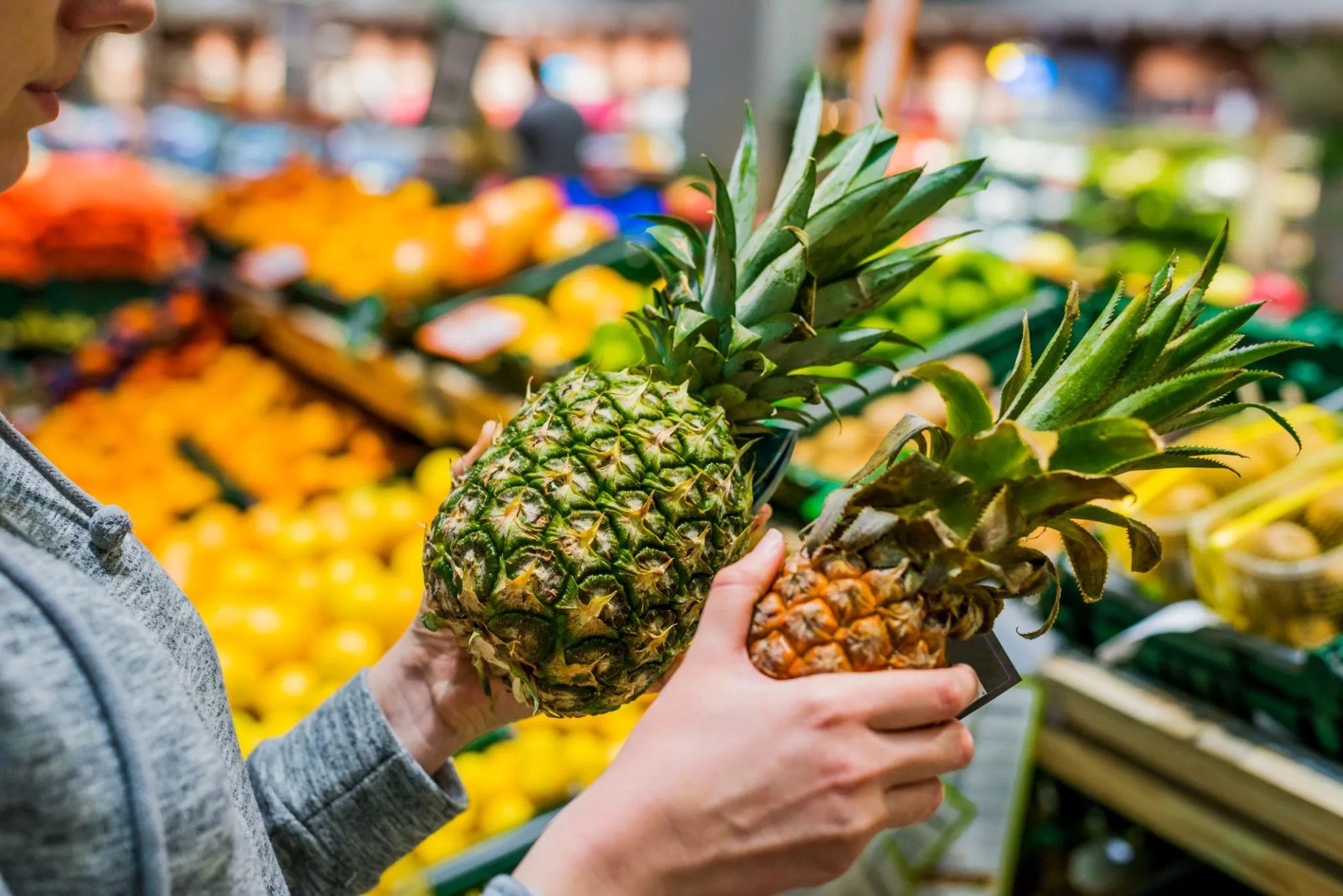
Check its heft (weight test)
"Heavy for its size" usually means more juice and better perceived sweetness. Pick up two similar-looking pineapples and choose the one that feels denser in your hand; that extra heft is a quick proxy for juiciness and ripeness. This test won't rescue an obviously underripe fruit, but it's a great tiebreaker when aroma and feel are close. Keep in mind that sweetness is a balance of sugar and acidity, more juice will taste better only if the scent and slight give also line up.
-
Look at the color (but don't rely only on it)
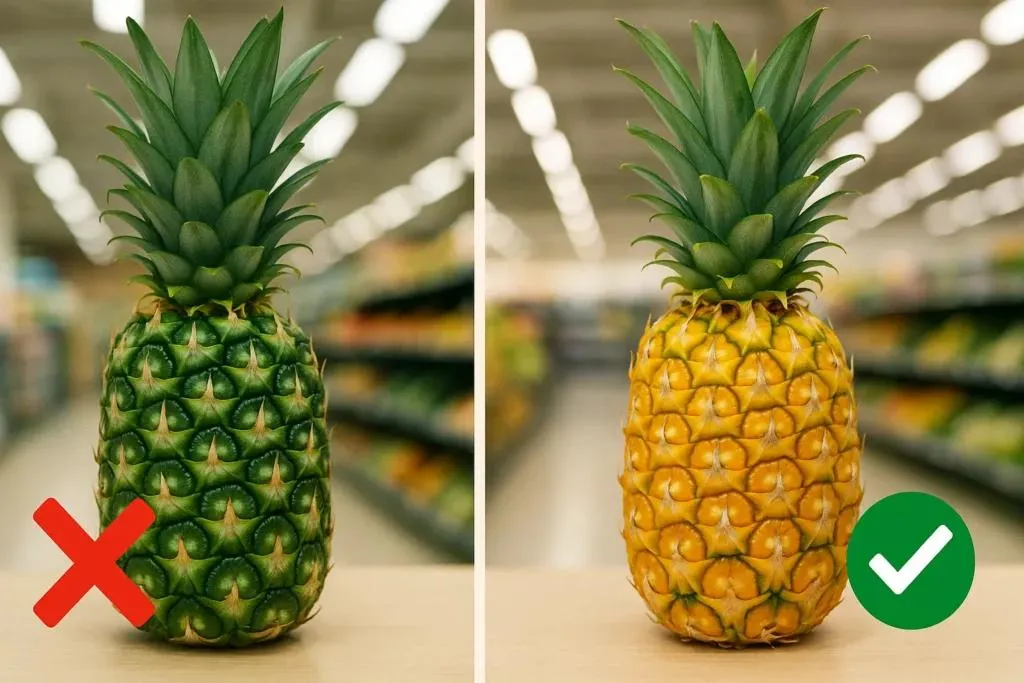
Golden-yellow tones starting at the base often indicate ripeness, but some ripe varieties stay partly green, so color alone can mislead. Check the bottom first, color typically progresses from the base upward, and use color as a secondary check alongside smell and feel. Be cautious with fruit that's dark orange or uniformly deep yellow with soft spots or shriveling; that can indicate overripeness and potential off-flavors. Sun-exposed sides can color faster than shaded ones, so read the whole fruit, not just a single patch.
-
Inspect the eyes and the crown (the "eyes" rule and leaf test)
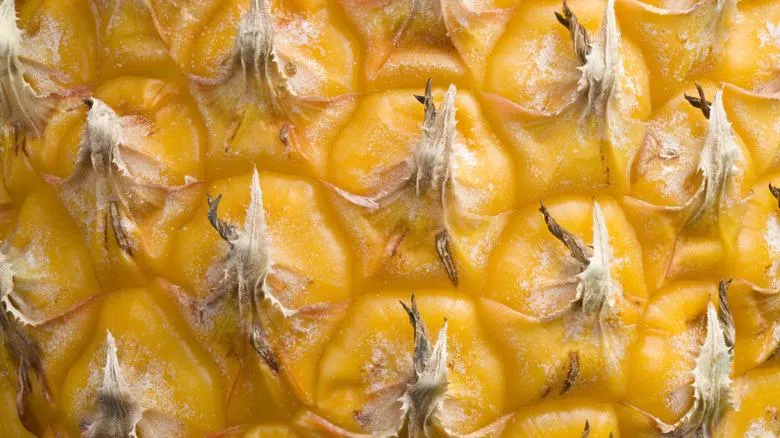
Flatter, more rounded "eyes" (the diamond-shaped scales) generally signal riper fruit, while sharp, protruding eyes suggest immaturity. Scan for a consistent pattern of flatter eyes, especially near the base, and avoid fruit with sunken, dark, or moldy eyes. For the crown, look for leaves that appear fresh and mostly green, not dry, crushed, or brown at the tips. Some shoppers test ripeness by pulling a crown leaf; while a leaf that slides out can align with ripeness, it's not reliable on its own because handling and storage affect leaf looseness, use it only as a minor clue alongside the sniff and squeeze tests. A fresh, intact crown also hints at gentler handling, which helps preserve texture.
3. Why a pineapple won't get much sweeter after being picked
Pineapples do not significantly increase in sugar after harvest, so the sweetness you buy is essentially the sweetness you'll eat. Unlike climacteric fruits, pineapples have limited post-harvest sugar accumulation; they can soften and their aromas can evolve a little, but Brix (sugar percentage) stays largely stable. That's why growers target harvest at peak sweetness, using refractometers to measure Brix in field samples and visual grading (including the curvature of the "eyes") to confirm maturity. Major producers and brand guides from growers and food outlets alike commonly note this harvest-first reality, so color changes you see at home don't mean real sugar gains. One more nuance helps shoppers: pineapples concentrate sugars from the bottom up, which is why the base smells sweeter first, and why the bottom color is a better cue than the top. In practical terms, choose carefully at purchase, what you select is what you'll taste.
4. Can you ripen or soften an underripe pineapple at home?
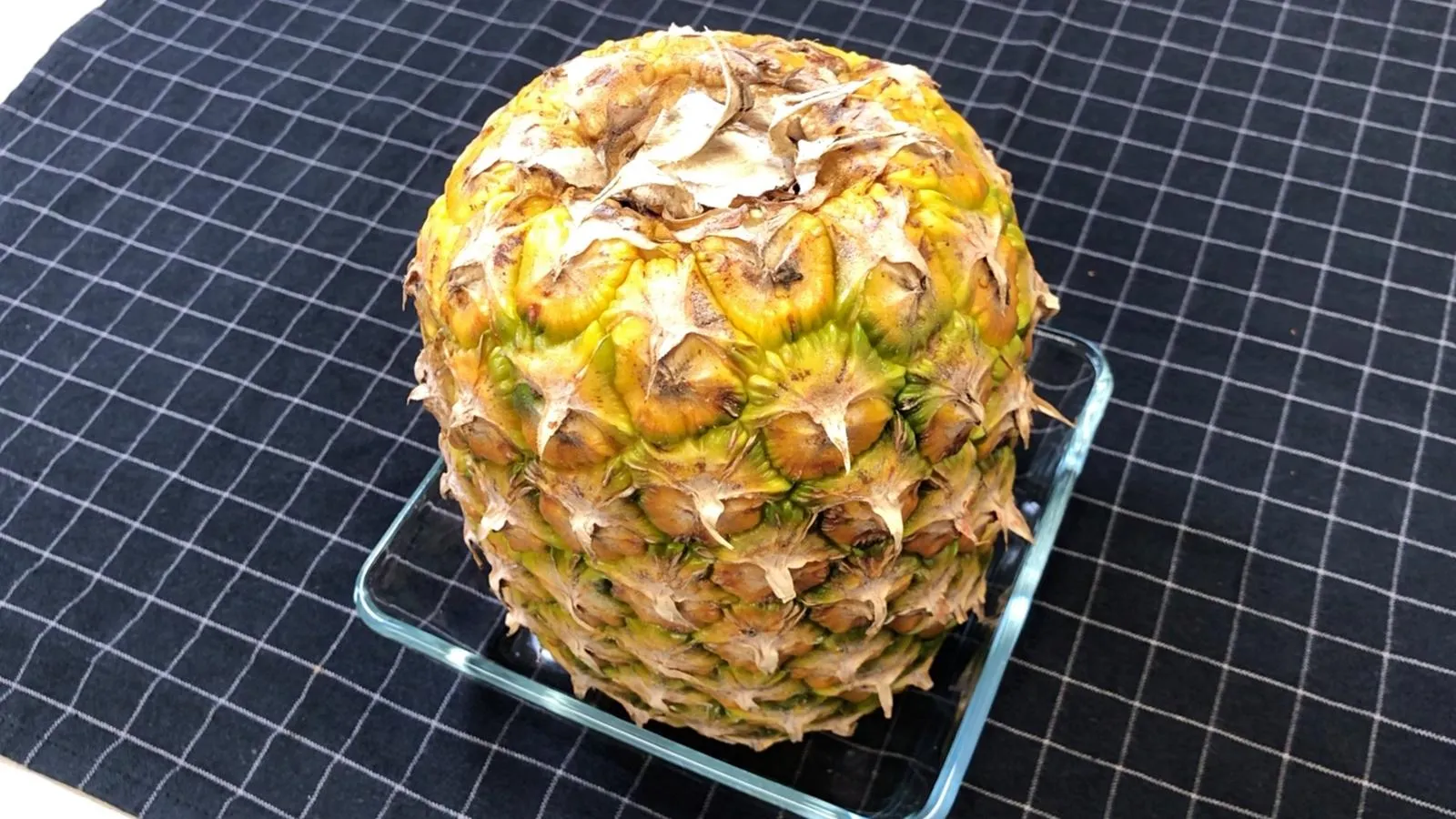
You can soften an underripe pineapple in 1-3 days at room temperature or by storing it upside down, but you should not expect a meaningful increase in sweetness. To encourage softening, keep the fruit at room temperature with good airflow and check daily; placing it near ethylene-producing fruit like bananas or apples can speed softening, though pineapple's sugars won't rise much after harvest. Setting the pineapple upside down (crown down) for a day or two may help redistribute juices from the sweeter base through the flesh. Once it yields slightly and smells pleasant at the base, move it to the fridge to slow decline. Don't wait too long, softening can tip into overripeness quickly, bringing fermented off-odors and leaks.
5. Signs a pineapple is overripe or spoiled
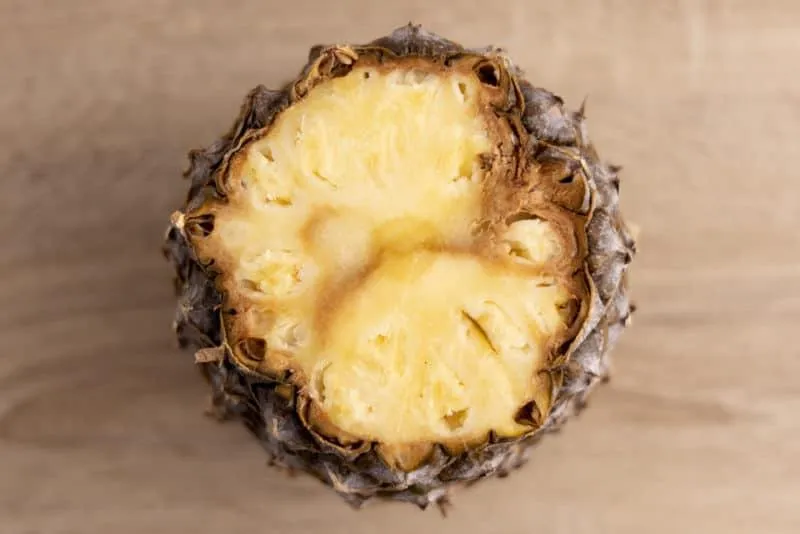
Telltale signs include a strong fermented or alcoholic smell, very soft or collapsing areas, leaking juice, visible mold (especially in the eyes or around the base), dark or wet-looking spots, and an off taste. If the surface gives slightly but smells clean and sweet, it's likely still fine for fresh eating or cooking. If you detect sour, vinegary notes, widespread mushiness, or active molding, it's safest to discard. Pineapple can go from peak to past-prime fast at warm room temperatures, so rely on your nose and fingertips before cutting, and refrigerate promptly once it smells ripe.
6. Buying and storing tips
The best strategy is to combine the sniff test, a slight give, and heavy-for-size feel at purchase, then store to match your timeline. In the store, avoid fruit with bruises, soft wet spots, or dried-out crowns; consider the "eyes" rule and base color only as supporting cues. At home, a whole ripe pineapple keeps best for a couple of days at room temperature or about 3-5 days in the refrigerator; chilling slows quality loss but can blunt aroma. For even juice distribution, rest whole fruit on its side and rotate it daily. Once cut, store pieces in an airtight container in the fridge and use within 3-4 days, checking aroma and texture before serving. If you bought a slightly underripe pineapple, let it soften on the counter (1-3 days), then refrigerate to hold the sweet spot. Rinse the exterior just before cutting to keep debris from transferring to the flesh, and don't wash ahead of time, which can invite mold in the eyes and base. For retailers and foodservice buyers, basic cold-chain handling after harvest helps preserve texture and aroma on arrival.
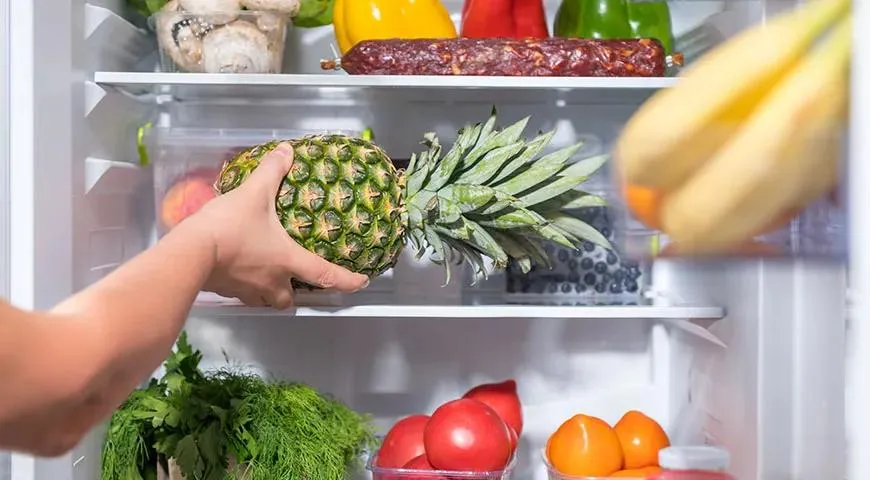
Note: As a certified ISO 22000, HACCP, BRC, FDA-registered producer, TMICORP's supply-side perspective aligns with these tips, field Brix checks with a refractometer, visual grading for eye curvature and color, careful packing to minimize bruising, and cold-chain logistics all help ensure pineapples chosen for fresh retail reach you at optimal eating quality.
7. Choosing a pineapple for different uses
For fresh eating and juicing, pick the most aromatic fruit that feels heavy for its size and yields slightly, since juiciness and fragrance shine raw. For grilling, roasting, or baking, a firmer pineapple (still aromatic but with less give) will hold its structure on skewers and in rings without turning mushy. Producers often grade fruit by maturity and Brix at harvest, lots with firmer texture and consistent acidity may be directed to canning, freezing, or drying, so your retail choice is mainly about matching desired sweetness and texture to how you'll use it. For salsas or chutneys, that slightly firmer fruit also dices cleanly; for smoothies, a very fragrant, softer one blends to a fuller tropical flavor.
Once you've chosen the right pineapple for your intended use, follow our guide on How to Cut Pineapple to peel, core, and slice it safely for any recipe
8. Frequently asked questions (FAQ)
Here are quick, practical answers to the ripeness questions shoppers ask most.
-
How long do pineapples take to ripen on the plant?
Most pineapples take roughly 12-18 months from planting to develop a mature, harvest-ready fruit, depending on variety and climate. Home growers should watch for flatter eyes, a sweet aroma at the base, and color shift starting from the bottom as harvest cues.
-
Can I make an underripe pineapple sweeter at home?
No, while you can soften it at room temperature or near ethylene producers like bananas or apples, the sugar level (Brix) won't rise meaningfully after harvest. Let it sit 1-3 days until it shows a slight give and a sweet base aroma, then chill to hold quality.
-
Does green skin always mean a pineapple is unripe?
No, some ripe pineapples remain partly green, especially near the crown. Use the base aroma, a gentle squeeze for slight give, the "eyes" rule (flatter eyes), and base color together rather than relying on overall skin color alone.
-
How long will a ripe pineapple keep in the fridge?
A whole ripe pineapple typically keeps 3-5 days refrigerated, while cut pieces should be sealed airtight and used within 3-4 days. Always check aroma and texture before eating, and return leftovers to the fridge promptly.
Credibility note: TMICORP exports processed fruits globally under brands like TMI Foods, Ecovita, Sunrich, and SunVitD, and uses routine Brix testing, grading, and traceability systems consistent with its ISO 22000, HACCP, BRC FOOD, and FDA registrations. These practices mirror the harvest and handling points described above to help fruit reach consumers at optimal eating quality.


Related Articles
Canned Pineapple Benefits: Health, Nutrition & Risks
WHAT IS CANNED PINEAPPLE?
3 Easy and Delicious Dishes You Can Make with Canned Pineapple
Discover 8 of the Best Bubble Tea Flavors Around the World!