
Star anise: Pods, powder or the toxic look‑alike
By TMICORP Editorial Team | Last updated: 2026-09-07
This article is for general information only and is not medical advice. Talk to a qualified healthcare professional about your own situation.
What star anise is, names and a quick answer
Whole star anise pods (Illicium verum) are the culinary species and the form to cook with. Ground star anise powder is convenient but fades faster once opened. Japanese star anise (Illicium anisatum) is toxic and not for food. This guide covers three product types.
Quick comparison (table you can scan)
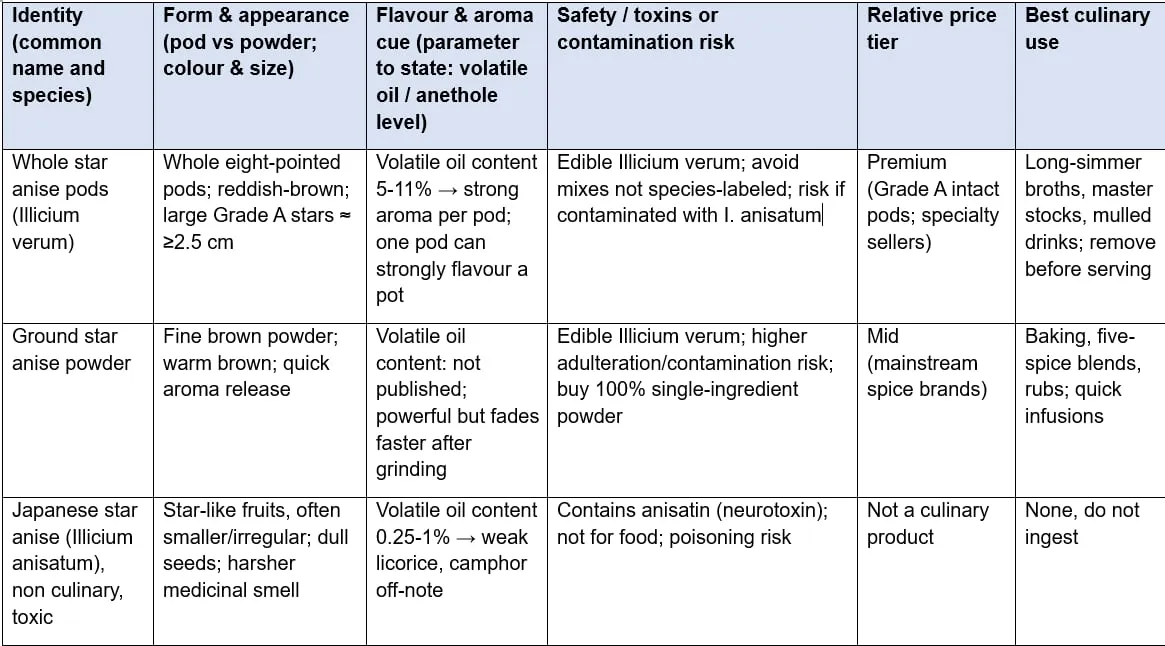
Batch-to-batch numbers vary with harvest and grade. Aroma strength tracks with volatile-oil content; grinding accelerates loss.
How to recognise each option (visual guide)
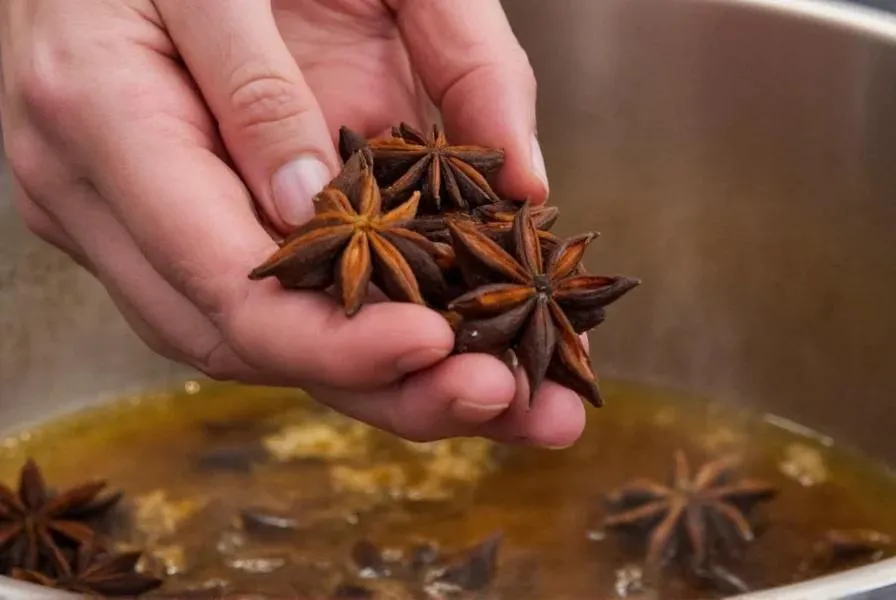
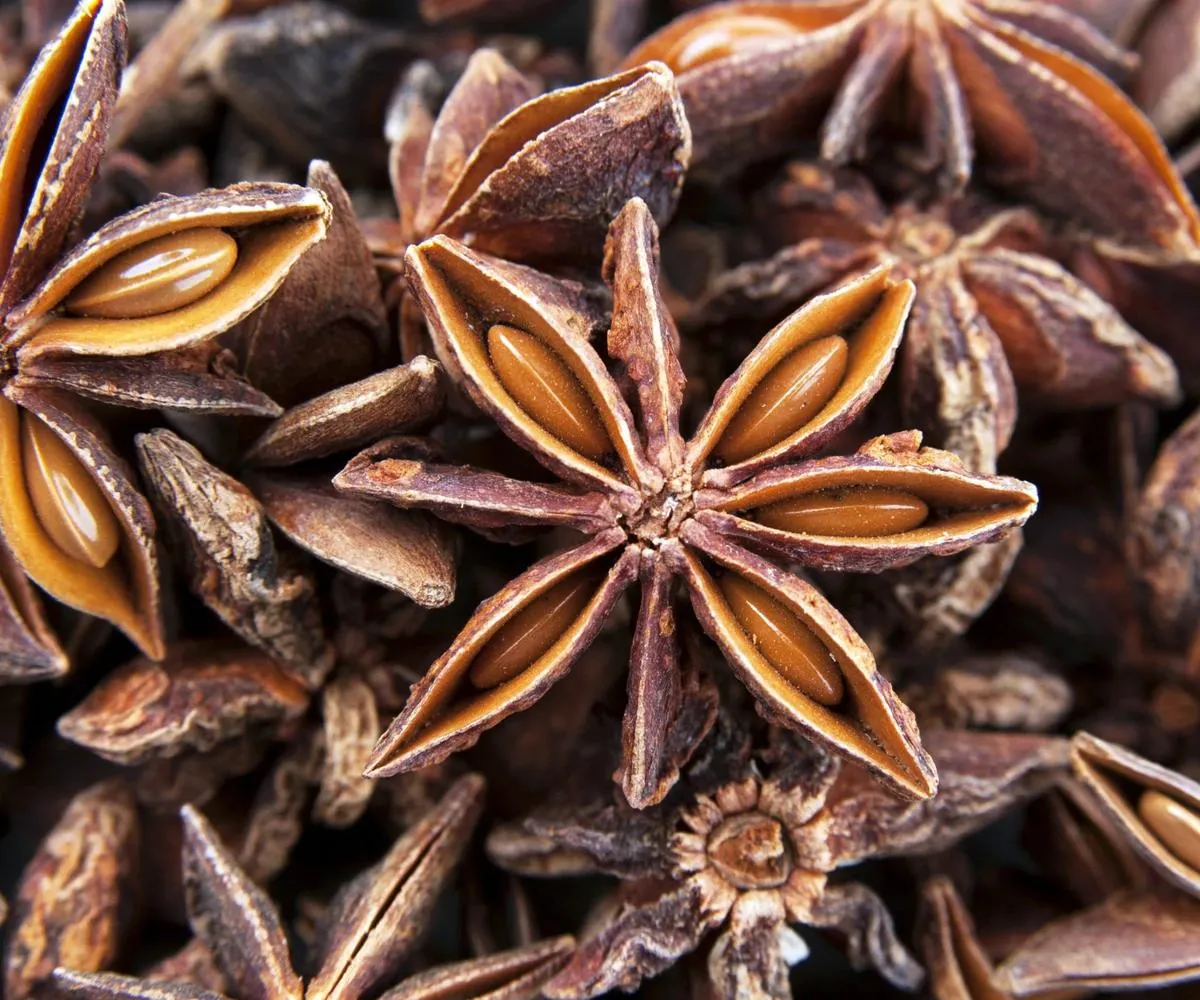
- Whole star anise pods (Illicium verum), also called Chinese star anise or badian. The pods are eight-pointed with a hard, woody shell, and the seeds look smooth and glassy. Color runs reddish-brown, and higher grades are large (about 2.5 cm and up) with evenly formed points. The smell reads as warm, sweet licorice with a clean, spicy edge. Regular points and glossy seeds are your visual green light, and the aroma should be sweet, not chemical or camphor-like.
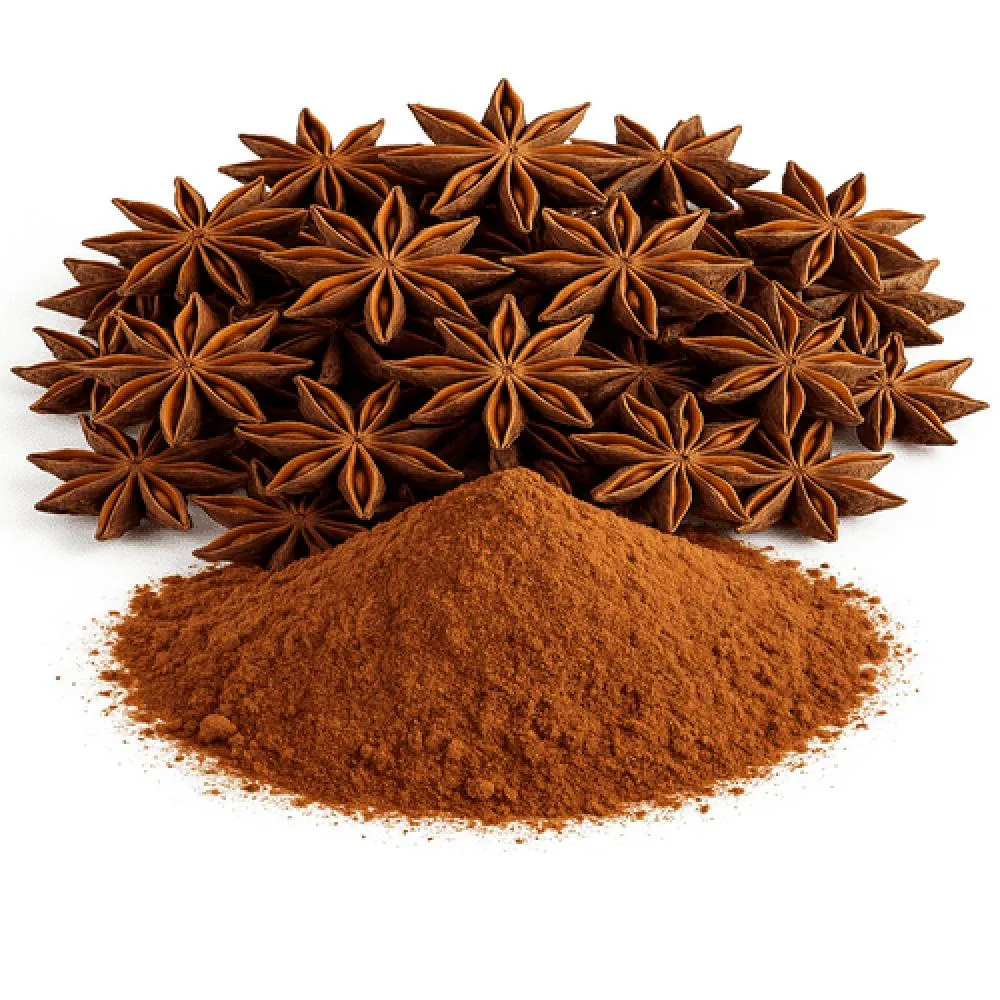
- Ground star anise powder. A fine, dry, free-flowing brown powder that hits you with licorice right when you open the jar. That burst fades faster after opening, so buy amounts you'll use up.
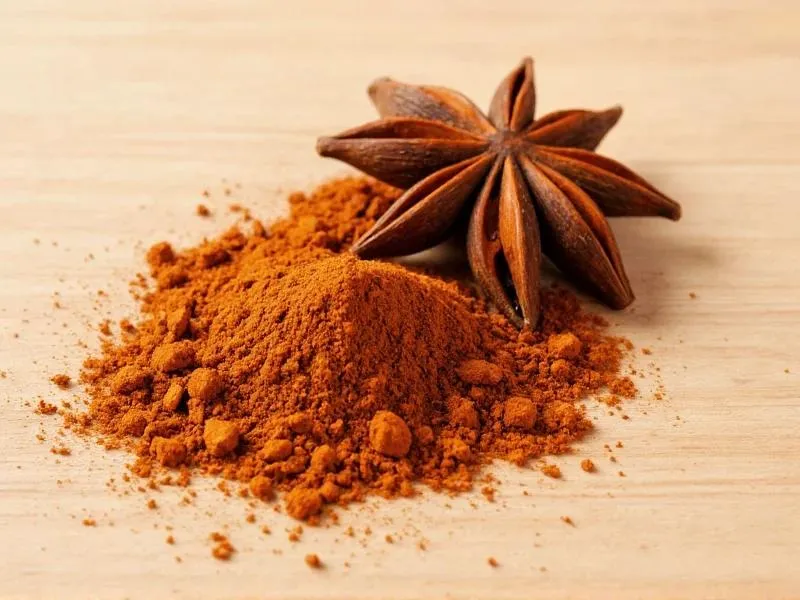
Caption: Ground star anise powder, fine brown spice with instant licorice aroma.
- Japanese star anise (Illicium anisatum), non culinary, toxic. The "stars" are often smaller with uneven points, the seeds look dull or matte, and the smell skews medicinal or camphor-like rather than sweet. Those are red flags: don't cook with it.
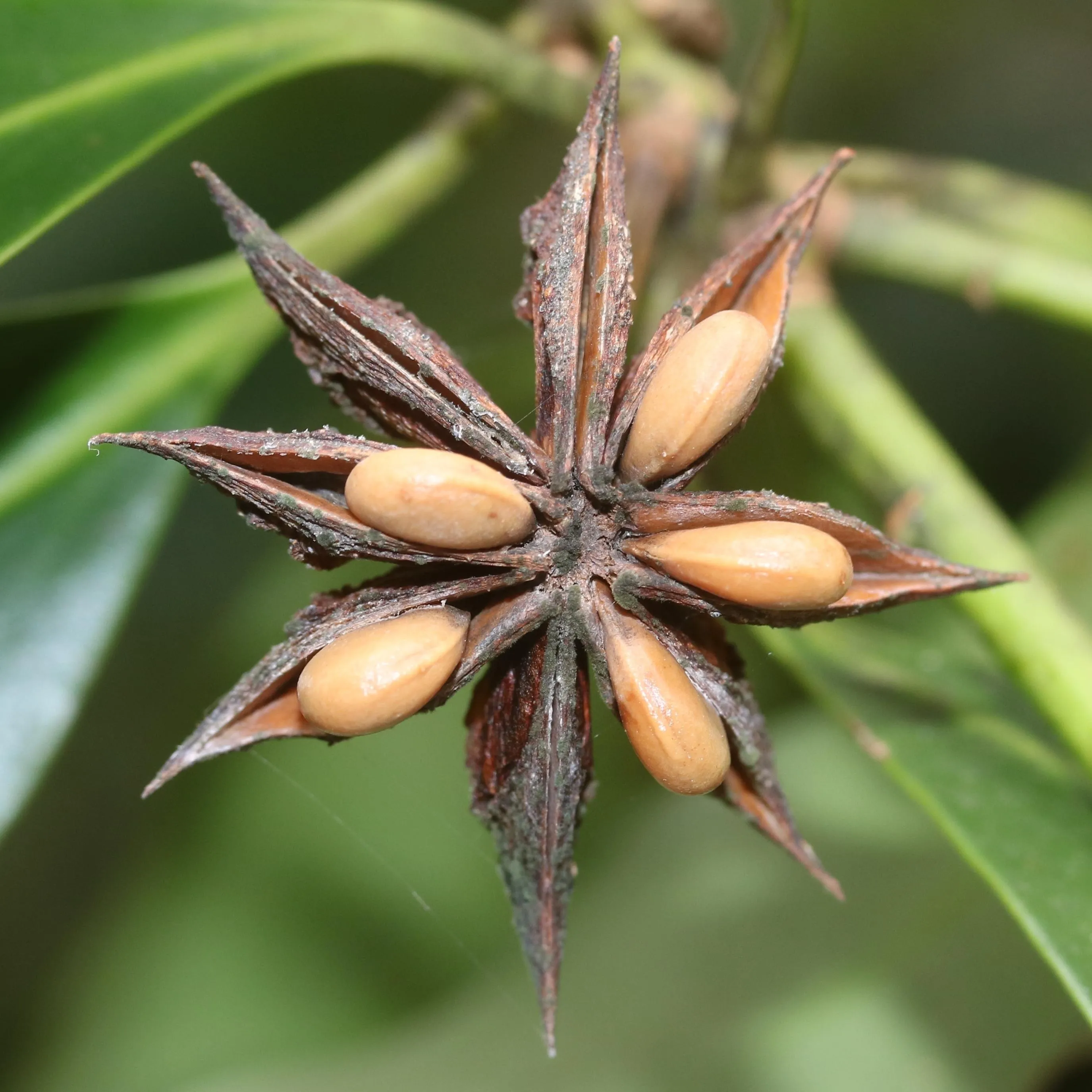
Caption: Japanese star anise (Illicium anisatum), irregular points, dull seeds, medicinal smell; not for food.
Smell for clean anethole licorice. Off-notes like camphor or solvent suggest I. anisatum or contamination, don't use.
Whole vs ground: forms, packing and shelf life
Whole pods hold aroma better because the volatile oil in the woody shell stays protected until you crack or simmer them. Culinary Illicium verum typically carries about 5-11% volatile oil by dry weight, the driver of that licorice-sweet aroma. Commercial dried pods tend to sit around 12-14% moisture, dry enough to keep, not so brittle they've shed all their scent. Properly stored whole pods keep good flavor for about 2-3 years before fading.
Ground star anise delivers fast flavor because the surface area is huge, but those same aromatics escape quickly once the jar is opened. Expect roughly 3-6 months of peak intensity after opening.
What that means on your shelf:
- Whole pods work best for occasional use and clean extractions in liquid. Drop one into a pot, let it infuse, then lift it out.
- Ground powder shines in baking and blends. You get instant, even distribution, just plan to replace it more often.
Packs to prefer:
- Airtight glass jars or opaque, resealable pouches.
- Labels that state Illicium verum and, for whole pods, an intact, hand-sorted grade.
- Dry, clean packs that don't smell medicinal.
For background on uses and aroma chemistry, see the overview of star anise in food and beverages (ScienceDirect Topics).
Cooking with star anise: how to use pods or powder
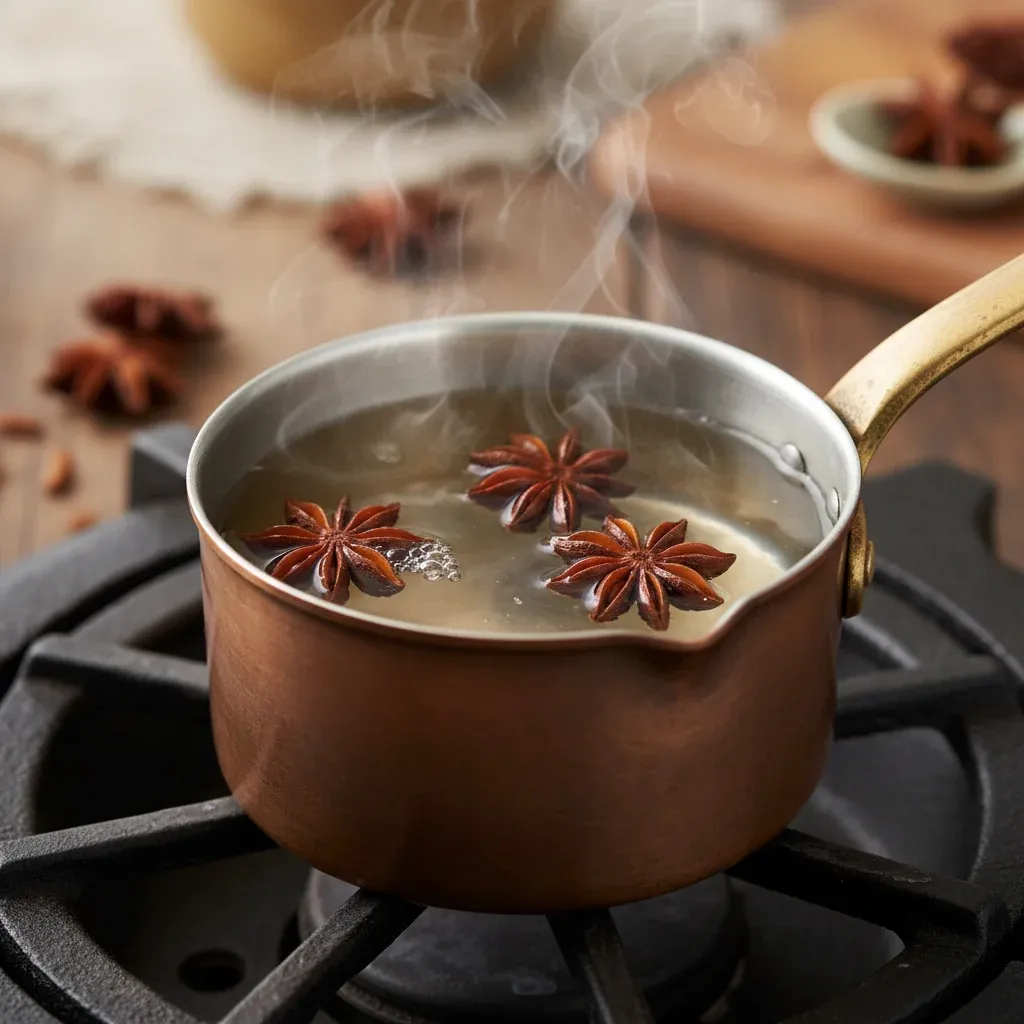
Use whole pods for long-simmer broths, stews, master stocks and mulled drinks. Let them infuse, then remove for a clean finish. Use ground powder in baking, dry rubs and classic five-spice blends where you want even distribution and quick release.
A practical start: one whole medium pod is roughly equal to 1/4 to 1/2 teaspoon ground. In broths, add pods early and taste as you go; for delicate dishes, add late or strain to avoid bitterness. With powder, a brief dry toast before blending can deepen flavor. Star anise pairs naturally with cinnamon, clove, fennel, ginger, black cardamom, citrus peel and soy-based braises.
Health: what people expect, evidence and side effects
People often ask what star anise is "good for." It contains aromatic compounds such as anethole and polyphenols, and it's widely used for flavor and fragrance; evidence for specific health benefits in humans is limited or preclinical. A regulatory lab evaluation of a star-anise tincture quantified compounds such as anethole and trace estragole at low percentages, illustrating measured composition in tested preparations (PubMed Central, EFSA FEEDAP).
Side effects at culinary levels can include nausea or upset stomach. Serious neurological symptoms and seizures have been reported when products were contaminated with Japanese star anise; its toxin anisatin is linked to these effects, and infants are especially vulnerable. If you need strict safety (infants, pregnant or breastfeeding people), avoid teas and supplements unless species-verified and stick to small culinary uses, or skip entirely (WebMD).
Safety: edible Illicium verum vs toxic Illicium anisatum
Two similar stars, two very different safety profiles. Edible Chinese star anise (Illicium verum) is a culinary spice dominated by anethole, the licorice note. Japanese star anise (Illicium anisatum) contains anisatin and related compounds that are neurotoxic; poisoning cases have traced to teas or bulk lots adulterated with or mislabeled as I. verum. Confusion can happen in mixed dried lots because the fruits look alike.
Practical protection:
- Read labels and prefer packs that name Illicium verum. Avoid anything labeled Illicium anisatum, "not for food," or "aromatherapy/external use."
- Use your senses. Verum smells sweet-licorice; anisatum skews medicinal/camphor. When in doubt, don't brew or cook with it.
- Skip unlabeled bulk bins if the species isn't clear.
For a toxicology overview of I. anisatum and anisatin, see the pharmacology entry on star anise's toxic look-alike (ScienceDirect).
What to check when buying (shopper's checklist)
- Look for the names Star anise, Chinese star anise or Illicium verum on the label.
- Avoid any mention of Illicium anisatum or wording like "not for food."
- Match the form to your recipe, whole pods vs ground powder.
- Choose 100% star anise or Illicium verum with no fillers.
- Pick intact, airtight, dry packaging with no sign of moisture or mold.
- Open-jar aroma should be warmly licorice; weak scent suggests old stock.
- Choose recent pack/best-before dates, especially for ground.
- Anything labeled aromatherapy or external use isn't for cooking.
- Prefer whole for longer storage and clean extraction in liquids.
- Prefer ground for baking, blends and instant, even flavor.
Troubleshooting: stale spice, unexpected taste, or suspect product
If aroma is faint, replace it, star anise should smell vivid and sweet. If it smells medicinal or camphor-like, return or discard it and don't brew it into tea. To check freshness at home with clearly labeled Illicium verum, snap a pod and smell. If it's still vivid, a tiny taste should read sweet-licorice, not bitter or harsh.
Storage and next steps (what to pick up next time)
Keep whole pods in an airtight container in a cool, dark cupboard; they hold good flavor for about 2-3 years. Store ground star anise in a small, tightly sealed jar and plan to use it within 3-6 months of opening; date the lid when you crack it. Buy whole if you make broths or infusions; buy ground if you bake frequently and turn it over quickly. When in doubt, buy whole Illicium verum pods and grind what you need. Anethole is the dominant aroma molecule in star anise oil, which is why even small amounts season a whole pot.
Frequently asked questions
Is star anise the same as anise seed?
No. Star anise is Illicium verum (a woody fruit), while anise seed is Pimpinella anisum (an herb seed). Both taste of anethole, so they share a licorice note, but star anise is sweeter, warmer and more resinous. You can sometimes swap small amounts in baking, but star anise pods are better for long infusions and broths.
Can I use ground star anise instead of whole pods in pho or broth?
You can, but add it carefully. Ground star anise releases flavor fast and can turn bitter if overdone; start small and taste. Whole pods infuse steadily and are easy to remove for a cleaner finish. Many cooks prefer whole for clear broths and ground for blends and marinades.
How can I tell edible star anise from the toxic Japanese star anise?
Check the label for Illicium verum and smell for a clean licorice note. Edible pods are usually regular, with glossy seeds; Japanese star anise (Illicium anisatum) is often smaller or irregular with dull seeds and a medicinal/camphor smell. If a product is labeled "not for food" or "aromatherapy," don't cook with it.
Are there side effects from eating star anise?
Culinary amounts are generally well tolerated, but some people report nausea or stomach upset. Serious neurological symptoms have been linked to contamination with Japanese star anise, which contains the neurotoxin anisatin; infants are especially vulnerable. If you need strict safety (e.g., pregnancy, breastfeeding, infant teas), avoid non-verified products and consider skipping teas and supplements (WebMD).
How long will star anise keep its flavor once opened?
Whole pods, kept airtight and dark, keep good flavor for about 2-3 years before fading. Ground star anise is best within 3-6 months of opening because volatile oils escape faster from the powder. Buy whole for occasional use, or smaller jars of ground if you bake often.
Credibility note: TMICORP exports processed fruits globally under brands like TMI Foods, Ecovita, Sunrich, and SunVitD, and uses routine Brix testing, grading, and traceability systems consistent with its ISO 22000, HACCP, BRC FOOD, and FDA registrations. These practices mirror the harvest and handling points described above to help fruit reach consumers at optimal eating quality.


Related Articles
Canned Pineapple Benefits: Health, Nutrition & Risks
WHAT IS CANNED PINEAPPLE?
3 Easy and Delicious Dishes You Can Make with Canned Pineapple
Discover 8 of the Best Bubble Tea Flavors Around the World!