
1. Quick answer: is frozen pineapple as healthy as fresh?
2. Does frozen pineapple have bromelain and other enzymes?
3. How freezing changes pineapple: what freezing preserves and what it doesn't
4. Nutrition comparison: frozen vs fresh vs canned (what to expect per serving)
5. Canned pineapple vs frozen: pros, cons and when to choose each
6. Buying and storage tips for highest quality and enzyme retention
7. Taste, texture and best culinary uses for frozen pineapple
8. How to use frozen pineapple for best nutrition and enzyme benefit
9. Environmental, cost and convenience factors
10. Frequently asked questions (FAQs)
11. About TMICORP
Frozen Pineapple vs Fresh: Nutrition, Enzymes & Uses
By TMICORP Editorial Team | Last updated: 2026-08-27
This article is for general informational purposes only and is not medical advice. Consult a qualified healthcare professional for guidance on your individual situation.
Yes, when it's frozen at peak ripeness, frozen pineapple is generally as healthy as fresh and can even beat store-bought "fresh" that has sat for days, because freezing locks in nutrients while time and heat degrade them. The big caveats are that canning and pasteurization reduce some heat-sensitive vitamins and inactivate enzymes, while simple freezing does not.
Yes, freezing does not irreversibly destroy bromelain, so properly handled frozen pineapple still contains enzymes; heat processing (canning, pasteurization, baking) inactivates them. Bromelain is a cold-stable protease, but cutting and long warm storage before freezing can reduce activity, which is why speed to freeze matters.
Whole fruit and IQF chunks both retain enzymes if they've never been heated; freezing simply pauses activity at low temperature. Canned pineapple, by contrast, undergoes a safety heat step that inactivates bromelain and other enzymes. Freshly blended smoothies made from raw or frozen fruit can deliver active enzymes, while commercial juices are commonly pasteurized and won't. When you thaw, keeping the fruit cold preserves more apparent activity than holding it warm.
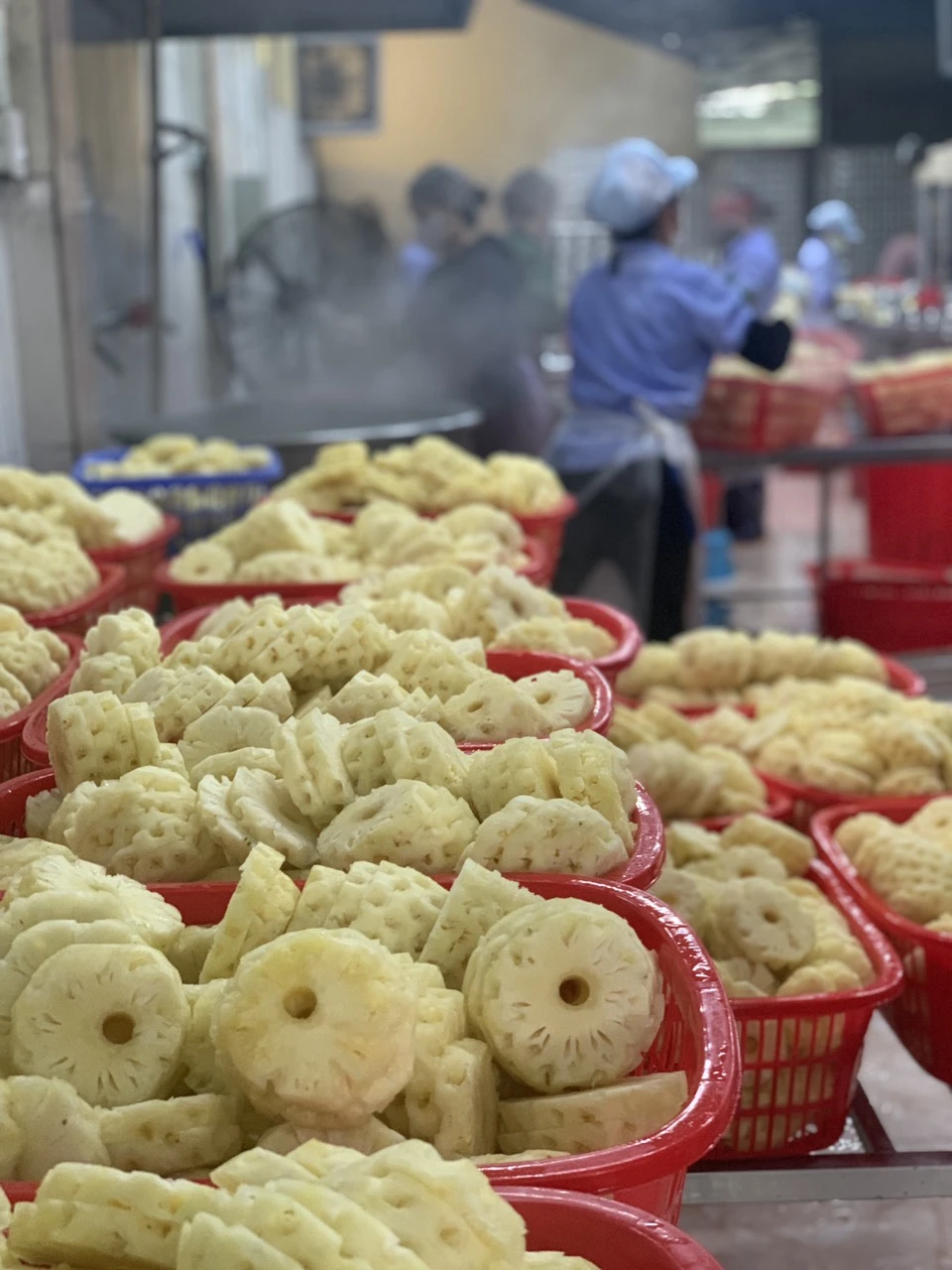
Rapid individual quick freezing (IQF) within about 24 hours of harvest and holding near −18°C preserves most pineapple nutrients and flavor exceptionally well. In commercial practice, fast freezing limits ice-crystal growth, which protects cell structure and keeps juices, aroma, and color closer to fresh.
Fiber, manganese, and most minerals are essentially unaffected by freezing, and natural sugars, your fruit's Brix, are locked in at the ripeness level the fruit had at freeze. Vitamin C (ascorbic acid) is more fragile: much of the loss happens during warm time before freezing, so a pineapple left at room temperature for days can wind up with less vitamin C than fruit that was cut, quickly frozen, and held cold. Over very long frozen storage, some antioxidant activity may drift down slowly, but a steady −18°C slows those changes.
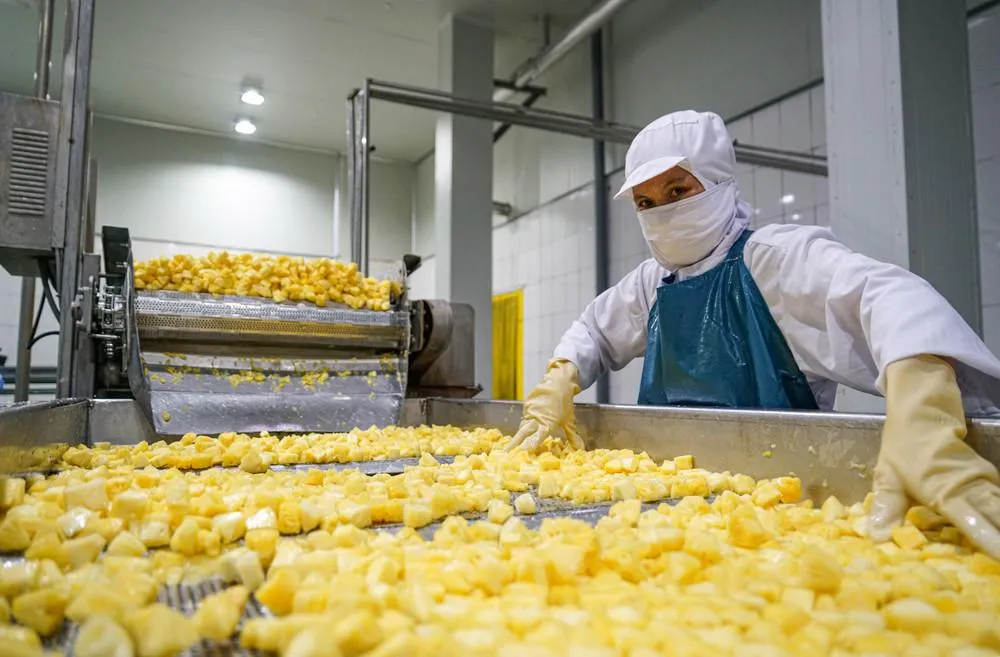
Texture is where you'll notice the trade-off. Ice crystals rupture some cells, so thawed pieces feel softer and can release juice (drip loss). IQF minimizes mushiness compared with slow or block freezing by keeping pieces separate and freezing them fast. From a certified-manufacturer perspective (e.g., ISO 22000, HACCP, BRC FOOD, FDA-registered operations), validated cold-chain programs target rapid harvest-to-freeze and continuous monitoring at roughly −18°C to safeguard quality.
Per 1 cup (about 150 g), fresh and frozen pineapple are nutritionally similar for calories, manganese, fiber, and natural sugars, while canned typically delivers less vitamin C and no active enzymes, and versions packed in syrup add extra sugar. Fresh-frozen fruit often retains more vitamin C than "fresh" pineapples that spend several days in transit or on shelves, because freezing halts further losses.
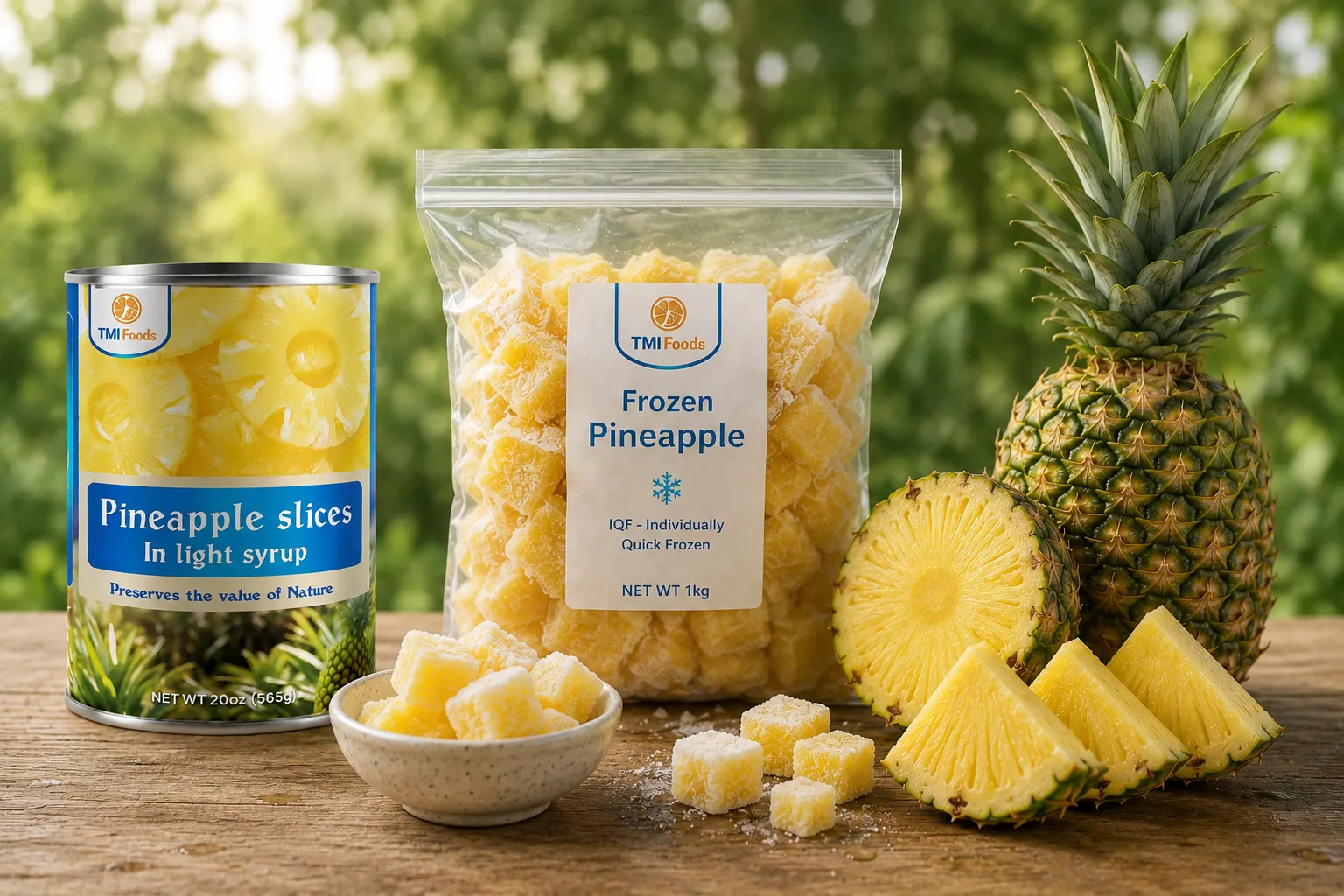
A cup of pineapple commonly provides a large share of the Daily Value for vitamin C; quick-frozen fruit tends to match fresh-cut closely, while heat-processed canned fruit trends lower. For typical ranges by form and packing medium, see USDA FoodData Central. Manganese and fiber are robust to freezing, so you can expect them to be broadly comparable in fresh and frozen; canning won't add enzymes back and may lower some water-soluble micronutrients. Sugar content depends on variety and ripeness; freezing fixes whatever Brix the fruit had at peak, whereas canned in syrup boosts total sugars via the liquid. For Daily Value context (not nutrient content), the NIH Office of Dietary Supplements vitamin C fact sheet is useful.
For buyers comparing different pineapple product formats, including fresh, canned, dried, and juice, see our guide to Wholesale Pineapple Supplier: Fresh, Canned, Dried, Juice
For most raw uses and when you care about enzymes, choose frozen; for shelf-stable convenience and cooked recipes, choose canned. Frozen is typically picked at peak ripeness, IQF-frozen for quality, and keeps nutrients well but needs continuous cold storage. Canned is ready to eat, pantry-stable, cost-predictable, and great when heating will happen anyway, though its bromelain and some heat-sensitive vitamins are inactivated by the canning step. If you want to understand the nutritional value, health benefits, and potential risks of canned pineapple in more detail, see our guide to Canned Pineapple Benefits: Health, Nutrition & Risks.
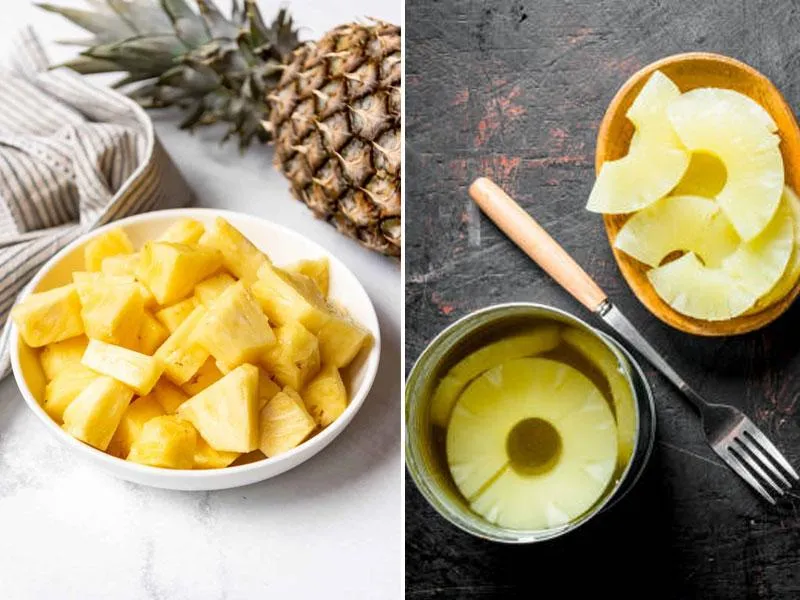
In day-to-day cooking, frozen shines in smoothies, bowls, fresh salsas, cocktails, and chilled desserts where bright flavor and enzyme activity matter. Canned earns its keep in baking, grilling, or hot dishes where you're applying heat regardless; opt for "in juice" or "no sugar added" over syrup to avoid extra sugar. Both formats are portion-friendly, frozen minimizes waste by letting you use only what you need, while canned wins when freezer space is tight.
Choose bags labeled "no sugar added" and "IQF" or "flash-frozen," look for a recent pack or harvest date when available, and store at −18°C or below to protect nutrients and enzymes. Check country of origin and favor brands with clear traceability; for institutional or private-label buyers, certifications like ISO 22000, HACCP, BRC FOOD, FDA registration, and HALAL signal robust controls.
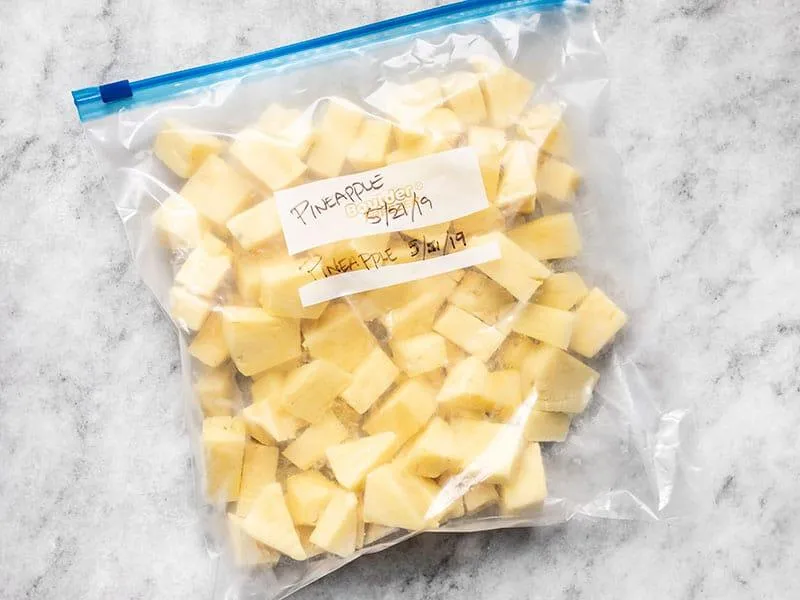
Keep bags sealed and frozen, and avoid temperature cycling or thaw-refreeze, which accelerates texture and flavor loss. For best quality, plan on 8-12 months at a steady −18°C; foods held constantly at 0°F/−18°C remain safe longer but slowly lose quality over time (see USDA FSIS guidance on freezing and food safety). Watch for freezer burn, dull color, dry or frosty surfaces, and off-odors, since it signals dehydration and oxidation; quality suffers even if safety isn't compromised. TMICORP operates under ISO 22000, HACCP, BRC FOOD, HALAL, and FDA registration, and our perspective reflects standard cold-chain and packaging practices used by certified manufacturers. That means product handling is validated and continuously monitored to protect quality.
Frozen pineapple stays vibrant and sweet but softens as it thaws, so it excels in smoothies, sauces, baking, cocktails, and hot dishes, and is less ideal for crisp fruit salads. If you're freezing fresh pineapple yourself, cutting it into small, even pieces and freezing it quickly can help preserve its flavor and texture. Use it straight from the freezer for smoothies or frozen cocktails to keep flavors bright and texture pleasing. For grilling or pizza, pat pieces dry first for better sear and to prevent steaming. For salsas or toppings, quick-thaw in the fridge, then drain excess juice so the mix doesn't water down.
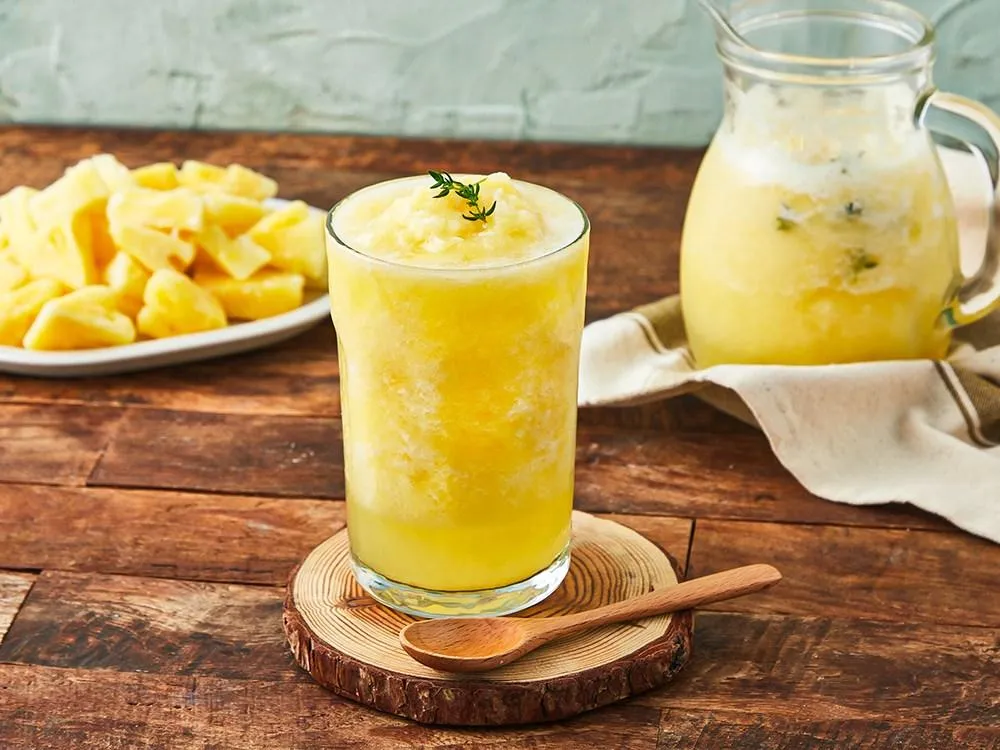
Frozen pineapple for smoothies, desserts, drinks, and more
For more practical tips on how to freeze fresh pineapple, prepare it properly, and avoid common texture problems after thawing, see our guide to Can You Freeze Pineapple? Best Way to Freeze Fresh Pineapple
Use it raw, blend from frozen for smoothies, fold into salsas, or top yogurt, to keep bromelain active; avoid heating if enzyme benefits are your goal. Commercial juices are typically pasteurized, which inactivates enzymes, so for "does frozen pineapple juice have bromelain," a freshly blended smoothie from frozen fruit is a better bet.
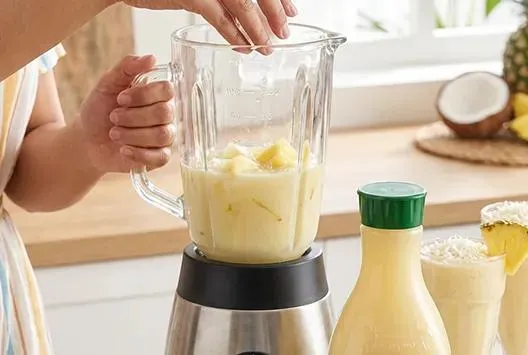
Try these simple habits to preserve quality:
- Portion IQF pieces so you only thaw what you need.
- Thaw in the fridge or use directly from frozen; keep prep cold to limit vitamin C loss.
- If juicing at home, blend briefly while cold to minimize oxidation.
-
Can frozen pineapple help with digestion the way fresh pineapple does?
Yes, if it hasn't been heated, frozen pineapple can still provide bromelain, a proteolytic enzyme that may help break down proteins during a meal. Effects are modest at typical portions, and any cooking or pasteurization will inactivate enzymes, so use it raw (smoothies, salsas) if digestion support is your aim.
-
Will freezing destroy the vitamins in pineapple?
No, freezing preserves most vitamins, especially when fruit is frozen quickly after harvest; the larger losses happen when cut fruit sits warm or when it's heated. Vitamin C is the most sensitive, but rapid freezing retains a high share compared with fruit left at room temperature for days.
-
Is frozen pineapple juice a good source of bromelain?
Sometimes, mechanically juiced raw or frozen pineapple can contain bromelain, but commercial juices are usually pasteurized and lose enzyme activity. For enzyme benefits, blend a cold smoothie from frozen pineapple and drink soon after preparing.
-
How long does frozen pineapple last in the freezer and how do I tell if it's gone bad?
For best quality, use frozen pineapple within 8-12 months at a steady −18°C; it remains safe longer if kept constantly frozen, but texture and flavor slowly decline. Signs of quality loss include freezer burn (dry, frosty surfaces), dull color, and off-odors; discard if smell or taste seems sour or fermented.
At TMICORP, we are proud to be one of Vietnam’s trusted suppliers of premium frozen fruits. Under our Ecovita and Sunrich brands, we deliver high-quality frozen pineapple that captures the natural taste and nutrition of the fruit. With strict quality control, modern freezing technology, and strong export expertise, TMICORP ensures your business receives the best value from Vietnam’s tropical harvest.
Whether you are a wholesaler, retailer, or food manufacturer, now is the perfect time to explore the opportunities with TMICORP’s frozen fruit range. Contact us today for a tailored quotation and reliable partnership.

Related Articles
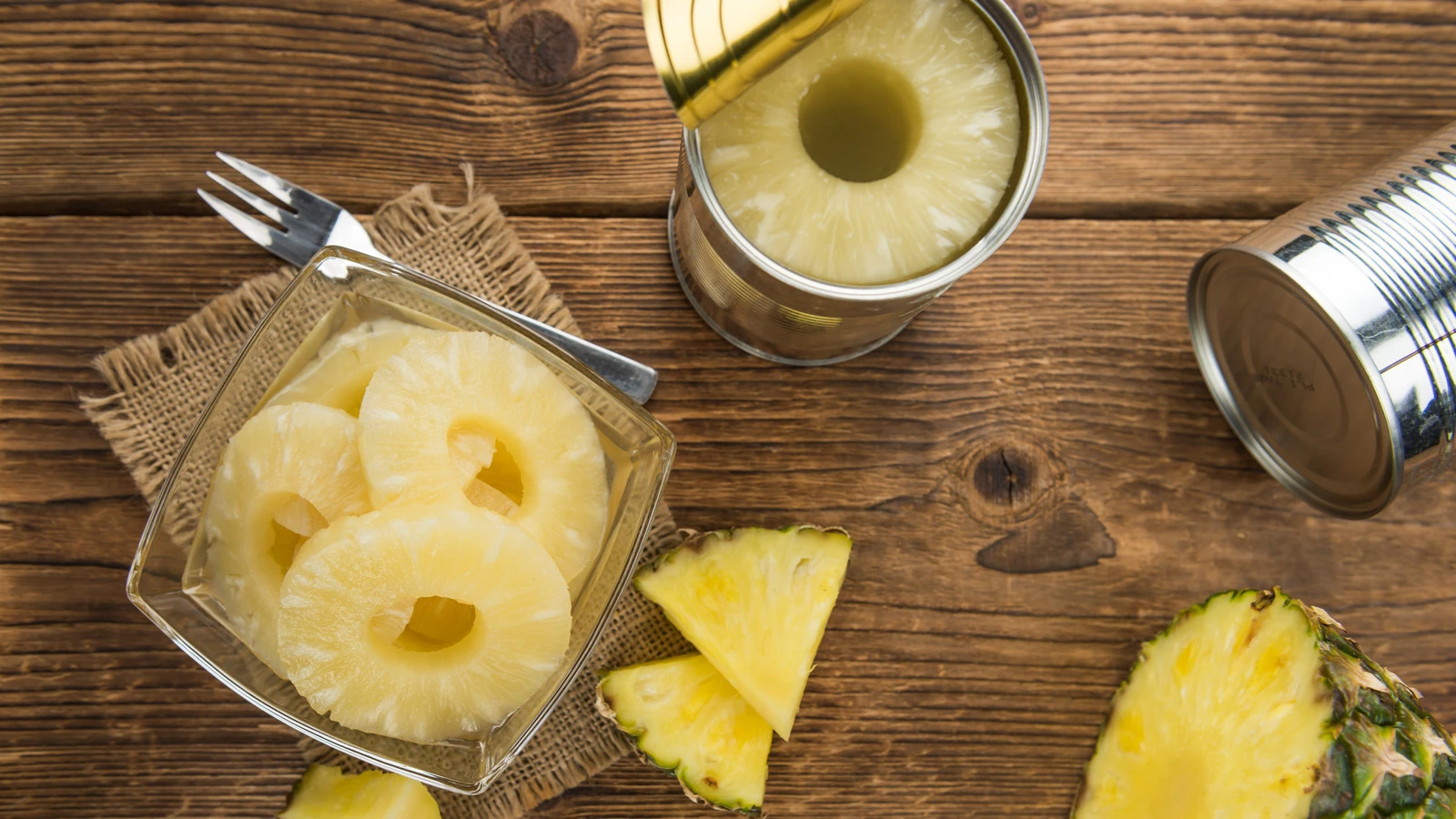
Canned Pineapple Benefits: Health, Nutrition & Risks
WHAT IS CANNED PINEAPPLE?
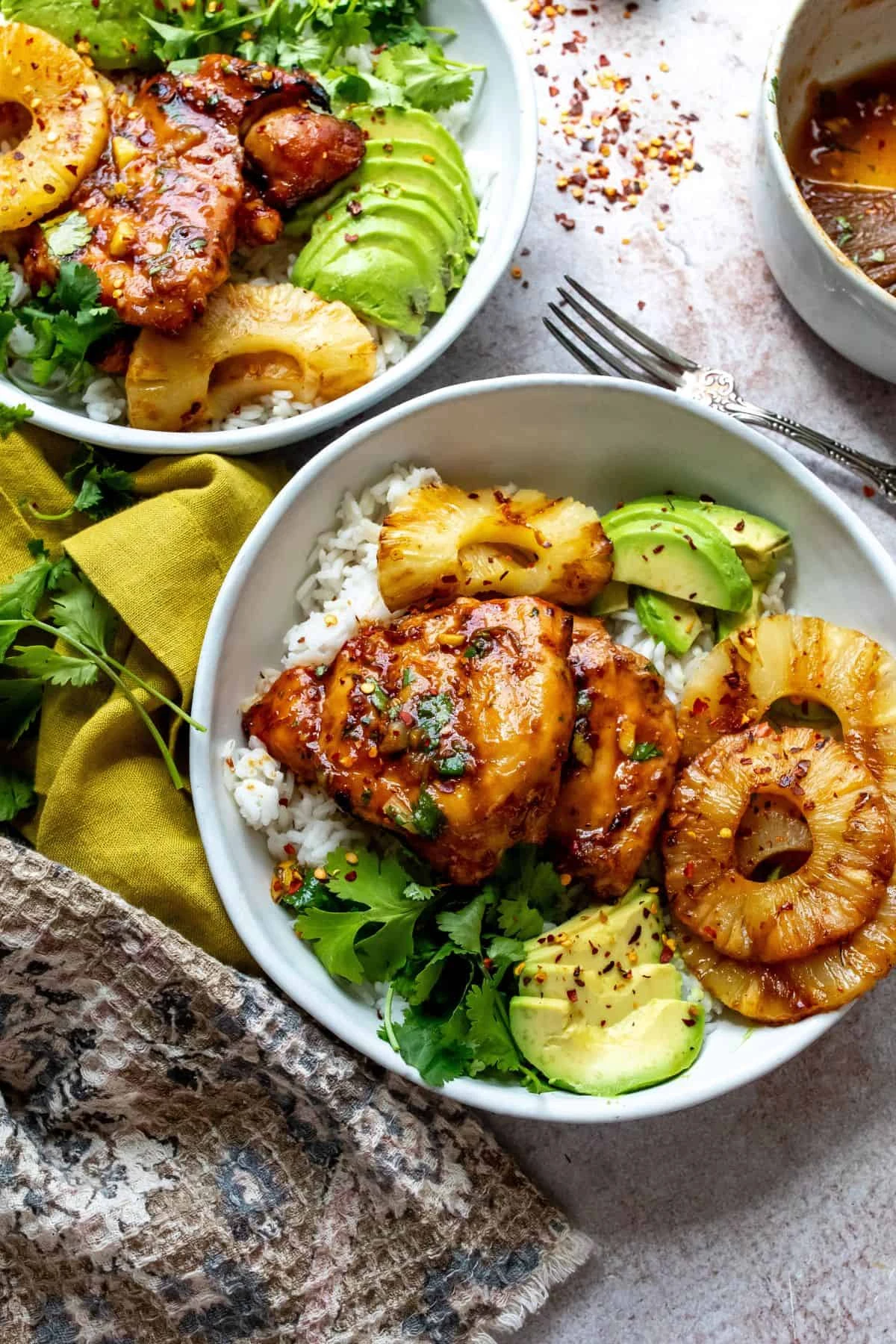
3 Easy and Delicious Dishes You Can Make with Canned Pineapple
Discover 8 of the Best Bubble Tea Flavors Around the World!