
Wholesale pineapple supplier: fresh, canned, dried, juice
By TMICORP Editorial Team | Last updated: 2026-08-04
This article is for general information only and is not medical advice. Talk to a qualified healthcare professional about your own situation.
1. Which option is best for bulk buyers? (quick answer)
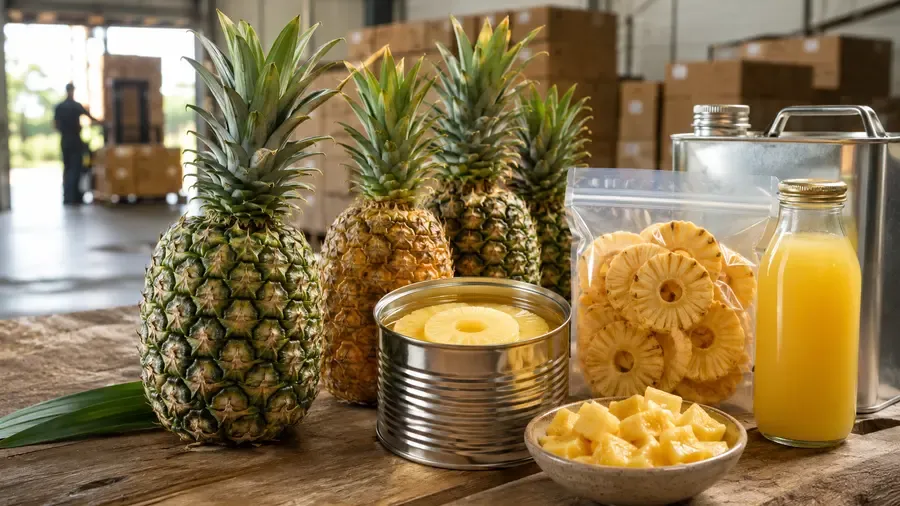
Fresh pineapple is your pick for peak aroma and firm texture when you can use it fast. Canned pineapple suits buyers who need consistent size, zero prep, and long shelf stability. Dried pineapple wins for portability, snack value, and minimal storage space in ambient warehousing. Pineapple juice is the cost-to-volume workhorse for beverages and recipes needing standardizable formulation.
2. At-a-glance comparison (quick table)
| Identity (form) | Typical appearance and packaging | Flavour profile and sweetness | Key quality or safety measurable (added sugar or preservatives) | Relative price level | Best uses |
|---|---|---|---|---|---|
| Fresh pineapple (whole fruit) | Whole fruit with green crown; shipped loose or in cartons | Bright, aromatic, juicy; sweetness varies by variety and ripeness | No added sugar or preservatives | Budget when in season; highest trim/waste | Eating fresh, cutting into rings/chunks, grilling |
| Canned pineapple (rings, chunks, diced, spears) | Uniform pieces in cans | Consistent sweetness; softer bite; syrup-packed tastes sweeter | Total sugars about 15 g per 1/2 cup in 100% juice; check added sugars on syrup packs | Mid-range | Baking, desserts, fruit bowls, ready-to-eat garnish |
| Dried pineapple (dehydrated) | Yellow to amber rings/chips/chunks in bags or pouches | Intense, concentrated sweetness; chewy to leathery | Some products ~78% sugar by weight; sulfites may be used | Premium per kg | Snacks, trail mixes, cereal/granola |
| Pineapple juice (bulk, concentrate or not) | Golden liquid; NFC in cartons, concentrate in sealed industrial packs | Sweet-tart; consistent batch-to-batch | Juice sugars count as free sugars (WHO); check "from concentrate" and preservatives | Low-to-medium per reconstituted liter; efficient freight | Beverage formulation, sauces, baking |
Values such as sweetness and color vary by variety, origin and processing; details and buyer tips for each form are below.
3. How to recognise each form by sight, touch and smell
Fresh pineapple (whole fruit)
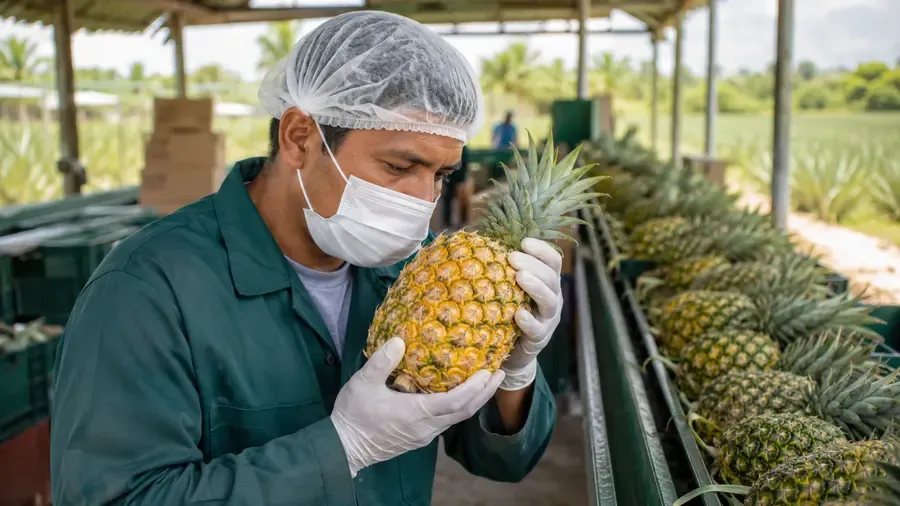
A good fruit shows a bright gold base, even "eyes," and a green, tidy crown. The shell feels firm with slight give, and the base smells sweet when ripe. Sensory test: smell the base; a pleasant pineapple aroma signals readiness, while a fermented note means it is past peak.
Canned pineapple (rings, chunks, diced, spears)
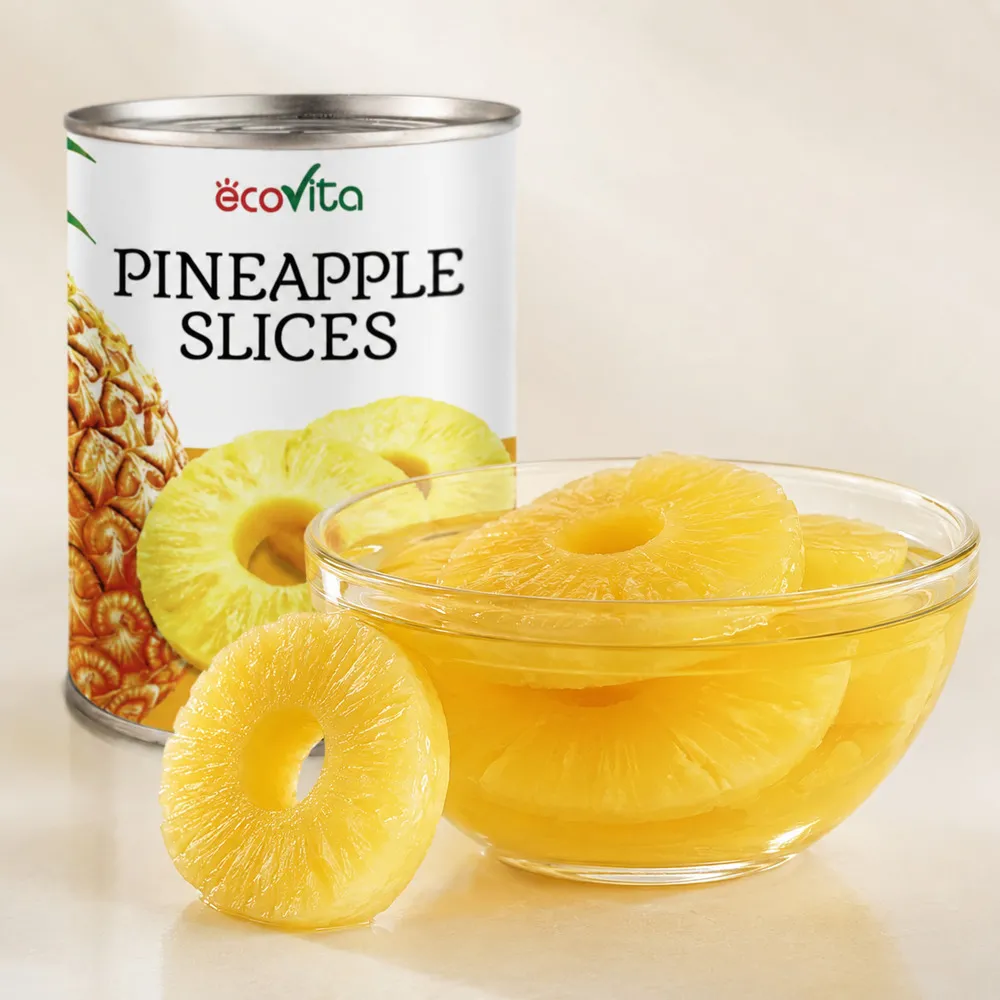
Slices are uniform rings; chunks and diced/tidbits are consistent cubes; spears are elongated segments. Liquid should be clear if packed in juice or water, thicker if in syrup. Can seams should be clean, with no dents, bulges or leaks.
Dried pineapple (dehydrated)
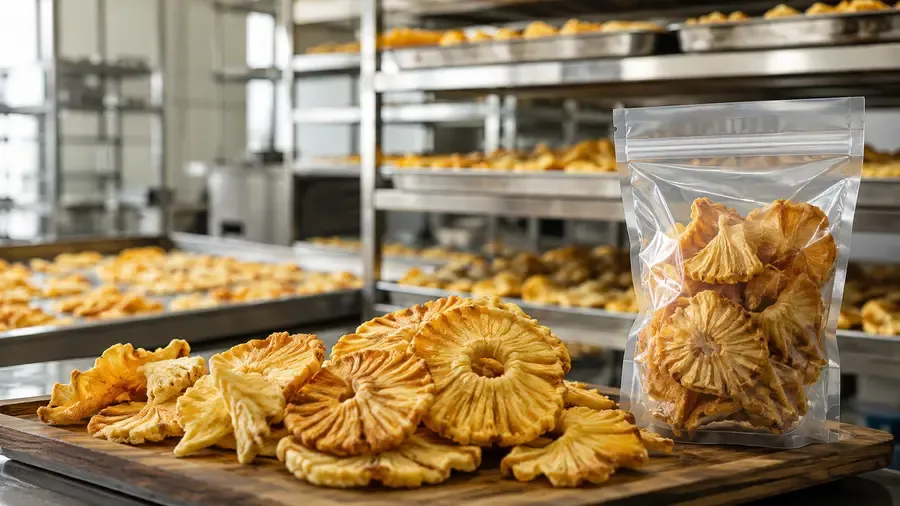
Natural dried pieces run yellow to amber with matte surfaces; sweetened versions may look glossy. Texture ranges from pliable-chewy to leathery; surfaces should be dry, not tacky. Sensory alert: unnaturally neon yellow/orange can suggest sulfite use for color retention.
Pineapple juice (bulk, concentrate or not)
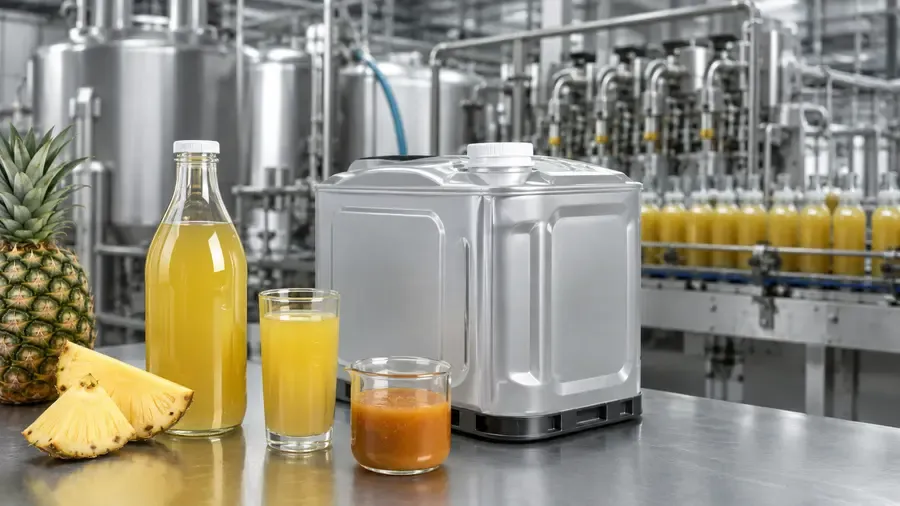
Single-strength juice looks golden, bright, and may include light pulp; concentrate is thicker and darker. Clarity ranges from clear to hazy depending on pulp level. Industrial packs are typically sealed and tamper-evident.
4. Where to find a wholesale pineapple supplier & how to buy in bulk
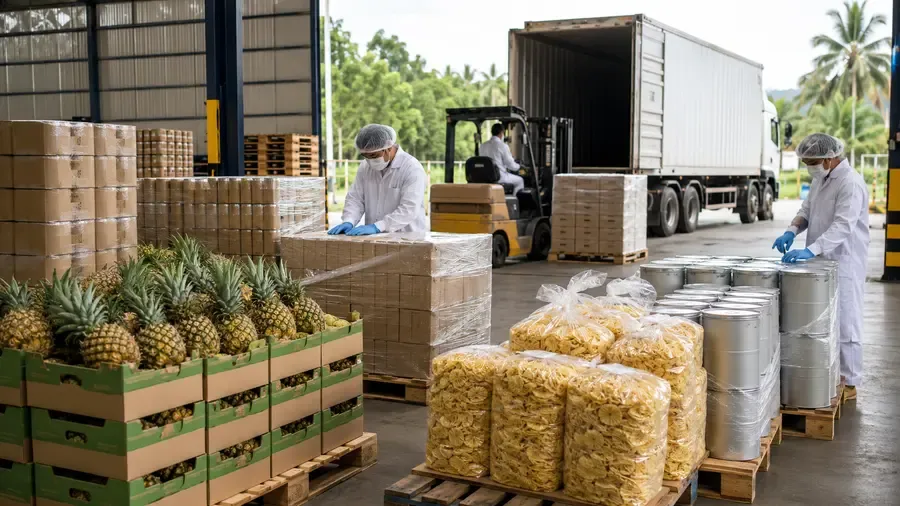
You'll find bulk supply through grower groups and farms (fresh), processors and packers (canned or dried), juice producers, wholesale produce distributors, and ingredient brokers or foodservice suppliers. On first inquiry, ask for lot size, packaging type, pack date or best-before, storage and transport temperature, and sample availability with lead time. For canned lines, confirm the exact cuts you need: rings, chunks, diced/tidbits, spears, or crushed.
Match pack formats to your operation: retail-style packs for direct sale, larger foodservice packs for kitchens, and industrial packs for manufacturing. Processors can often run "no sugar added" or "in 100% juice" for canned fruit and offer different pack media. For context on the pantry stability of high-acid canned goods like pineapple, see guidance from a national food-safety authority FSIS on shelf-stable food safety.
5. Prices & value: pineapple wholesale price today (relative levels)
Dried pineapple is typically the premium option per kilogram because water removal concentrates sugars and adds processing steps. Canned pineapple sits in the mid range, reflecting cutting, packing, and, where used, syrup costs. Fresh pineapple can be the budget buy per raw kilogram when supply is abundant, but it has the highest trim/waste. Bulk pineapple juice concentrate is often low-to-medium per reconstituted liter and highly economical for formulation because it ships and stores efficiently.
Key price drivers include raw fruit seasonality (and shrink on fresh), processing intensity (canning, drying, concentration), packaging format (smaller retail packs vs. larger foodservice and industrial packs), added sugar content (syrup adds cost and free sugars), and freight per usable volume. A practical translation: fresh whole fruit yields roughly 50% edible chunks, so 10 kg purchased becomes about 5 kg usable; canned, dried and juice are essentially 100% usable content for recipes. Concentrate reduces shipping volume by about 5:1 to 6:1, cutting freight and storage per serving of finished drink ScienceDirect on juice concentrates and market data on concentrate logistics.
Expect short-term volatility from season, weather and labor, and longer-term shifts from variety choices (for example, high-sweetness MD2/Golden or Smooth Cayenne) and processing capacity investments. On sugars, remember the World Health Organization advises keeping free sugars under 10% of energy, ideally below 5% (about 25 g/day at the stricter target), and it counts fruit juices and concentrates as free sugars WHO guideline on free sugars.
6. Canned forms: rings, chunks, diced, spears, what to expect
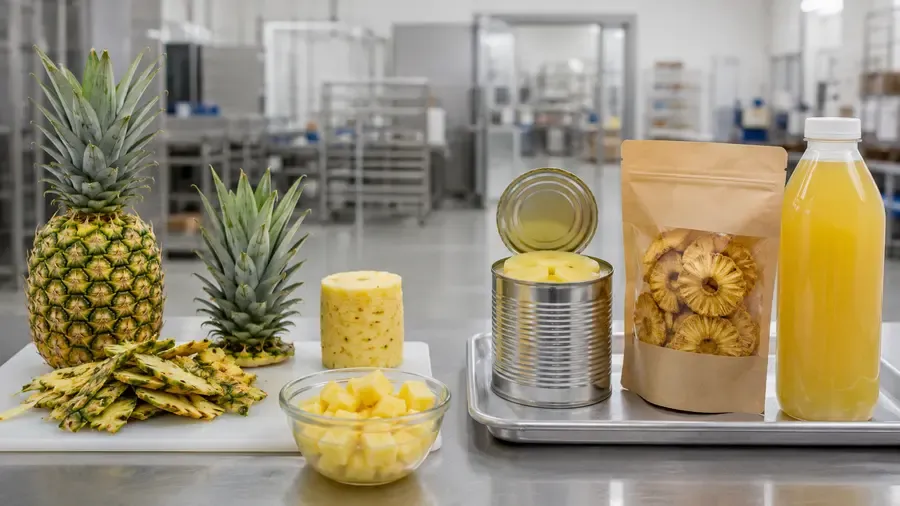
- Rings/slices hold their shape for toppings and garnish.
- Chunks are bite-size cubes for fruit bowls and desserts.
- Diced/tidbits are small, even pieces that distribute well in baking and yogurts.
- Spears suit buffet trays, cocktails and savory glazing.
Check the label for the single biggest quality cue: the packing medium and claims such as "no sugar added" or "packed in 100% juice." A typical serving of canned pineapple packed in 100% juice lists around 15 g total sugars per 1/2 cup (122 g) with 0 g added sugars for that product; syrup-packed fruit adds free sugars, so read both "total" and "added sugars" to match your needs. Sugars in fruit juices are counted as free sugars under health guidance, while sugars in whole fruit are not; that's why "in water" or "in juice" fits differently in a reduced-sugar plan EU Health Promotion Gateway summary.
Storage and handling are straightforward: unopened high-acid canned pineapple is best quality for about 12-18 months in a cool, dry pantry, per guidance from a national food-safety authority FSIS shelf-stable guidance. Many industry guides advertise 18-24 months for peak quality; always go by your can date and storage conditions. After opening, transfer to a clean container, refrigerate, and use within about 5-7 days. Heat processing inactivates bromelain, so canned pineapple doesn't tenderize meat the way fresh can. Always reject cans with bulges, deep dents on seams, leaks, or spurting contents.
7. Dried pineapple (dehydrated): buying notes
Common formats include rings/slices, chips, chunks/tidbits, and crystallized/sweetened styles. Read the ingredient list closely: some products add sugar, sweeteners, citric acid and sulfur dioxide (sulfites) for color and shelf stability. One labeled example shows around 78% sugar by weight, illustrating how much sweeter dried fruit is bite-for-bite than fresh; that translates into a much higher calorie density per handful, even without added sugar.
Useful quality cues to request from a supplier or look for on the pack: moisture level or target chew, percent fruit if blended, and sugar by weight when declared. Bright, almost neon yellow/orange pieces often indicate sulfite use; sulfites keep color but can bother sensitive individuals. For storage, keep it cool, dry and airtight; most dried fruits hold best quality for months and up to a year in cooler rooms, while warmth shortens life NCHFP on packaging and storage of dried foods. Pack in small resealable bags to limit repeated opening in service.
8. Pineapple juice: bulk, concentrate or not
You can buy pineapple juice as not-from-concentrate (NFC) single-strength, as concentrate (a thick syrup), or as reconstituted juice made from concentrate. If you're specifying for production, ask for the sweetness level (degrees Brix), flavor balance (Brix-to-acid ratio), pulp level, percent juice, "from concentrate" wording, and any preservatives used on the spec. Concentrate slashes freight and storage by about 5:1 to 6:1 versus single-strength, a key advantage for beverage makers ScienceDirect overview of concentrates and market data on 5:1-6:1 volume reduction.
On nutrition, remember guidance that sugars in juices and concentrates count as free sugars, with a stricter target of about 25 g/day for additional health benefits WHO sugars guideline. In practice, a single glass of pineapple juice can use a large share of that daily budget, so portion size matters for frequent consumption. Shelf life differs widely: sealed, aseptic packs of concentrate often keep many months at ambient conditions, whereas fresh-squeezed or short-life NFC needs a cold chain and is perishable within days market report on shelf-life contrast.
9. Best uses: which form suits which jobs
- Fresh pineapple (whole fruit) works for eating fresh, cutting into rings or chunks, and grilling; think grilled pineapple steaks for a barbecue.
- Canned pineapple (rings, chunks, diced, spears) suits baking and desserts, ready-to-eat fruit bowls, and foodservice garnish; classic use is pineapple upside-down cake with rings.
- Dried pineapple shines in snacks, trail mixes and cereal/granola; great as chewy inclusions in granola bars.
- Pineapple juice or concentrate powers beverage formulation, sauces and bulk baking; for example, reconstituted juice in tropical punch or concentrate in a sweet-sour glaze.
10. What to check when buying (shop-floor checklist)
- Match the name on pack to the form you need: fresh pineapple, canned pineapple, dried pineapple, or pineapple juice.
- Confirm the declared cut or style: rings, chunks, diced, spears, slices, concentrate or not.
- Read the packing medium on canned fruit: syrup, light syrup, fruit juice, or water.
- Scan the ingredients for added sugar and any preservatives such as sulfur dioxide.
- Look for percent fruit or juice concentration and any "from concentrate" statement.
- Note country of origin or packer, plus pack date or best-before/use-by; record the lot code.
- Check net weight and pack count on bulk lots.
- Inspect packaging condition: no bulges, leaks, torn seals or damaged bags.
- For fresh fruit, check color, firmness, fragrance at the base/crown, and absence of soft spots or mold.
- Follow the storage instructions and recommended shelf life on pack.
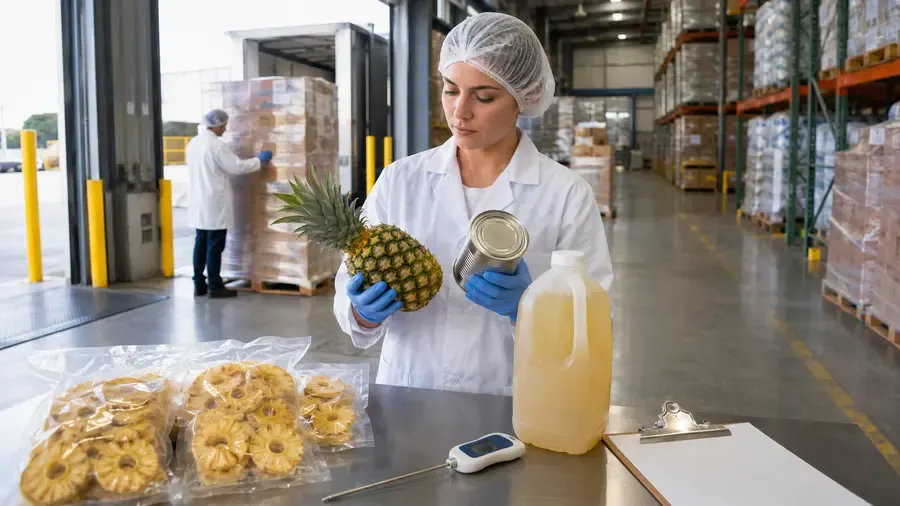
Receiving inspection tip: record lot numbers and product temperature on arrival, and reject bulging cans or wet/damp dried-fruit bags immediately.
11. Storage and shelf life, practical guidance
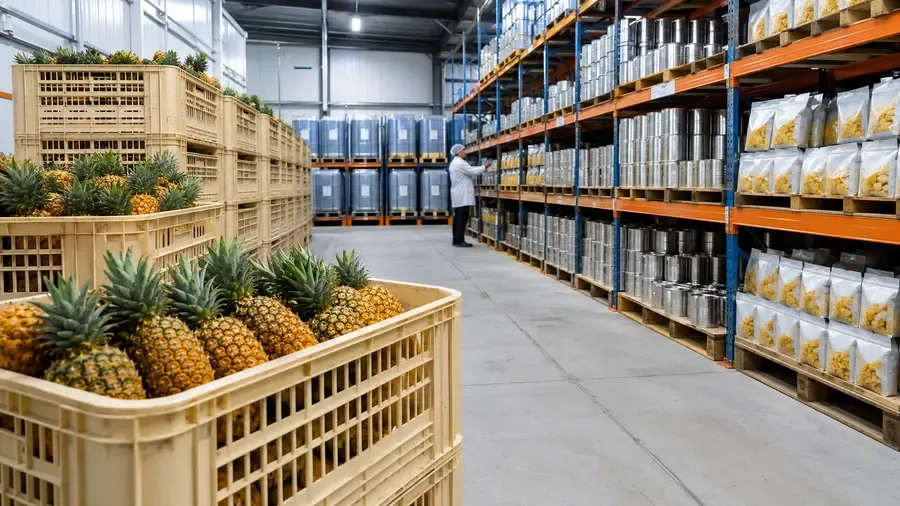
- Fresh whole fruit keeps best at room temperature for up to about 3 days; refrigerate cut fruit and use within about 3-7 days.
- Canned (unopened) holds best quality for roughly 12-18 months stored cool and dry; once opened and decanted to a clean container, refrigerate and use within about 5-7 days USDA FSIS on shelf-stable foods.
- Dried fruit stays at best quality around 4 months to 1 year depending on storage temperature; cooler rooms extend life NCHFP storage guide.
- Juice concentrate in sealed, aseptic packs often lasts 18-24 months; fresh-squeezed has a short life of about a week without a robust cold chain.
Heat and humidity shorten all storage times quickly; label opened-pack dates so teams can rotate and use stock promptly.
12. Practical next step for buyers and cooks
- Value texture and aroma at home? Choose fresh pineapples and plan to prep near service. Storage tip: keep whole fruit at room temp briefly, then refrigerate cut pieces in airtight containers.
- Need shelf stability for an event or cafeteria? Choose canned rings, chunks, diced or spears "in 100% juice." Storage tip: keep cans cool and dry; refrigerate once opened and use within a week.
- Small manufacturer chasing cost-effective formulation? Specify juice concentrate or diced/tidbits in bulk for predictable solids. Storage tip: store concentrate per the spec and track sweetness, pulp and preservative notes on the COA.
Where possible, order a sample lot first to confirm cut size, sweetness and packing medium meet your recipe, then lock the spec.
13. Frequently asked questions
How do I tell if a fresh pineapple is ripe and good for bulk purchase?
Smell the base, a sweet pineapple aroma signals ripeness; a fermented smell means it's past peak. Look for a bright gold base, firm shell with slight give, and a green, tidy crown with no mold or wet spots.
What is the difference between juice from concentrate and not-from-concentrate?
Not-from-concentrate (NFC) is single-strength juice; concentrate is juice with water removed and later reconstituted. Concentrate ships and stores more efficiently (about 5:1 to 6:1 volume reduction) but heat steps can dull fresh notes; NFC costs more to ship but preserves more fresh character ScienceDirect on juice concentrates.
Are dried pineapples safe if they list sulfites on the label?
Sulfites help keep color and extend shelf life, but some people are sensitive to them. If you avoid sulfites, choose products that state "no sulfites added" and look for natural amber-yellow color rather than neon hues.
How long does unopened canned pineapple keep in storage?
For best quality, high-acid canned foods like pineapple keep about 12-18 months in a cool, dry place; opened product should be refrigerated and used within about 5-7 days.
Which form gives the most edible fruit per kilogram purchased?
Canned, dried and juice products are essentially 100% usable for recipes. Fresh whole pineapples yield roughly 50% edible chunks after trimming and coring, so buy more weight to hit your target portions.
Do canned options add a lot of sugar?
It depends on the packing medium. A typical 1/2 cup serving packed in 100% juice lists around 15 g total sugars and may show 0 g added sugars, while syrup adds free sugars; compare labels to fit within health guidance on free sugars WHO sugar intake guideline.
Notes on names you may see: MD2 (Golden) often indicates a high-sweetness fresh variety common in export and juice; Smooth Cayenne is frequently used in juice processing. Standard canned pack names include rings/slices, chunks, diced/tidbits and crushed.

Related Articles
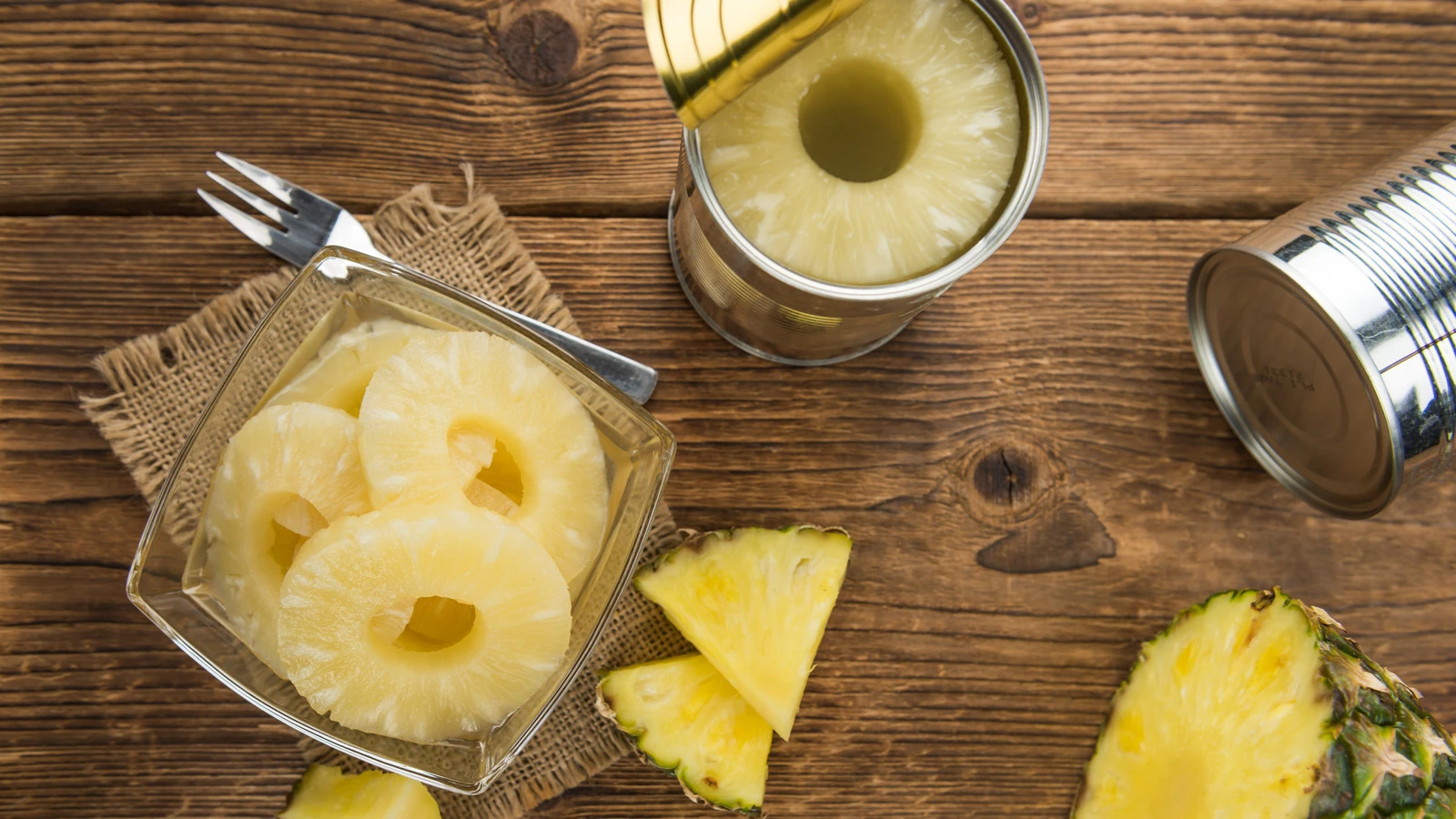
Canned Pineapple Benefits: Health, Nutrition & Risks
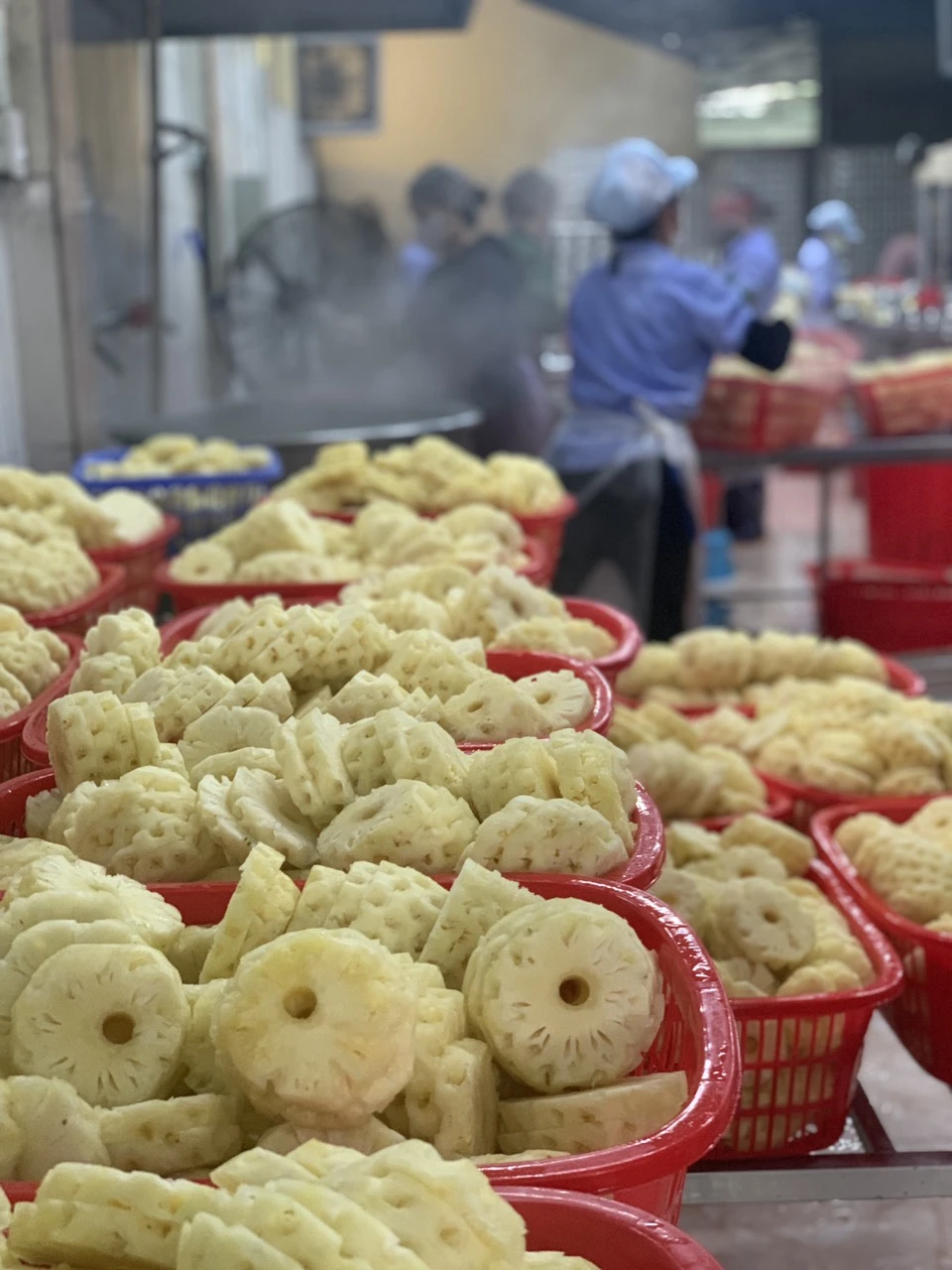
WHAT IS CANNED PINEAPPLE?
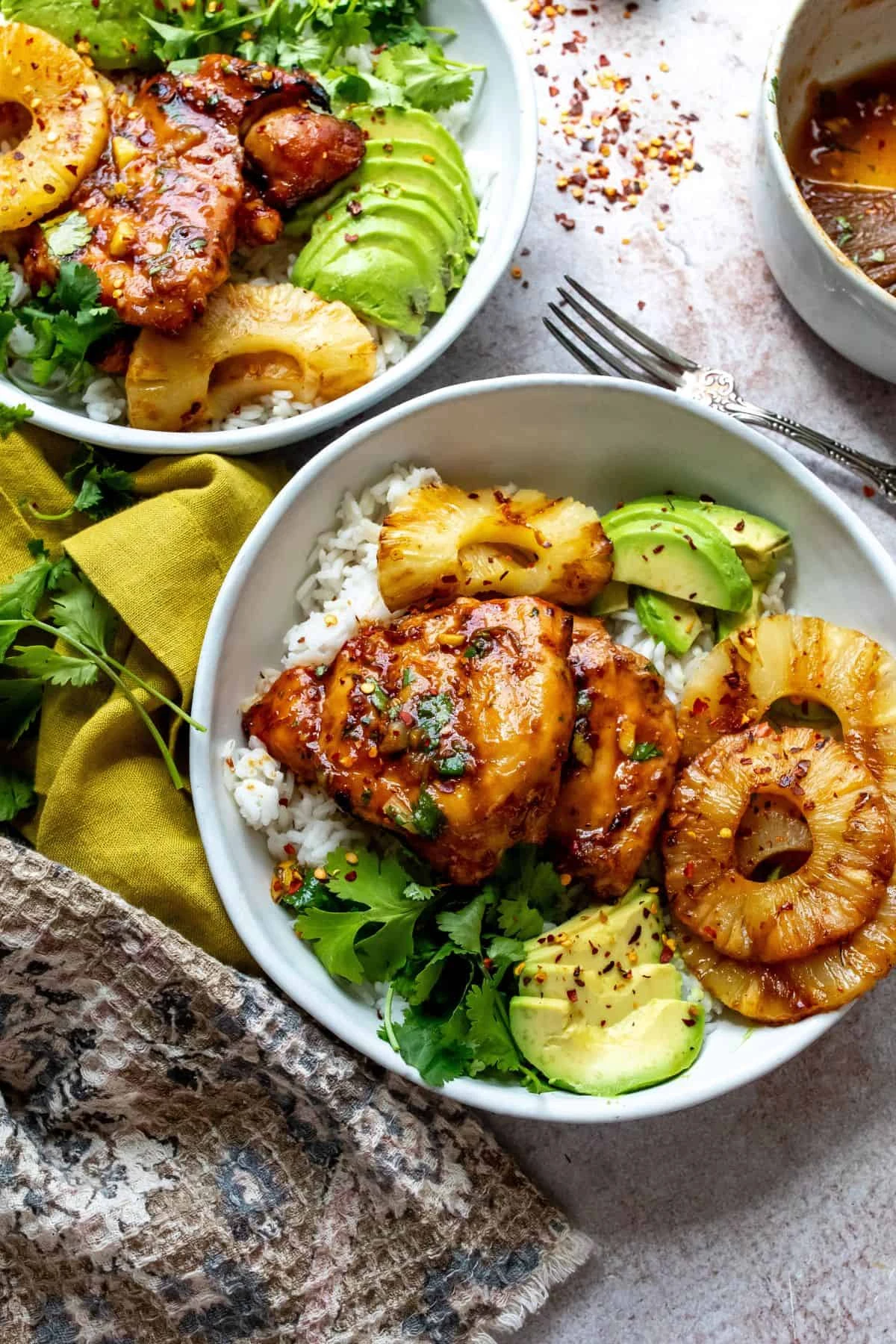
3 Easy and Delicious Dishes You Can Make with Canned Pineapple
Discover 8 of the Best Bubble Tea Flavors Around the World!