
Where Does Cinnamon Come From? Origins & Types
By TMICORP Editorial Team | Last updated: 2026-07-31
Quick answer: where cinnamon comes from
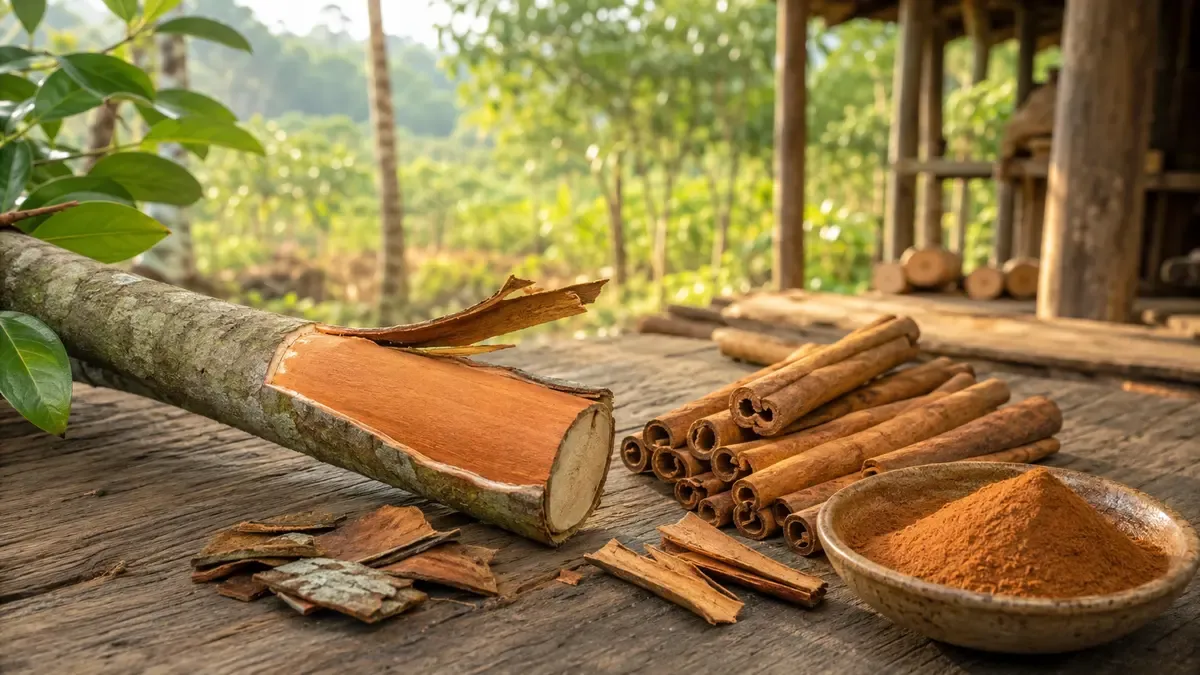
Cinnamon comes from the dried inner bark of trees in the Cinnamomum genus, peeled from young shoots, curled into "quills," and sold as sticks or ground powder, with China, Indonesia, Vietnam, and Sri Lanka now supplying about 98% of the world's cinnamon. In everyday cooking the spice is made from bark, not the root or leaves, and in U.S. supermarkets it's most often cassia cinnamon. For a plain-language explainer and production share, see the Illinois Extension overview of cinnamon and global production Illinois Extension: Cinnamon's journey and global output.
Those quills start as tender shoots: growers cut the young stems, remove the outer bark, and lift the fragrant inner bark in long sheets that naturally curl as they dry. Whole sticks are graded by length and uniformity; smaller pieces are milled into familiar ground cinnamon. Most "cinnamon" on U.S. shelves is cassia-type (Chinese, Indonesian, or Vietnamese species) because its bold flavor holds up in baking and large-scale food production. Ceylon cinnamon, sometimes labeled "true" cinnamon, is paler, layered like a cigar, and favored for delicate desserts and teas.
If the jar doesn't name the species, the country on the label often does: Sri Lanka typically signals Ceylon; China, Indonesia, or Vietnam point to cassia types. Either way, it's the same plant part, inner bark, prepared in different styles and from related species that vary in aroma, strength, and cost.
Which plants produce cinnamon (botanical background)
Several trees in the Cinnamomum genus (laurel family, Lauraceae) yield the spice we call cinnamon, notably Cinnamomum verum (Ceylon or "true" cinnamon), C. cassia (also known as C. aromaticum; Chinese cassia), C. loureiroi (Saigon/Vietnam cinnamon), C. burmannii (Korintje/Indonesian cinnamon), and C. citriodorum (Malabar cinnamon). These tropical evergreens are native to South and Southeast Asia, and "cinnamon" is the common-market name covering multiple related species. Species differ because their essential-oil chemistry varies, cinnamaldehyde drives the classic warm aroma, while coumarin and other constituents are higher in many cassia types, so flavor and safety profiles change by species. You'll see these species again below when we match them to their origin countries and culinary uses.
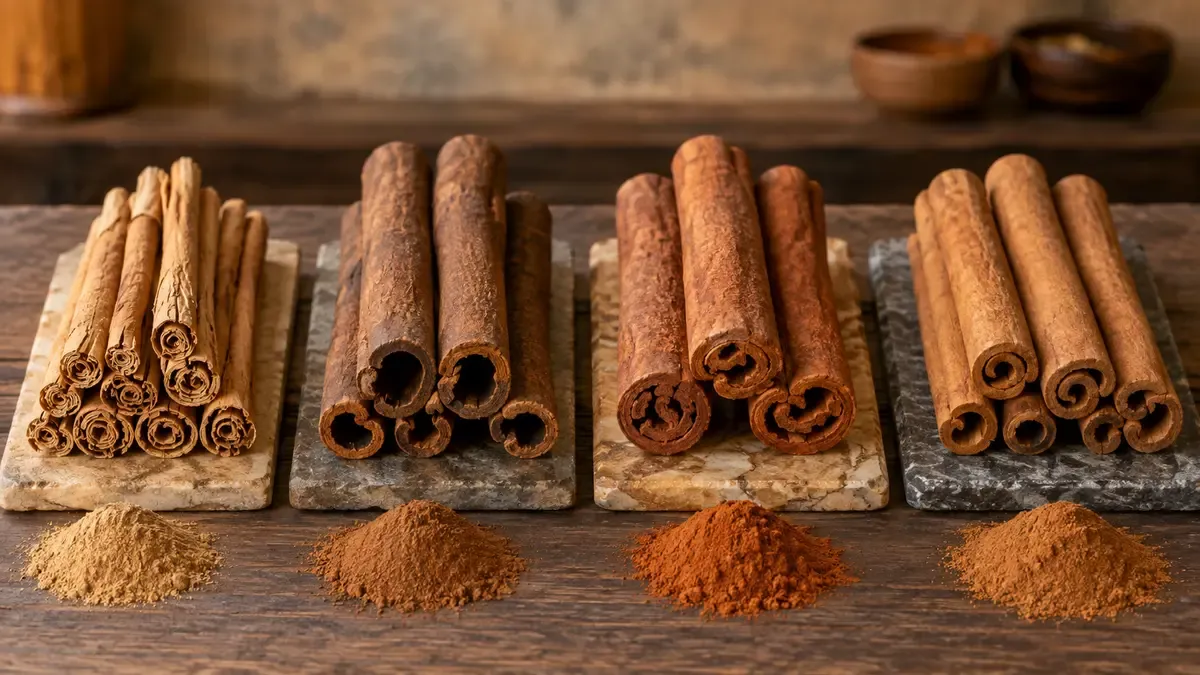
Across the group, the part we eat is the inner bark from young shoots; leaves and roots aren't the source of culinary cinnamon. Ceylon (C. verum) tends to be lighter in color and nuance, with quills built from many thin layers. Cassia species, C. cassia, C. loureiroi, and C. burmannii, form thick, hard curls with a darker color and a spicier punch. That chemistry difference is why Ceylon often suits delicate infusions, while cassia excels in robust bakes and long simmers. Malabar cinnamon (C. citriodorum) appears in regional Indian cooking but is less common in global trade. All are botanically close cousins, but the essential-oil mix sets their culinary personalities apart.
Major cinnamon types and where they originate
The main commercial cinnamons are Ceylon (true) from Sri Lanka and southern India, cassia (Chinese and Indonesian types) from southern China and across Southeast Asia, Saigon (Vietnamese) from Vietnam, and Korintje (Indonesian) from Indonesia, each with a distinct flavor and price tier.
Ceylon cinnamon (Cinnamomum verum) is native to Sri Lanka and parts of southern India and is still primarily produced there. It's pale tan, delicately sweet, and citrusy-woody, with quills made of many thin layers; it's prized for desserts and light infusions and is typically the most expensive. Ceylon's subtle top notes can fade with prolonged cooking, so it shines in finishing and short-simmer dishes.
Cassia cinnamon (C. cassia/C. aromaticum) originates in southern China and is now widely grown across Southeast Asia. Darker, stronger, and spicier, with single thick, hard curls, cassia is the most common cinnamon in U.S. retail and holds up well in baking and long braises, hence its ubiquity in everyday "cinnamon" products.
Saigon or Vietnamese cinnamon (C. loureiroi), grown mainly in Vietnam, is aromatic and boldly spicy. It's popular in Vietnamese cuisine and in robust baking where punchy cinnamon is desired.
Korintje or Indonesian cinnamon (C. burmannii) comes predominantly from Indonesia and is heavily exported under the "Korintje" trade name. Expect a dependable, warm-sweet flavor that makes it a workhorse in packaged foods and spice blends.
Ceylon is generally milder and pricier; cassia varieties are darker, more assertive, and dominate mass-market supply. If you're asking where Ceylon cinnamon comes from (Sri Lanka), or where cassia, Saigon, or Korintje cinnamon originate (China/Southeast Asia, Vietnam, and Indonesia respectively), the country-of-origin label usually provides the clearest clue.
If you're still deciding which cinnamon is right for your needs, read our detailed guide on Cinnamon types: which to buy — Ceylon, cassia, Saigon, Korintje
How cinnamon is grown, harvested and processed
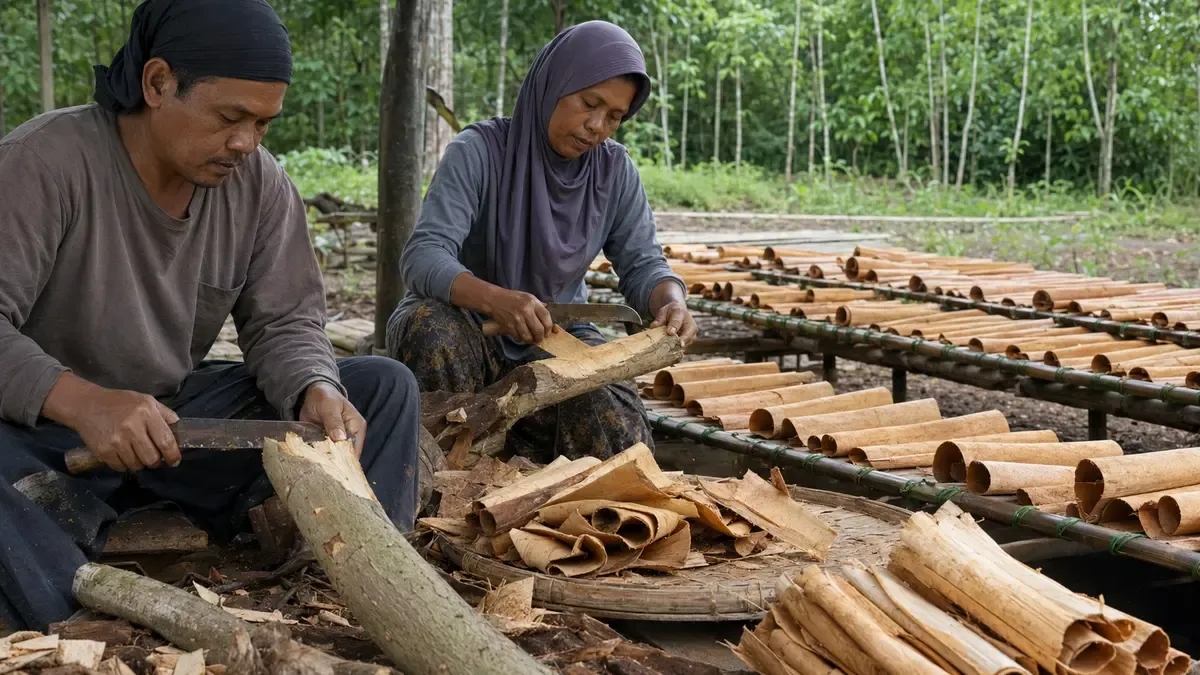
Cinnamon is cultivated as coppiced shrubs and harvested on a 2-3 year cycle: growers cut young shoots, scrape away the outer bark, peel the fragrant inner bark, and dry it so it naturally curls into quills. The work is highly labor-intensive and skilled, harvesters judge maturity by bark slip, knife off the epidermis, and coax wide, clean strips that dry evenly.
After peeling, the bark is dried in sun or shade depending on the climate and buyer preference; slower shade-drying can help protect delicate aromas. Processors nest thin sheets inside one another to build long, straight quills, then grade them by length, thickness, and visual uniformity. Premium grades demand long, unbroken sticks with tidy surfaces; smaller fragments and broken bark are sorted as "chips" for milling into ground cinnamon. Post-harvest handling may include washing, careful bundling, steam sterilization for some buyers, and essential oil distillation from bark or leaves for the flavor and fragrance trade.
Yields vary by species, site, and age, and are managed by coppicing cycles and shoot density. From a manufacturer's perspective, clean drying, species/grade segregation, and hygienic milling are critical; companies like TMICORP operate ISO 22000-, HACCP-, BRC FOOD-certified lines with lot traceability, metal detection, and HALAL-compliant handling to protect authenticity and quality.
Where cinnamon sticks and cinnamon bark come from
Cinnamon sticks (quills) and what traders often call "cinnamon bark" are the same thing: the curled, dried inner bark of Cinnamomum shoots. Whole quills are the most visually recognizable; "broken bark" or chips are trimmed fragments used for simmering or grinding, while ground cinnamon is the milled powder of those quills and chips.
Top cinnamon producing countries and global trade today
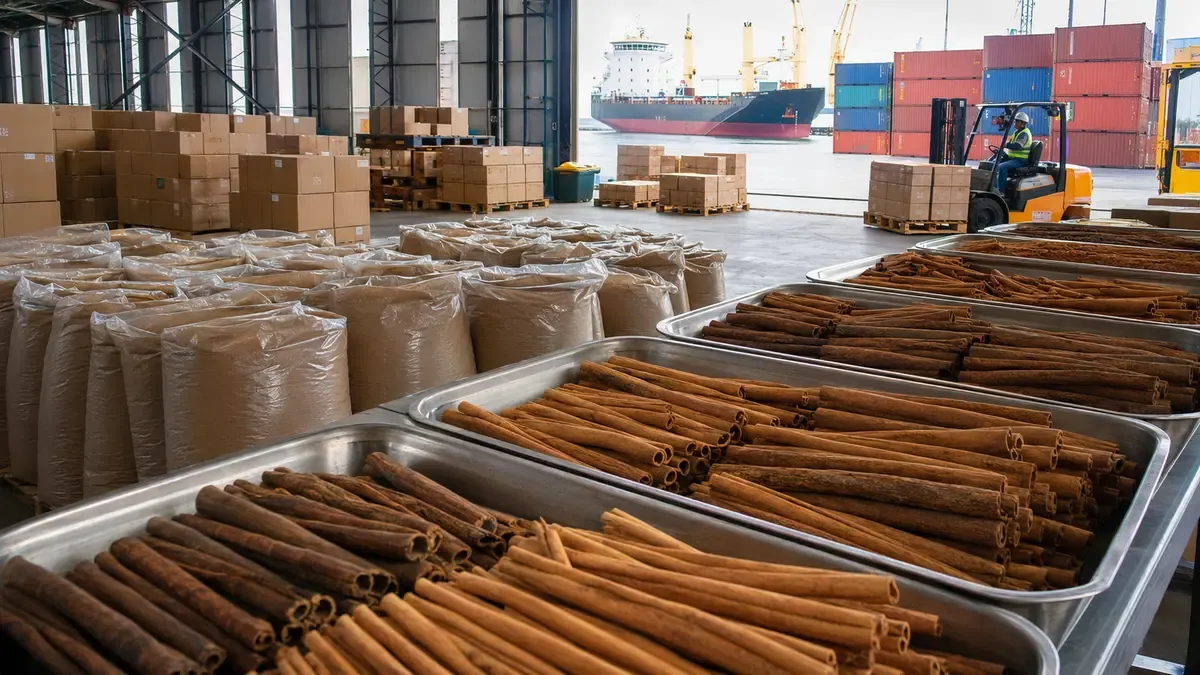
China, Indonesia, Vietnam, and Sri Lanka are the top cinnamon producers today, and together they account for roughly 98% of global output, a high concentration that shapes price and supply stability. According to university extension reporting, Sri Lanka primarily supplies Ceylon cinnamon, while Indonesia, Vietnam, and China export cassia-type cinnamons Illinois Extension: four countries produce the vast majority of cinnamon. China and Vietnam also have significant domestic consumption in savory dishes and beverages, whereas a large share of Indonesian Korintje goes to export for baking and packaged foods. When harvests in any of these hubs tighten, global prices can rise quickly because alternative sources are limited.
That concentration means weather, labor conditions, and local policy in just a few regions ripple worldwide. Sri Lanka's Ceylon industry serves a premium niche, while Southeast Asian producers supply the volume that keeps supermarket cinnamon affordable. Trade flows also follow flavor: robust cassia fills the needs of bakeries and large food brands; Ceylon moves through specialty importers to tea houses, pastry kitchens, and spice boutiques. Year-to-year rankings shift with harvest size and export priorities, but the map stays the same, four countries setting the tone for supply, price, and style.
Taste, chemistry and safety differences (coumarin & more)
Cinnamon types taste different because their essential-oil profiles differ, cinnamaldehyde drives the familiar warm-sweet aroma, while eugenol, linalool, and other volatiles add nuance, and cassia varieties tend to contain more coumarin. Safety-wise, culinary amounts are generally considered safe, but high, frequent intakes of cassia (and supplements) can raise coumarin exposure, which may pose liver risks for some people; those planning daily high-dose use often choose Ceylon, which is typically lower in coumarin. For balanced, evidence-based guidance on cinnamon's uses, limits, and the "cinnamon challenge" warning, see the NCCIH overview of cinnamon safety and coumarin NCCIH: Cinnamon usefulness and safety.
On the palate, Ceylon reads light, citrusy, and gently woody, which flatters custards, fruit, and delicate teas. Cassia styles are darker and spicier, leaving a hotter finish that stands up to chocolate, coffee, long-baked pastries, and slow-cooked stews. Those aromatic differences trace back to each species' oil composition and how the bark is cured and dried. If you're considering cinnamon for daily wellness routines or supplements, the low-coumarin reputation of Ceylon is the reason many people prefer it. For cooks, the simple rule holds: choose Ceylon when you want lift and perfume, cassia when you want power and warmth.
To learn more about the origin, characteristics, and export quality of Vietnamese cinnamon, read our guide to Cinnamon from Vietnam: Saigon & Vietnamese Cassia
Short history: how cinnamon travelled from ancient trade to modern markets
Cinnamon has been traded for millennia, valued in ancient Egypt and China, wrapped in Mediterranean lore, and later controlled by European colonial monopolies in Ceylon. Classical writers amplified its mystique (Herodotus famously repeated a tale of "cinnamon birds" guarding the spice), and in the Age of Exploration the Portuguese and then the Dutch sought and held tight control over Ceylon's plantations, shaping global supply routes. For a concise historical background anchored in health-agency context, see the NCCIH background on cinnamon's history and uses NCCIH: Background on cinnamon.
Arab and Venetian middlemen once obscured the spice's origins to keep prices high, which fed centuries of rumor and desire. Colonial powers later turned Ceylon into a strategic asset, using forced systems and strict grading to command European markets. As cultivation spread across Southeast Asia, cassia types surged in availability and began to dominate everyday cooking worldwide. Today's split, premium Ceylon from Sri Lanka, high-volume cassia elsewhere, echoes that long arc from myth and monopoly to modern commodity.

Growing cinnamon at home or on a small scale
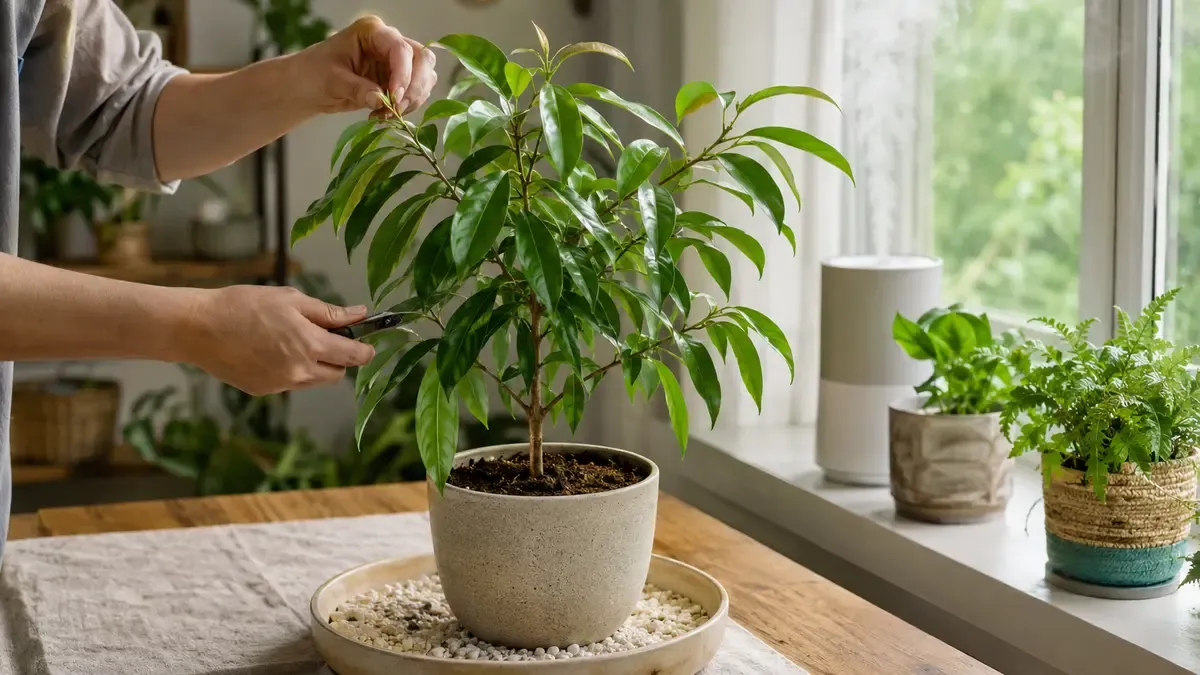
Cinnamon needs a warm, humid tropical or subtropical climate outdoors, but small Cinnamomum plants can be kept as houseplants in temperate zones if you provide warmth (above 60°F), bright light (full sun to partial shade), and humidity around 50% or higher. Use a well-drained, slightly acidic potting mix, and avoid cold drafts. On a small scale, you can coppice after a few years and harvest thin inner bark from young shoots, but expect modest yields and slow regrowth. Always source seedlings ethically from reputable nurseries and avoid damaging wild populations.
Indoors, a bright south or west window plus supplemental light helps keep growth steady; a pebble tray or room humidifier makes that 50% target more realistic in winter. Water when the top inch of soil dries and feed lightly during the growing season, lush, fast growth doesn't equal fragrant bark. When the plant is mature enough to cut, take only a couple of small shoots and allow ample recovery time. Think of it as a botanical curiosity with the occasional treat, not a pantry staple you'll harvest at scale.
How to choose, identify and store real cinnamon
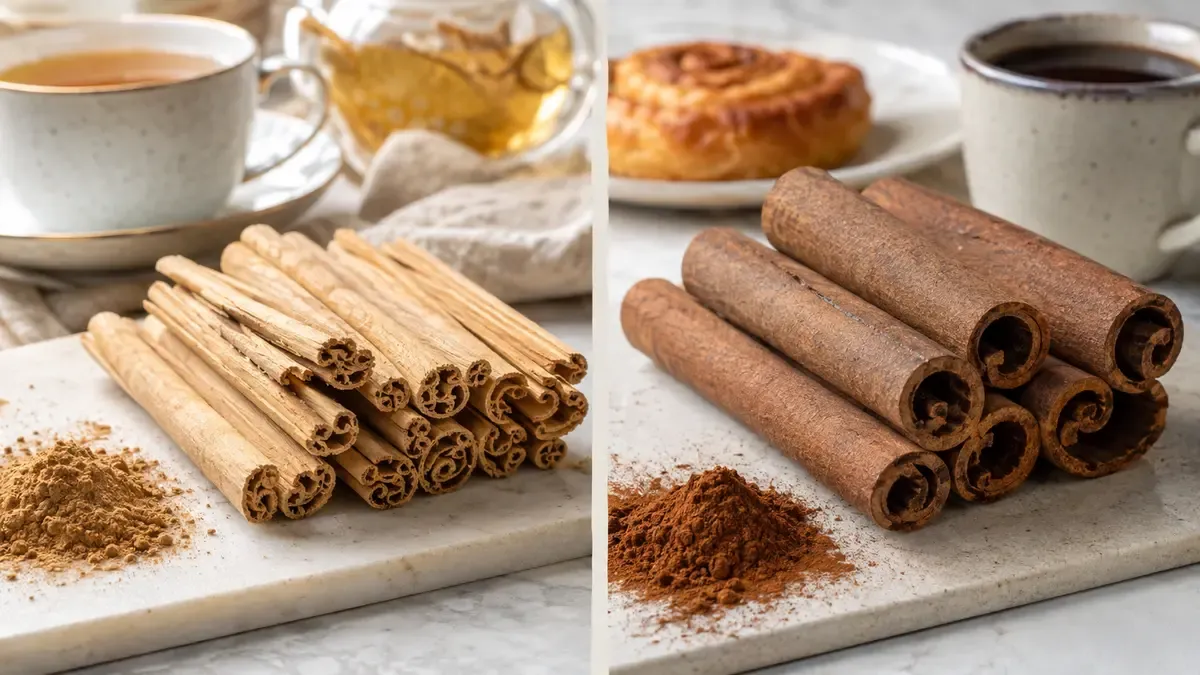
To identify Ceylon versus cassia, examine the quill: Ceylon shows many thin, papery layers and a pale tan color with a delicate, citrusy aroma, while cassia is a single thick, dark, very hard curl with a stronger bite. Ground cinnamon hides these cues, so rely on the label and origin: Sri Lanka usually signals Ceylon; China, Indonesia, or Vietnam usually indicate cassia types.
When buying, look for a clear species name ("Ceylon"/C. verum or a cassia type such as Chinese/Saigon/Korintje) and a stated country of origin. Whole quills keep their aroma longer than ground; if you bake often, buy sticks and grind small amounts as needed. Grade shows in the stick: longer, straighter, cleaner quills with fewer breaks indicate higher grade and better yield if you plan to use them whole. Packaging should be airtight, light-protective, and clearly dated. Trade buyers should request HACCP/ISO/BRC documentation and confirm HALAL/FDA labeling support where applicable.
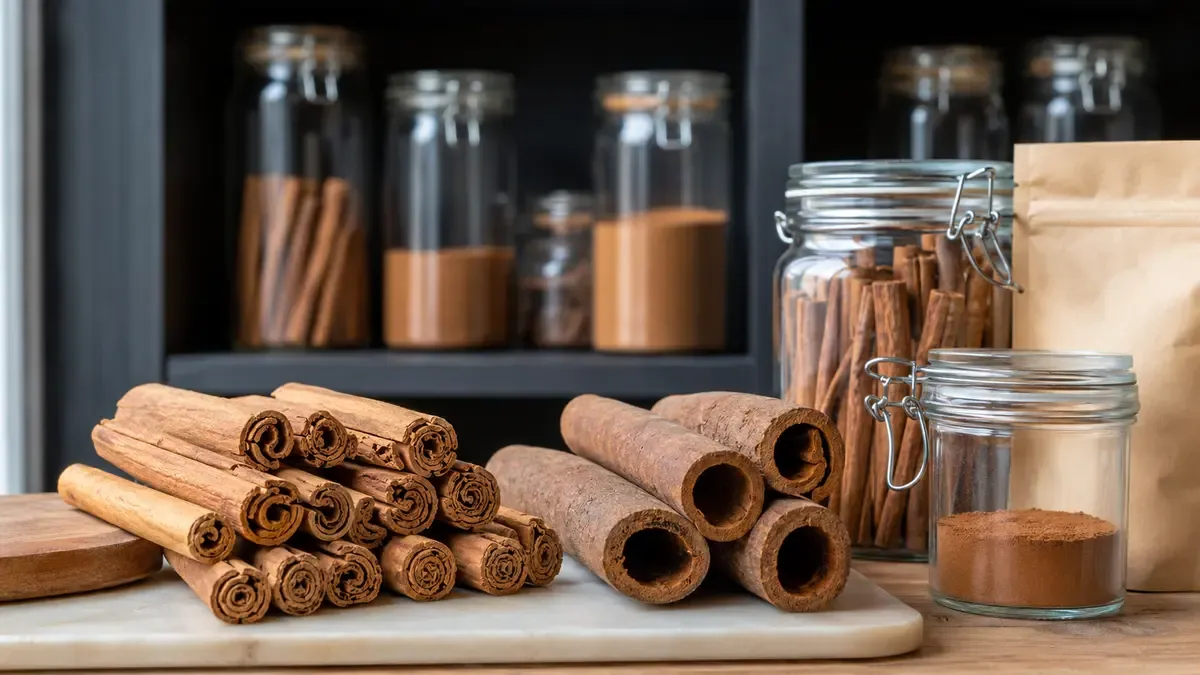
Store cinnamon in airtight containers in a cool, dark, dry place; whole quills retain aroma longer than ground. For private-label or B2B purchases, documented species segregation, lot traceability, and compliant labels matter; manufacturers such as TMICORP use ISO 22000, HACCP, BRC FOOD systems, HALAL workflows, and FDA-registered facilities to help ensure authenticity and food-safety standards from origin to pack.
Frequently asked questions
How can I tell Ceylon cinnamon from cassia?
Ceylon quills are light tan and made of many thin, papery layers that flake easily with a sweet, delicate aroma; cassia is darker, denser, and forms a single thick, hard curl with a bold, spicy bite. For ground cinnamon, these visual cues disappear, so the best check is the species and country of origin on the label.
Which country produces the most cinnamon today?
In recent years, China, Indonesia, Vietnam, and Sri Lanka have produced the vast majority, about 98% combined, of the world's cinnamon, with year-to-year rank changes by harvest and exports. For the latest annual league table, consult FAO production statistics or recent agricultural reports that summarize them.
Is cassia or Ceylon cinnamon safer to eat every day?
Ceylon is generally preferred for frequent high intake because it's typically lower in coumarin, while cassia is fine in normal culinary amounts but isn't advisable in large supplemental doses without medical advice. Health-agency guidance (e.g., NCCIH) also cautions against risky practices like the "cinnamon challenge."
Are cinnamon sticks the same as cinnamon bark?
Yes, cinnamon sticks (quills) are simply the curled, dried inner bark of Cinnamomum shoots, and "cinnamon bark" in trade usually refers to the same product. You may also see "chips" (broken bark pieces) and ground cinnamon (powder milled from quills and chips).
Can I grow cinnamon outside the tropics?
Not outdoors for commercial harvest; cinnamon needs frost-free, humid conditions year-round. You can keep a small plant indoors in temperate zones with warmth, bright light, and humidity, but it won't yield the quantity or quality of bark seen in tropical plantations. Use a well-drained, slightly acidic potting mix and avoid cold drafts.
TMICORP sources, mills, and packs spices with ISO 22000, HACCP, and BRC FOOD certifications, HALAL workflows, and FDA-registered facilities. We maintain species and grade segregation with lot-level traceability and metal detection to help protect authenticity and safety from origin to finished pack.


Related Articles
Canned Pineapple Benefits: Health, Nutrition & Risks
WHAT IS CANNED PINEAPPLE?
3 Easy and Delicious Dishes You Can Make with Canned Pineapple
Discover 8 of the Best Bubble Tea Flavors Around the World!